
Essential Content Optimization Practices Every Marketer Should Know

Most published content never reaches the people it is written for. That is not an opinion; instead, stats support it. According to multiple marketing studies, more than 90 percent of web pages receive little to no traffic from search engines.
This is the real problem. Content exists, but it stays invisible. Pages rank low, engagement stays weak, and conversions do not happen. Over time, this becomes frustrating. Teams start blaming algorithms, competition, or even the content itself.
But in many cases, content is often published without being shaped for how people read or how search engines understand information. This gap can be filled with “Content Optimization”.
In this blog, we will discuss essential content optimization practices that every marketer should understand to get real value from the content they already create.
What is Content Optimization?
Content optimization is the process of refining digital content (such as blog posts and web pages) to improve its quality, relevance, and accessibility. Its goals include higher search rankings, increased organic traffic, better user engagement, higher conversions, etc.
The content optimization process involves multiple techniques, such as using relevant keywords, optimizing meta tags, improving readability, enhancing technical aspects (like speed), and aligning with user intent and business objectives.
This process makes the content more useful for the readers and searchable for search engines like Google.
Essential Content Optimization Practices Marketers Should Follow
Content optimization does not need complex rules. A few practical practices consistently make the biggest difference in performance. The following techniques help polish and strengthen written content.
1) Align Content With Search Intent
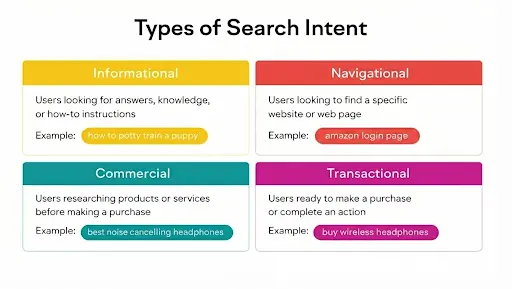
Search intent means understanding what the user actually wants when they type a query into a search engine. Some users want information. Some want to compare options. So, there are four major types of search intents.
- Informational: User needs information about a specific topic.
- Navigational: User wants to go to a specific website or page.
- Commercial: User is searching for multiple options available and comparing them to know the best thing to buy.
- Transactional: User wants to make a transaction or buy something.
If your content does not match that intent, it will struggle no matter how well it is written. Then a question arises:
How to determine search intent?
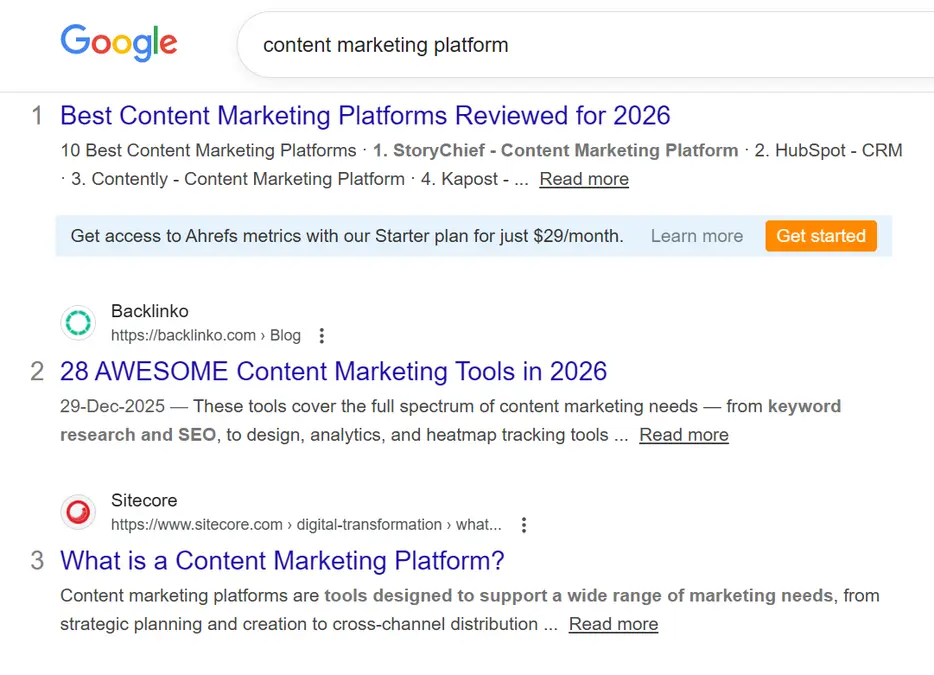
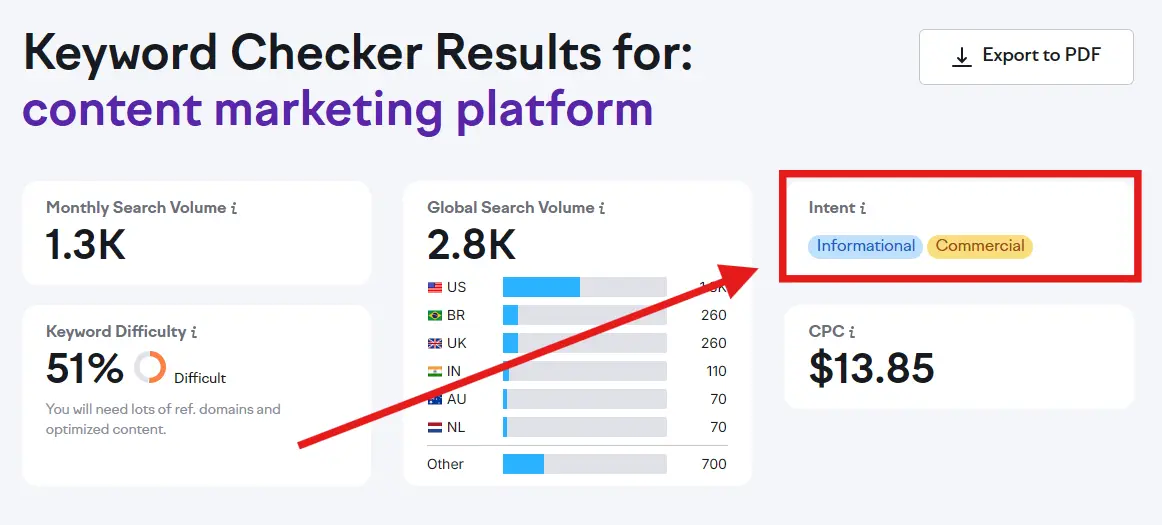
Well, there are two common methods to determine the search intent of a keyword. One is using a search engine. Open Google or another search engine and search for your keyword. For example, searching for “content marketing platform” shows both listicles and guides. So this keyword has both commercial and informational intent.
The second method is using keyword research tools like Semrush. This tool provides a complete overview of any keyword.
2) Use Keywords Naturally
Keywords help search engines understand the main purpose of the content. Previously, adding keywords forcibly into the sentences was a common practice to rank high in the SERPs. This practice is known as keyword stuffing. But now, it harms your content rankings.
There are usually three types of keywords involved in a page.
- Primary keywords define the main topic of the page.
- Secondary keywords support the main keyword with related angles.
- Semantic keywords or entities add context by covering related terms and ideas.
Here is an example of primary (red), secondary (orange), and semantic (green) keywords used organically in a blog post:
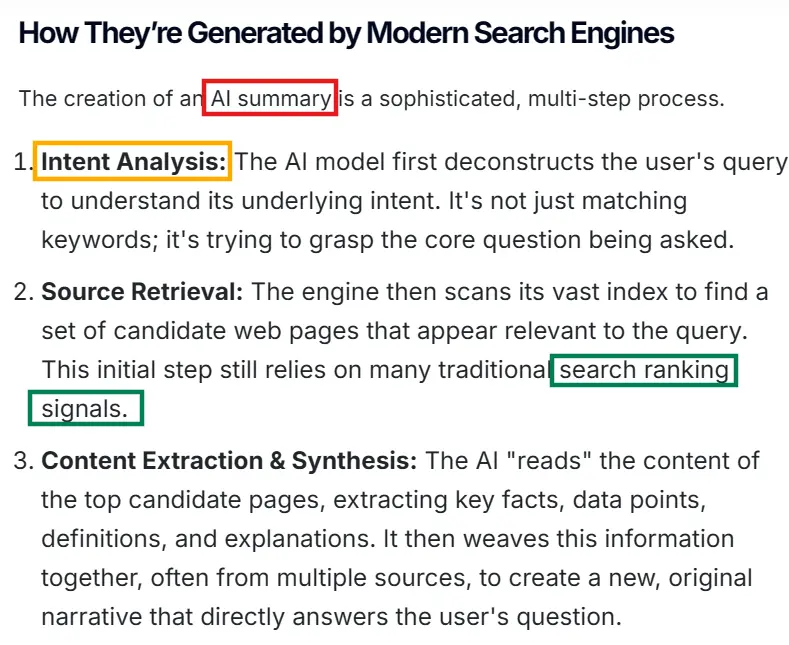
Adjust keywords organically into the headings and paragraphs. Make sure these words do not break the flow of the sentences. Also, focus on entities and topic clusters. Cover related subtopics that naturally belong to the main topic.
For example, if the content is about content optimization, discussing readability, structure, internal linking, and user experience adds depth without keyword stuffing. This method helps build topical authority over time.
3) Focus on Content Quality and Structure
If your content is very informative and useful but difficult to read and skim, it can fail to engage the reader. Hence, the reader will leave soon. It will increase your bounce rate and will harm your site.
Therefore, content structure and readability play a big role in user retention. Short paragraphs make content easier to follow. Clear subheadings help readers find what they need without scrolling endlessly. Updated examples keep the content relevant.
Simple words and phrases enhance the readability and help readers grasp the information quickly. So, make your writing clear and fluent. Replace difficult terms and jargon with simple variants.
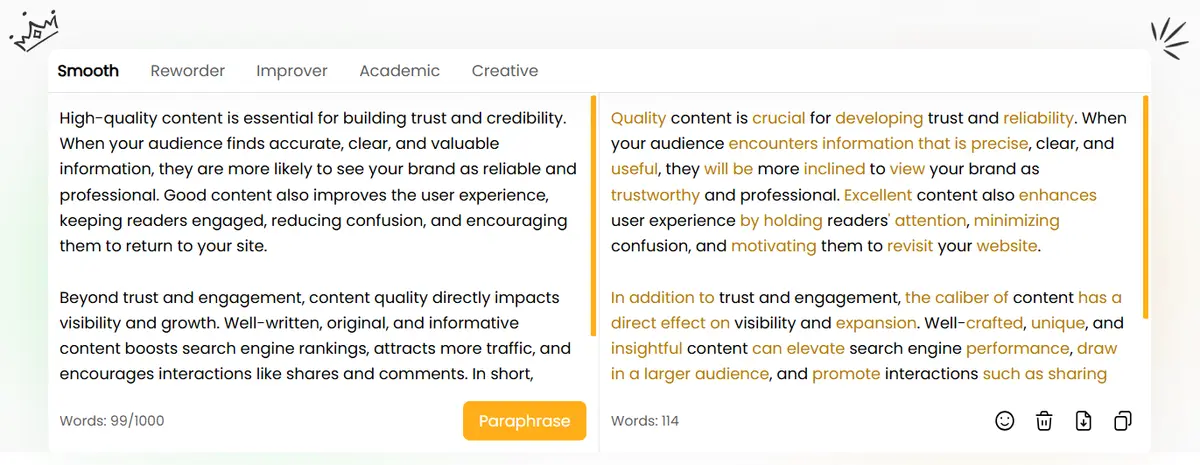
Read the sentences aloud and see where the flow breaks. Rephrase that part to improve it. You can also get help from a paraphrase tool. It can quickly rephrase your text by simplifying the wording and improving the flow to enhance readability. Here is an example of text paraphrased by the tool:
4) Optimize On-Page Elements for Clarity
On-page elements help both users and search engines understand your content. The title tag should explain the page in simple words. Write it after finishing the content, not before. Do not try to sound smart or add overwhelming words to compel the reader to click on it. Just be clear.
A meta description is like a short summary for humans. Explain what the page offers and why it is useful. One or two lines are enough.
Use header tags to break the content properly. Each heading should explain what the next section is about. If a heading feels confusing, rewrite it. Readers rely on headings more than paragraphs.
Add internal links where they actually help. Link to related pages only when it adds value. The anchor text should be descriptive. The reader should get the idea of what they will get by clicking on the link.
The image alt text is also very important for rankings; it gives the idea of the content on the image to the search engines. So it should be optimized with proper description and keywords.
5) Optimize Content for AI Search
People search differently on AI tools. On search engines, they usually search for keywords. But in AI tools, they search by writing the full questions (often known as inputs or prompts). Here is an example of a search on Google and an AI tool:
Google search: “content optimization techniques”
AI prompt: “What are the most effective content optimization practices for a small marketing team with limited resources?”
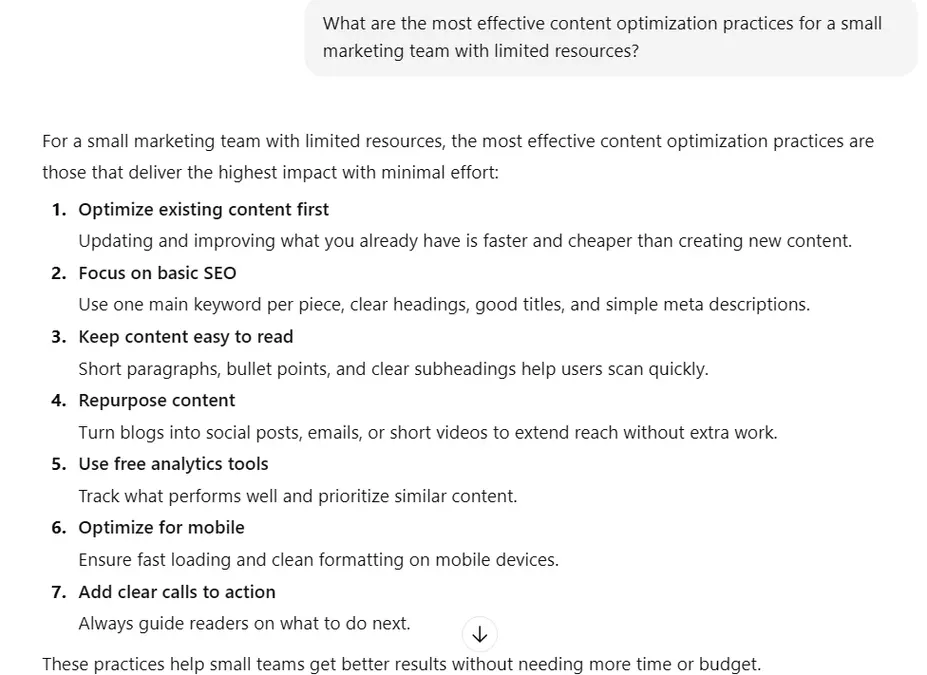
So, people talk to AI tools the same way they talk to a person. They provide them a full scenario, their specific requirements, and the answering style they can understand.
Hence, if your page only targets short keywords, it may not appear in AI responses. Therefore, write your content that is easy to understand and in a conversational tone. Make headings in a question format. Provide short answers under every heading and then explain the things later.
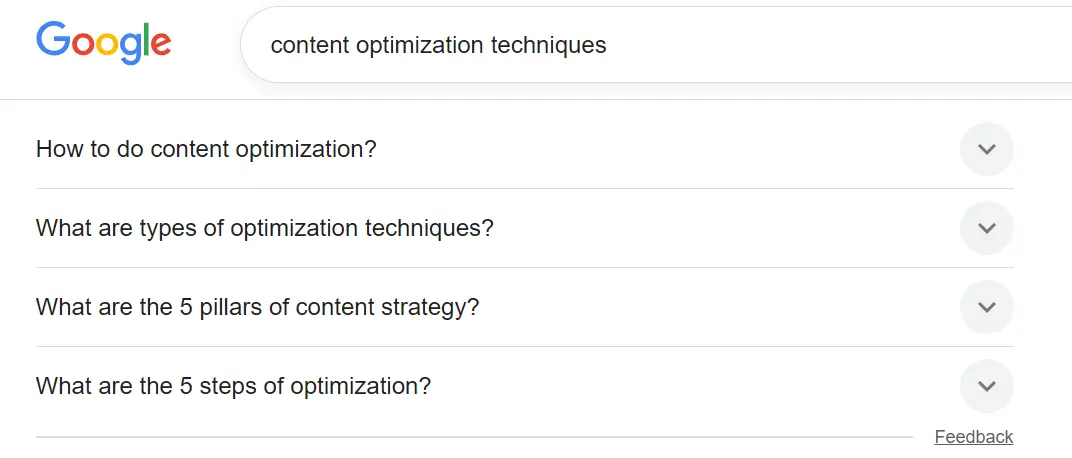
A good place to start is your own data. Look at sales calls, chat logs, demo recordings, or support tickets. Notice how users phrase their questions. These are real queries coming from real people. You can also take the ideas of such questions from Google’s People Also Ask section. Look at this:
Writing for AI works best when you focus on answering real questions in simple language, the same way you would explain something to a person.
Final Words
Content optimization is an ongoing task because search trends and user queries are always changing. The rise of AI has made a bigger difference in search visibility.
Apart from visibility, the next thing is relevancy. Outdated information becomes useless for the readers. Everyone looks for fresh content and the latest information. Therefore, optimize old content instead of always creating new pages.
The key is consistency. Pay attention to how users search, read, and interact with your content. Fix what feels confusing. Improve what feels weak. Keep language simple and direct.
When content is written for real people and supported by proper optimization, it performs better everywhere. That includes search engines, AI tools, and user engagement.