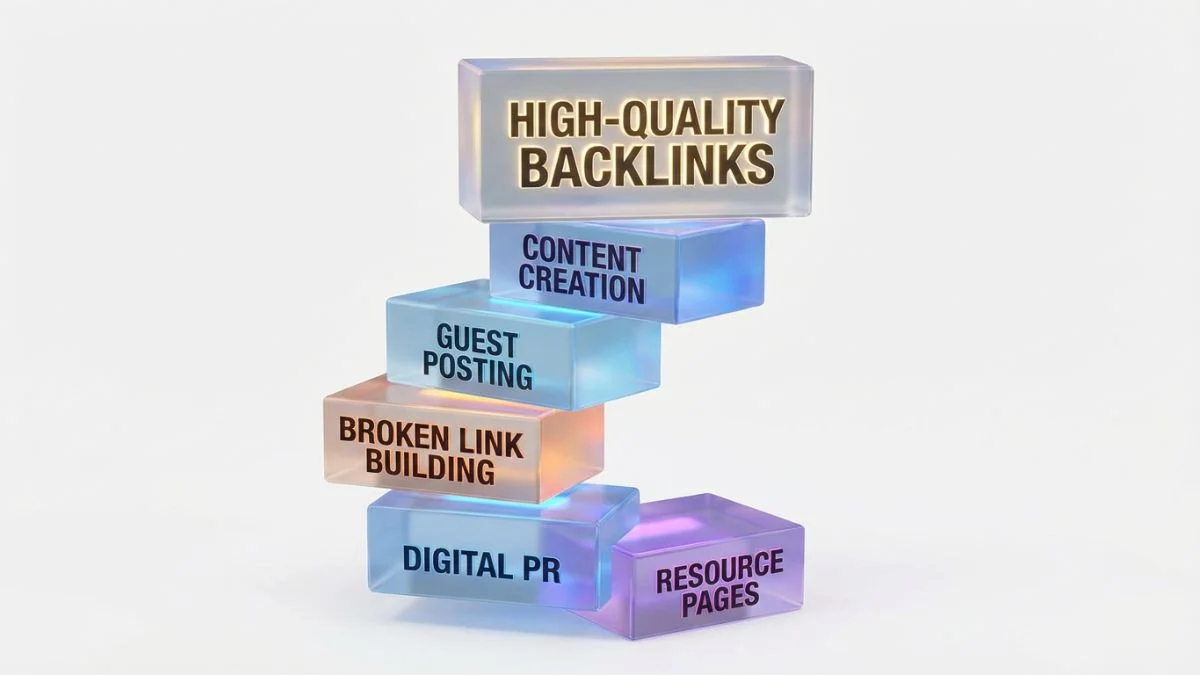
Best Strategies to Build High-Quality Backlinks

Best Strategies to Build High-Quality Backlinks in 2026
Building backlinks is one of the hardest parts of SEO, but it is also one of the most rewarding. The websites that consistently earn high-quality links from authoritative sources are the ones that dominate Google's first page. And in 2026, the bar for what counts as a "quality" backlink has never been higher.
Google's SpamBrain AI system can now detect purchased links, PBN links, and manipulative patterns with remarkable accuracy. The old shortcuts no longer work. What does work is a strategic, relationship-driven approach to earning links that Google rewards rather than penalizes.
According to Ahrefs' comprehensive study, 96.55% of all pages on the internet receive zero organic traffic from Google, and the primary reason is a complete lack of backlinks. On the flip side, pages that invest in strategic link building see compounding returns over time.
This guide covers 15 proven strategies to build high-quality backlinks in 2026, organized from the most impactful to the most accessible. Whether you are working with a budget or bootstrapping your way to the top, there is a strategy here that fits your situation.
Quick Info: Link Building Essentials
- Goal: Earn links from high-authority, relevant sites in your niche
- Quality threshold: Target sites with DA 40+ for meaningful impact
- Monthly target: 5-30 quality backlinks depending on your niche
- Best free method: HARO outreach and broken link building
- Best paid method: Digital PR campaigns with original data
- Audit first: Use free backlink checkers to understand your starting point
Strategy 1: The Skyscraper Technique
The Skyscraper Technique, coined by Brian Dean of Backlinko, remains one of the most reliable link building frameworks available. The concept is straightforward: find content that already earns links, create something dramatically better, then reach out to the sites linking to the original and pitch your improved version.
Here is how to execute it step by step:
- Identify link-worthy content in your niche: Use Ahrefs Content Explorer or BuzzSumo to find articles with high backlink counts in your topic area.
- Analyze why those pages attract links: What data do they include? How comprehensive are they? What format do they use? Identify the specific qualities that make people want to link to them.
- Create a significantly better version: This means more data, more depth, better design, updated information, additional examples, or a combination of all of these. Aim for 10x improvement, not 10% improvement.
- Find everyone linking to the original: Export the backlink list of the original page using Ahrefs or Moz Link Explorer.
- Reach out with a personalized pitch: Contact each site owner, explain that you noticed they linked to a resource on [topic], mention that you have created an updated and more comprehensive version, and suggest they consider linking to yours as well.
The success rate for Skyscraper outreach typically ranges from 5% to 15%, which means you need to contact at least 100 sites to earn 5-15 quality backlinks. That math is very much worth it when those links come from DA 50+ domains.
Strategy 2: HARO and Journalist Outreach
HARO (Help a Reporter Out) connects journalists from publications like Forbes, Entrepreneur, Inc., and Business Insider with expert sources. When a journalist uses your quote or insight in their article, they typically include a backlink to your website.
Tips for HARO success:
- Respond quickly: Journalists work on tight deadlines. Aim to respond within one hour of receiving a relevant query.
- Be specific and quotable: Provide concrete data, personal experience, or unique insights rather than generic advice.
- Include credentials: Mention your relevant experience, certifications, or company role to establish credibility.
- Keep it concise: Journalists scan hundreds of responses. Get to the point quickly with 200-300 word responses.
- Follow up politely: If you do not hear back within a week, a single gentle follow-up is acceptable.
HARO is one of the few methods that can earn you links from DA 80+ publications for free. The trade-off is time: expect to spend 30-60 minutes per day reviewing and responding to queries. Learn more about leveraging PR for SEO in our guide on how SEO helps grow your business online.
Strategy 3: Guest Blogging on Authority Sites
Guest posting on reputable websites in your industry is a proven method for earning quality backlinks, building thought leadership, and reaching new audiences. The key distinction in 2026 is between strategic guest blogging and mass guest posting, which Google frowns upon.
To find quality guest posting opportunities:
- Search Google for: "[your niche] + write for us" or "[your niche] + guest post guidelines"
- Check where your competitors guest post using Ahrefs' backlink analysis
- Look at author bios on industry blogs to see if they accept contributors
- Use LinkedIn to connect with editors and content managers at target publications
- Check platforms like GuestPost.com for curated opportunities
When pitching, personalize every email. Reference a specific recent article on their site, explain why your proposed topic fills a gap in their content, and include 2-3 headline options. As Neil Patel's guest blogging guide recommends, focus on providing exceptional value to the host site's audience.
Strategy 4: Broken Link Building
Broken link building is a win-win strategy. You help site owners fix dead links on their pages while earning a backlink in return. It works because every webmaster has broken links they have not noticed, and most appreciate being informed about them.
The process:
- Find resource pages in your niche: Search Google for "[your topic] + resources" or "[your topic] + useful links"
- Scan for broken links: Use browser extensions like Check My Links or Ahrefs' broken link checker to identify 404 errors.
- Check what the broken link used to point to: Use the Wayback Machine to see the original content.
- Create matching content: Write a resource on your site that covers the same topic as the dead page, ideally with more depth and updated information.
- Contact the site owner: Inform them about the broken link and suggest your content as a replacement.
For more on fixing broken links across the web, check out 10 smart ways to fix broken links.
Strategy 5: Original Research and Data Studies
Publishing original research is the single most powerful long-term link building asset you can create. When you produce unique data that does not exist anywhere else on the internet, you become the primary source, and every article that cites that data must link back to you.
Types of original research that attract links:
- Industry surveys: Survey your customers or industry professionals and publish the findings. Tools like SurveyMonkey or Typeform make this easy.
- Data analysis studies: Analyze publicly available datasets and present unique insights. The Backlinko ranking factor study is a perfect example.
- Annual reports: Publish yearly state-of-the-industry reports that become anticipated reference material.
- Case studies: Document real results with specific numbers. Marketers love linking to proven results.
Original research requires significant upfront investment but generates passive backlinks for years. A single well-promoted study can earn hundreds of links over its lifetime.
Strategy 6: Creating Free Tools and Calculators
Free tools are backlink magnets. When you build something genuinely useful, other sites link to it as a recommended resource for their audience. BrightSEOTools demonstrates this perfectly, with dozens of free tools like the SEO Score Checker, Keyword Research Tool, and Image Compressor that naturally attract backlinks.
Tool ideas for different niches:
- Marketing: ROI calculators, headline analyzers, content graders
- Finance: Loan calculators, investment projections, budget planners
- Health: BMI calculators, calorie counters, symptom checkers
- Real estate: Mortgage calculators, property value estimators
- Education: GPA calculators, study planners, citation generators
The beauty of free tools is that they earn backlinks passively. Once created and promoted initially, they continue attracting links without ongoing outreach effort.
Strategy 7: Digital PR Campaigns
Digital PR combines traditional public relations with SEO to earn high-authority backlinks from news sites and major publications. This strategy involves creating newsworthy stories, data, or angles that journalists want to cover.
Effective digital PR angles include:
- Data-driven stories: Present surprising statistics from your original research
- Trend reports: Identify and document emerging trends before mainstream media picks them up
- Expert commentary: Offer expert analysis on breaking industry news
- Reactive PR: Quickly respond to current events with relevant insights and data
Use media databases like Muck Rack and Cision to find relevant journalists, and craft pitches that lead with the story angle rather than the link request.
Strategy 8: Resource Page Link Building
Thousands of websites maintain curated resource pages, link roundups, and recommended tools lists. Getting included on these pages is one of the easiest wins in link building because the page already exists for the purpose of linking out to useful resources.
Finding resource pages:
- Search: "[your topic] + resources"
- Search: "[your topic] + useful links"
- Search: "[your topic] + recommended tools"
- Search: "best [your niche] blogs/tools/resources"
- Look at competitor backlink profiles for resource page links
When reaching out, explain specifically why your resource would be valuable for their audience. Reference other resources on their page to show you have actually reviewed it. Keep your outreach email under 150 words.
Strategy 9: Infographic Link Building
Infographics remain one of the most shareable content formats. A well-designed infographic can earn dozens or even hundreds of backlinks as other sites embed it with attribution. According to HubSpot's marketing statistics, infographics are shared and liked on social media 3 times more than other content types.
Creating effective infographics:
- Choose a topic with broad appeal in your niche
- Gather compelling data and statistics from authoritative sources
- Design the infographic using Canva, Piktochart, or Venngage
- Include an embed code below the infographic so others can easily share it
- Submit to infographic directories and promote through social media
- Reach out to bloggers who cover the topic and offer the infographic for their use
Strategy 10: Unlinked Brand Mention Reclamation
If your brand is mentioned online without a link, that is an easy win waiting to happen. The site owner already knows about you and thinks your brand is worth mentioning. Converting that mention into a link usually requires just a simple, friendly email.
How to find unlinked mentions:
- Set up Google Alerts for your brand name, product names, and key personnel names
- Use Mention.com or BrandMentions for more comprehensive monitoring
- Search Ahrefs for pages that mention your brand but do not link to you
The conversion rate for unlinked mention outreach is typically 30-50%, making it one of the highest-converting link building tactics available.
Strategy 11: Podcast Appearances
Appearing as a guest on podcasts in your niche earns you backlinks from show notes pages, which are typically well-indexed by Google. Beyond the link, podcast appearances build brand authority, drive targeted traffic, and establish you as an industry expert.
Finding podcast opportunities:
- Search Apple Podcasts and Spotify for shows in your niche
- Use Listen Notes to search for podcasts by topic
- Look at where your competitors have appeared as guests
- Pitch podcast hosts with specific topic ideas and your unique angle
Strategy 12: Competitor Backlink Replication
Your competitors have already done the hard work of finding link opportunities. By analyzing their backlink profiles, you can identify sites that are likely to link to you too, since they already link to content in your niche.
- Identify your top 5-10 ranking competitors for your target keywords
- Use Ahrefs Site Explorer to export their backlink profiles
- Look for patterns: Are they earning links from guest posts? Resource pages? Directories? News coverage?
- Target the same sites with equal or better content and outreach
- Focus on sites that link to multiple competitors, as they are clearly interested in your topic area
This strategy is especially powerful when combined with the Skyscraper Technique. Create better content than your competitor, then reach out to everyone linking to them.
Strategy 13: Community and Forum Participation
While forum links are typically nofollow, consistent community participation builds brand awareness, drives referral traffic, and indirectly leads to natural backlinks as people discover your expertise.
High-value communities for link building:
- Reddit - Participate in relevant subreddits with genuinely helpful comments
- Quora - Answer questions thoroughly and link to your content when genuinely relevant
- Niche-specific forums and Slack communities
- Indie Hackers - Great for tech and startup niches
- Facebook Groups in your industry
The golden rule: provide value first, always. Never spam forums with self-promotional links. Build genuine credibility within the community and link opportunities will follow naturally.
Strategy 14: Testimonial Link Building
Many companies feature customer testimonials on their website with a link back to the customer's site. If you use products or services related to your business, reach out and offer to write a testimonial. You get a backlink from their site, and they get social proof. Everyone wins.
Look at tools, software, and services you already use. Check if they have a testimonials page. Then offer a genuine, detailed testimonial with permission to link to your website.
Strategy 15: Scholarship and Sponsorship Link Building
Creating a scholarship or sponsoring local events, nonprofit organizations, or industry conferences can earn high-authority .edu and .org backlinks. Universities and nonprofits frequently maintain pages listing their sponsors and scholarship providers with links.
This strategy requires budget, but the links earned are typically very high authority and difficult to replicate through other methods.
Strategy Comparison: Effectiveness, Cost, and Time Investment
| Strategy | Effectiveness | Cost | Time Required | Difficulty |
|---|---|---|---|---|
| Skyscraper Technique | Very High | Low-Medium | High | Medium |
| HARO Outreach | Very High | Free | Medium | Low-Medium |
| Guest Blogging | High | Low | High | Medium |
| Broken Link Building | High | Free | Medium | Low-Medium |
| Original Research | Very High | Medium-High | Very High | High |
| Free Tools | Very High | High | Very High | High |
| Digital PR | Very High | Medium-High | High | High |
| Resource Page Outreach | Medium-High | Free | Medium | Low |
| Infographic Creation | Medium-High | Low-Medium | Medium | Medium |
| Unlinked Mention Reclamation | Medium | Free | Low | Low |
| Podcast Appearances | Medium-High | Free | Medium | Medium |
Building a Monthly Link Building Plan
Consistency is the key to sustainable link building. Here is a sample monthly plan that balances multiple strategies:
Sample Monthly Link Building Schedule
- Week 1: Respond to 15-20 HARO queries. Send 25 broken link building outreach emails. Publish one linkable asset (infographic, tool, or data piece).
- Week 2: Write and pitch 2 guest posts to DA 40+ sites. Reach out to 10 resource page owners. Monitor and follow up on Week 1 outreach.
- Week 3: Continue HARO responses (15-20 queries). Send 20 Skyscraper outreach emails. Reach out to 5 podcasts for guest appearances.
- Week 4: Reclaim 10 unlinked brand mentions. Follow up on all pending outreach. Audit new backlinks earned and update tracking spreadsheet.
Track all your outreach and results in a spreadsheet or CRM. Tools like Pitchbox and BuzzStream can automate much of the outreach management process.
Outreach Email Templates That Convert
Your outreach emails make or break your link building campaigns. Here are the principles that drive high response rates:
- Personalize the subject line: Reference their site name or a specific article
- Open with value: Compliment something specific about their content
- Be concise: Keep emails under 150 words
- Make the ask clear: Do not bury the purpose of your email
- Follow up once: A single polite follow-up 5-7 days later is acceptable
Find the right contact email using tools like Hunter.io or Snov.io.
Avoiding Link Building Penalties
Google's spam policies are clear about what constitutes manipulative link building. Avoid these practices at all costs:
Link Building Practices That Will Get You Penalized
- Buying or selling links that pass PageRank
- Excessive link exchanges or partner page schemes
- Large-scale article marketing or guest posting campaigns with keyword-rich anchor text links
- Using automated programs or services to create links to your site
- Requiring a link as part of a Terms of Service or contract
- Text ads or native advertising that pass PageRank without being qualified with rel="sponsored"
- Links from private blog networks (PBNs)
If you suspect previous link building has crossed a line, read about SEO mistakes that kill rankings and take corrective action immediately.
Tools You Need for Effective Link Building
The right tools make link building dramatically more efficient:
| Tool | Primary Use | Starting Price |
|---|---|---|
| BrightSEOTools | SEO auditing and score checking | Free |
| Ahrefs | Backlink research and competitor analysis | $99/mo |
| Hunter.io | Finding outreach email addresses | Free / $49/mo |
| BuzzSumo | Finding link-worthy content topics | $199/mo |
| HARO | Journalist outreach for editorial links | Free |
| Canva | Creating infographics and visual assets | Free / $13/mo |
For a complete list of free options, explore 10 powerful free SEO tools that actually work and top free SEO tools for beginners.
Conclusion: Build Links That Last
High-quality backlink building in 2026 is about strategy, patience, and genuine value creation. The shortcuts of the past, like buying links and PBNs, are riskier than ever thanks to Google's AI-powered spam detection. But the legitimate strategies outlined in this guide work better than ever.
Start by auditing your current backlink profile using BrightSEOTools' free SEO checker. Then pick 3-4 strategies from this list that match your resources and skills. Execute them consistently month after month, and you will see your domain authority, keyword rankings, and organic traffic grow steadily.
The best time to start building links was yesterday. The second best time is right now. For more SEO guidance, explore 10 proven tips to skyrocket traffic and our comprehensive SEO for beginners guide.