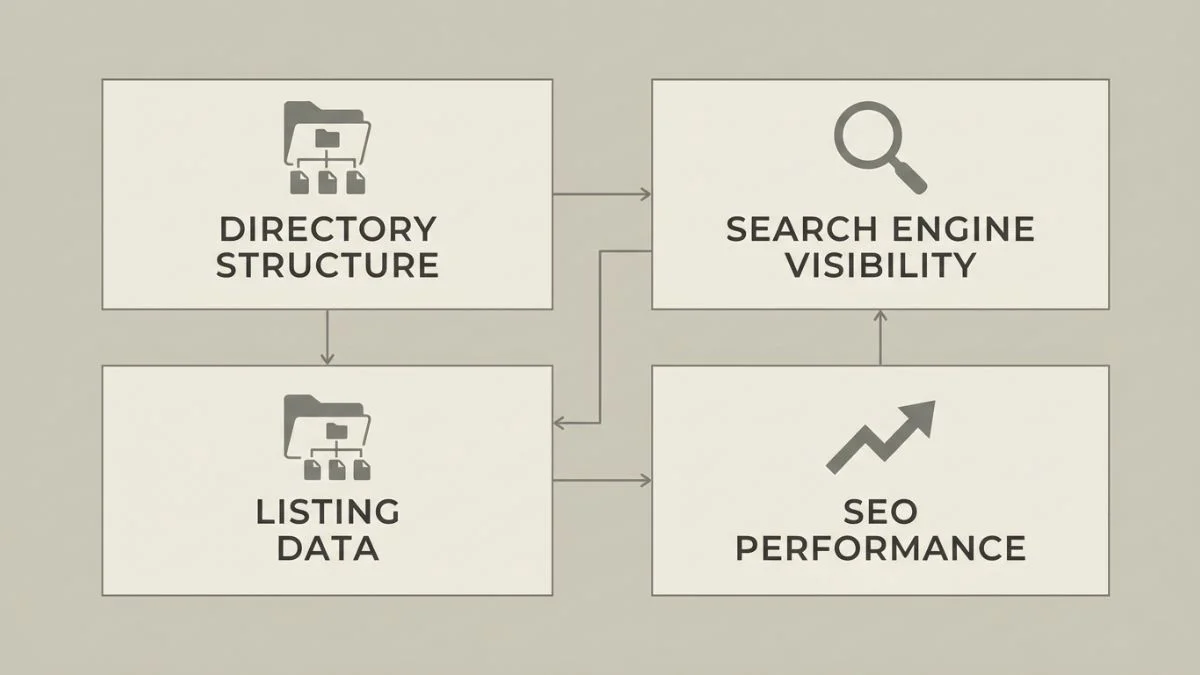
How Directory Listings Affect SEO

How Directory Listings Affect SEO: The Complete 2026 Guide
Directory listings have been part of SEO since the early days of the internet — from the original Yahoo! Directory to today's sophisticated business listing platforms. While the landscape has changed dramatically, the fundamental principle remains: being listed in trusted, relevant directories sends positive signals to search engines about your business's legitimacy and authority.
In 2026, Google's algorithms have become incredibly sophisticated at distinguishing between valuable directory citations and spam. The days of mass-submitting to hundreds of free directories for quick SEO wins are long gone. Instead, a strategic approach to directory listings — focused on quality, relevance, and consistency — can meaningfully impact your off-page SEO profile.
Whether you're a local business trying to dominate the map pack, a SaaS company building authority, or an e-commerce brand seeking visibility, understanding how directory listings affect SEO is essential for your overall SEO strategy.
How Directory Listings Impact SEO: The Core Mechanisms
Directory listings affect your SEO through several interconnected mechanisms. Understanding these helps you prioritize which directories to target and how to optimize your listings.
The Five SEO Impact Channels of Directory Listings
| Impact Channel | How It Works | SEO Weight | Measurement |
|---|---|---|---|
| Backlink Authority | Directory links pass PageRank and domain authority | High (for quality directories) | DR/DA of linking directory |
| Citation Signals | Consistent NAP data across directories confirms business legitimacy | High (especially for local SEO) | NAP consistency score |
| Trust & E-E-A-T | Verified listings on trusted platforms signal trustworthiness | Medium-High | Number of verified listings |
| Referral Traffic | Directory visitors click through to your site | Medium | GA4 referral traffic data |
| Brand Visibility | Appears in directory SERPs and search features | Medium | Brand search volume trends |
The Citation Signal Explained
A citation is any online mention of your business's name, address, and phone number (NAP). According to BrightLocal's Citation Trust Report, Google cross-references citation data from hundreds of sources to verify business information accuracy. The more consistent your NAP data is across directories, the more Google trusts your business information.
There are two types of citations that matter:
- Structured citations: Complete business listings on directory platforms (Google Business Profile, Yelp, BBB) with standardized NAP format
- Unstructured citations: Mentions of your business information in blog posts, news articles, social media profiles, and other non-directory web pages
Both contribute to your off-page SEO, but structured citations from reputable directories carry the most weight because they follow a consistent data format that search engines can easily parse and validate.
Types of Directories and Their SEO Value
Not all directories are created equal. Understanding the hierarchy of directory types helps you prioritize your listing efforts for maximum SEO impact.
Directory Quality Tiers
SEO Value by Directory Type
Tier 1: Core Directories (Must-Have)
These are the most authoritative directories that every business should be listed on. They carry significant weight with Google's algorithm and are frequently used by consumers to discover businesses.
| Directory | DA Score | Link Type | Cost | Key Benefit |
|---|---|---|---|---|
| Google Business Profile | 100 | Dofollow | Free | Map pack rankings, Knowledge Panel |
| Yelp | 93 | Nofollow | Free (premium available) | Review signals, high-traffic referral |
| Better Business Bureau | 91 | Dofollow | Paid (varies) | Trust signal, high DA backlink |
| Apple Maps | 100 | N/A (citation) | Free | iOS user discoverability |
| Bing Places | 99 | Dofollow | Free | Bing search visibility, Cortana results |
| LinkedIn Company Page | 99 | Nofollow | Free | Professional authority, B2B visibility |
| Facebook Business | 96 | Nofollow | Free | Social signals, review aggregation |
Tier 2: Industry-Specific Directories
Industry-specific directories carry disproportionate SEO weight because of topical relevance. According to Ahrefs' directory study, links from niche-relevant directories pass 2-3x more topical authority than general directory links.
| Industry | Top Directories | DA Range | Notes |
|---|---|---|---|
| SaaS/Technology | G2, Capterra, Product Hunt, TrustRadius | 80-92 | Review-based, high referral traffic |
| Legal | Avvo, FindLaw, Justia, Lawyers.com | 75-88 | High trust signals for E-E-A-T |
| Healthcare | Healthgrades, Zocdoc, Vitals, WebMD | 80-93 | Critical for YMYL compliance |
| Real Estate | Zillow, Realtor.com, Trulia, Redfin | 85-92 | Property-specific listings, agent profiles |
| Restaurants/Hospitality | TripAdvisor, OpenTable, Zomato, TheFork | 85-94 | Review-driven, high consumer trust |
| Home Services | Angi, HomeAdvisor, Thumbtack, Houzz | 80-90 | Lead generation + SEO signals |
| E-commerce | Trustpilot, Sitejabber, ResellerRatings | 80-92 | Review aggregation, shopping SERP features |
| Marketing/Digital | Clutch, GoodFirms, DesignRush, UpCity | 70-85 | B2B lead generation, portfolio showcase |
Tier 3: Regional and Local Directories
Regional directories are particularly important for businesses with a physical presence. They reinforce your geographic relevance signal to search engines, which according to Search Engine Journal is one of the top three local ranking factors.
- Chamber of Commerce: Your local chamber's directory typically has DA 50-70 and provides a dofollow link. Membership is usually required but affordable.
- City/County Directories: Government-maintained business directories (.gov domains) carry exceptional trust signals
- State Business Directories: State-level listings reinforcing geographic authority
- Neighborhood/Community Sites: Nextdoor, local Facebook Groups, community websites
- Regional News Sites: Many local newspapers maintain business directories with DA 60+
The NAP Consistency Factor
Name, Address, and Phone Number (NAP) consistency across directories is one of the most critical factors for local SEO. According to Moz's Local Ranking Factors Survey, citation accuracy and consistency remain in the top 5 local ranking signals.
Common NAP Inconsistency Problems
| Problem Type | Example | Impact | Fix |
|---|---|---|---|
| Business name variations | "ABC Corp" vs "ABC Corporation" vs "ABC Corp." | High — Google may treat as different entities | Standardize across all listings |
| Address format differences | "123 Main St" vs "123 Main Street" vs "123 Main St." | Medium — confuses data aggregators | Use USPS-standardized format |
| Suite/unit number missing | "123 Main St" vs "123 Main St, Suite 200" | Medium — incomplete location signal | Include suite number consistently |
| Phone number format | "(555) 123-4567" vs "555-123-4567" vs "5551234567" | Low-Medium — most search engines normalize | Use one format everywhere |
| Outdated information | Old phone number or address on forgotten listings | High — sends contradictory signals | Audit and update all listings |
| Duplicate listings | Multiple Yelp listings for same location | High — dilutes authority, confuses users | Merge or remove duplicates |
NAP Consistency Audit Process
- Create a master NAP document: Establish the exact, canonical version of your business name, address, phone number, and website URL. This is your "source of truth."
- Scan existing citations: Use tools like BrightLocal, Moz Local, or Yext to scan for existing citations across the web.
- Identify inconsistencies: Flag every listing that deviates from your master NAP, no matter how small the difference.
- Prioritize corrections: Fix high-DA directories first (Google Business, Yelp, BBB), then work through lower-priority listings.
- Remove duplicates: Contact directory support to merge or remove duplicate listings.
- Document all listings: Maintain a spreadsheet with login credentials, listing URLs, and last-verified dates for every directory.
Use the SEO audit tips guide alongside your citation audit for a comprehensive approach to identifying and fixing consistency issues.
How Directory Listings Affect Local SEO Rankings
For local businesses, directory listings are not just helpful — they're essential. BrightLocal's 2025 Local Search Ranking Factors Survey found that local pack rankings are influenced by a combination of factors where directory citations play a central role.
Local Ranking Factor Breakdown
Google Local Pack Ranking Factors (2026)
While citation signals account for 7% directly, directory listings also contribute to link signals (13%) through the backlinks they provide and to Google Business Profile signals (32%) through data corroboration.
The Local Citation Building Workflow
- Claim and optimize Google Business Profile first — this is your most important listing
- Set up data aggregator profiles: Submit to Factual (now part of Foursquare), Localeze/Neustar, Acxiom, and Infogroup — these feed data to hundreds of smaller directories
- Claim Tier 1 general directories: Yelp, BBB, Apple Maps, Bing Places, Facebook Business
- Submit to industry-specific directories: Identify and list on 5-10 directories relevant to your industry
- Build regional citations: Chamber of Commerce, local business associations, city directories
- Monitor and maintain: Use SEO performance tracking to measure the impact on local rankings
Optimizing Directory Listings for Maximum SEO Impact
Simply submitting your NAP to directories isn't enough. Optimized listings perform significantly better in both search rankings and user engagement. According to Google's Business Profile documentation, complete profiles are 2.7x more likely to be considered reputable by consumers.
Directory Listing Optimization Checklist
| Element | Optimization Tips | SEO Impact |
|---|---|---|
| Business Name | Use exact legal business name. Never stuff keywords. | High — keyword stuffing triggers penalties |
| Description | Write unique 150-300 word description for each directory. Include primary keywords naturally. | Medium — unique content prevents duplicate issues |
| Categories | Select the most specific and relevant categories. Use all available category slots. | High — primary relevance signal for local search |
| Images | Upload 10+ high-quality photos with descriptive filenames and alt text | Medium — improves engagement and listing completeness |
| Hours | Keep hours accurate, including holidays and special hours | Medium — affects user behavior metrics |
| Website URL | Link to a relevant landing page, not always the homepage. Track with UTM parameters. | High — passes link equity to target page |
| Reviews | Actively solicit and respond to reviews. Aim for 4.0+ average rating. | Very High — review signals are a top local ranking factor |
| Products/Services | List specific products and services with descriptions and prices where applicable | Medium — keyword relevance signals |
Writing Unique Directory Descriptions
One common mistake is using the same description across all directories. While this ensures consistency of facts, Google's spam policies flag duplicate content even in directory listings. Write unique descriptions for each major directory that:
- Maintain the same core facts (NAP, services, founding year)
- Vary the wording and sentence structure
- Highlight different aspects of your business for different audiences
- Include 2-3 primary keywords naturally
- End with a clear call-to-action relevant to the directory's audience
For guidance on writing optimized descriptions, see the SEO-friendly meta description guide — the same principles apply to directory descriptions.
Directory Listings for Non-Local Businesses
While directory listings are most commonly associated with local SEO, they also benefit purely online businesses, SaaS companies, and e-commerce brands. The strategy differs but the SEO impact remains significant.
SaaS and Tech Directory Strategy
For SaaS companies, review-based directories are particularly powerful. According to Gartner's Digital Markets, 84% of B2B buyers consult review sites before making purchase decisions. These directories also send strong topical authority signals to Google.
| Platform | SEO Value | Key Actions | Expected Results |
|---|---|---|---|
| G2 Reviews | Dofollow link, review rich snippets | Complete profile, solicit 25+ reviews | SERP feature capture, referral traffic |
| Capterra | Dofollow link, category rankings | Optimize listing for category keywords | Category visibility, comparison mentions |
| Product Hunt | High-DA dofollow link, launch visibility | Strategic product launch, engage community | Spike in referring domains, brand mentions |
| Crunchbase | DA 92 dofollow link, Knowledge Panel data | Complete company profile with funding data | Entity authority, investor visibility |
| TrustRadius | Dofollow link, detailed review content | Verified reviews from enterprise clients | Enterprise buyer trust, comparison traffic |
E-commerce Directory Strategy
E-commerce businesses should focus on directories that influence shopping intent searches and build click-through rates:
- Trustpilot: DA 93, review snippets appear in Google Ads and organic results
- Sitejabber: DA 78, product-level reviews that can generate rich snippets
- Google Merchant Center: Essential for Shopping tab and free product listings
- Amazon (if applicable): Dual-listing strategy can capture additional SERP real estate
- Better Business Bureau: Trust signal that appears alongside brand name searches
Toxic Directories: What to Avoid
Just as high-quality directories can help your SEO, low-quality directories can harm it. Google's link spam policies specifically address directory links, and SpamBrain has become increasingly effective at identifying manipulative directory link schemes.
Red Flags of Toxic Directories
| Red Flag | Description | Risk Level |
|---|---|---|
| No editorial review | Auto-approves all submissions without review | High |
| DA below 20 | Very low authority, likely not crawled regularly | Medium-High |
| Excessive outbound links | Pages with 200+ external links dilute value | Medium |
| Paid dofollow links | Charges a fee specifically for a dofollow backlink | High |
| Mixed-niche content | Mixes businesses with casino, adult, or pharma listings | Very High |
| No real traffic | SimilarWeb shows zero or negligible monthly visitors | Medium |
| Recently created domain | Domain age under 2 years for a "directory" | Medium-High |
| Mass-link pages | All listings on a single page rather than individual pages | Medium |
Use the domain age checker and MozRank checker to verify directory quality before submitting your listing.
Measuring the SEO Impact of Directory Listings
Tracking the ROI of your directory listing efforts requires monitoring multiple metrics across several tools. Here's how to measure whether your directory strategy is working.
Key Metrics to Track
| Metric | Tool | What to Look For | Timeframe |
|---|---|---|---|
| Referring domains from directories | Ahrefs / Semrush | New directory links being indexed | 2-4 weeks after submission |
| Local pack rankings | BrightLocal / keyword position checker | Improvement in local 3-pack position | 4-8 weeks after citation build |
| Referral traffic from directories | Google Analytics 4 | Traffic source = directory domain | Ongoing |
| Domain Rating/Authority | Ahrefs / Moz | Gradual DR/DA improvement | 3-6 months |
| Citation accuracy score | BrightLocal / Moz Local | NAP consistency percentage improvement | After each audit cycle |
| Brand search impressions | Google Search Console | Increasing branded query impressions | Ongoing |
yoursite.com?utm_source=yelp&utm_medium=directory&utm_campaign=citation-building. This gives you precise data on which directories drive the most valuable traffic. Learn more about tracking with the essential SEO metrics guide.
Directory Listing Strategy by Business Type
Different business types require different directory strategies. Here's a tailored approach based on your business model.
Single-Location Local Business
- Priority: Google Business Profile optimization (spend 30% of effort here)
- Core directories: Top 10 general + 5-10 industry-specific
- Local emphasis: Chamber of Commerce, city directories, neighborhood associations
- Review strategy: Focus on Google and 2-3 industry directories
- Total target: 30-40 high-quality listings
Multi-Location Business
- Priority: Consistent NAP management across all locations
- Tool requirement: Use a citation management platform (Yext, BrightLocal, Moz Local)
- Per-location: Unique Google Business Profile, Yelp, and 15-20 additional directories
- Challenge: Preventing duplicate listings and maintaining consistency at scale
- Total target: 30-40 listings per location
Online-Only Business (SaaS, E-commerce)
- Priority: Industry-specific review directories
- Focus: G2, Capterra, Product Hunt, Trustpilot, Crunchbase
- Content approach: Detailed product descriptions with feature keywords
- Review strategy: Systematic review collection across top 3-5 platforms
- Total target: 15-25 high-authority directories
Professional Services (Legal, Medical, Financial)
- Priority: Industry-specific directories for E-E-A-T signals
- Compliance: Ensure listings meet industry advertising regulations
- Trust emphasis: BBB, professional association directories, .edu/.gov directories where applicable
- Review strategy: Focus on Healthgrades/Avvo and Google Reviews
- Total target: 25-35 high-quality, compliance-verified listings
The Google Business Profile: Your Most Important Directory Listing
Google Business Profile (GBP) deserves special attention because it directly controls your appearance in Google's local pack, Maps, and Knowledge Panel. According to Search Engine Journal, GBP signals account for 32% of local pack rankings — more than any other single factor.
GBP Optimization Essentials for 2026
| GBP Feature | Optimization Action | Ranking Impact |
|---|---|---|
| Primary Category | Choose the most specific category that matches your business | Very High |
| Additional Categories | Add up to 9 relevant secondary categories | High |
| Business Description | Write 750-word description with keywords in first 250 characters | Medium |
| Services/Products | List all services with descriptions and pricing | Medium-High |
| Google Posts | Post weekly updates, offers, events | Medium |
| Photos & Videos | Add 25+ photos covering interior, exterior, products, team | Medium |
| Q&A Section | Pre-populate with common questions and keyword-rich answers | Medium |
| Review Responses | Respond to all reviews within 24 hours including keywords | Medium-High |
| Attributes | Complete all applicable business attributes | Low-Medium |
Directory Listing Maintenance: The Ongoing Process
Directory listings aren't a "set and forget" activity. Regular maintenance is essential for maintaining SEO benefits and preventing issues. According to BrightLocal, 68% of consumers would stop using a local business if they found incorrect information in online directories.
Quarterly Directory Maintenance Checklist
- Verify NAP accuracy: Spot-check 10-15 key directories for correct information
- Check for new duplicates: Data aggregators sometimes create new duplicate listings
- Update seasonal information: Holiday hours, seasonal services, promotional offers
- Respond to new reviews: Address all reviews across directories within 24-48 hours
- Add new photos: Keep visual content fresh with recent photos
- Review directory quality: Check if any previously good directories have declined in quality
- Pursue new directories: Identify any new, relevant directories that have launched
- Update descriptions: Refresh directory descriptions to reflect current services and offerings
- Track metrics: Record referral traffic and ranking changes from directory efforts
Integrate your directory maintenance into your broader SEO checklist to ensure nothing falls through the cracks.
Common Mistakes With Directory Listings
- Keyword stuffing in business names: Adding keywords to your business name (e.g., "Joe's Plumbing - Best Cheap Plumber NYC") violates Google's guidelines and can result in suspension. Use your exact legal business name only.
- Using mass-submission tools: Automated directory submission services typically target low-quality directories and create inconsistent data entries.
- Ignoring reviews: Unanswered negative reviews damage both your reputation and local SEO signals. Always respond professionally.
- Inconsistent tracking numbers: Using different tracking phone numbers across directories breaks NAP consistency. Use a consistent number or call tracking that maintains NAP.
- Neglecting to remove old listings: If you move locations or change phone numbers, old listings with wrong data actively harm your local SEO.
- Copying the same description everywhere: Duplicate descriptions across directories provide minimal value and miss the opportunity to target different keywords.
- Submitting to irrelevant directories: A software company listed on a restaurant directory sends confusing relevance signals to search engines.
Future of Directory Listings in SEO
Looking ahead, several trends will shape how directory listings impact SEO in late 2026 and beyond. Staying ahead of these trends ensures your directory strategy remains effective.
Emerging Trends
| Trend | Impact on Directory SEO | Action to Take |
|---|---|---|
| AI-powered search (SGE) | AI overviews cite directory data for business info | Ensure structured data is complete and accurate |
| Voice search growth | Voice assistants pull from directory data | Optimize for conversational queries in descriptions |
| Zero-click searches | Users find answers without clicking through | Make listings complete enough to convert without a click |
| Review rich results expansion | More SERP real estate for review-enabled directories | Aggressively pursue reviews on top platforms |
| Entity-based search | Google uses directory data to build Knowledge Graphs | Ensure consistency across all structured citations |
For more on how AI is changing SEO and how to prepare for voice search impact, see our specialized guides on Bright SEO Tools.
Building Your Directory Listing Action Plan
Here's a step-by-step action plan to build an effective directory listing strategy from scratch.
30-Day Directory Building Timeline
| Week | Actions | Expected Results |
|---|---|---|
| Week 1 | Create master NAP document, audit existing listings, claim and optimize Google Business Profile | Complete GBP profile, baseline citation count |
| Week 2 | Submit to data aggregators (Foursquare/Factual, Neustar, Acxiom, Infogroup), claim Yelp, BBB, Bing Places | Tier 1 directories complete, aggregator distribution begins |
| Week 3 | Submit to 5-10 industry-specific directories, 3-5 regional directories, fix any NAP inconsistencies found | Tier 2 and 3 directories active, consistency improving |
| Week 4 | Write unique descriptions for top 10 directories, upload photos, start review solicitation campaign | Fully optimized listings, first reviews appearing |
After the initial 30-day build, switch to a quarterly maintenance schedule. Use the 30-day SEO plan to integrate directory building with your overall SEO activities.