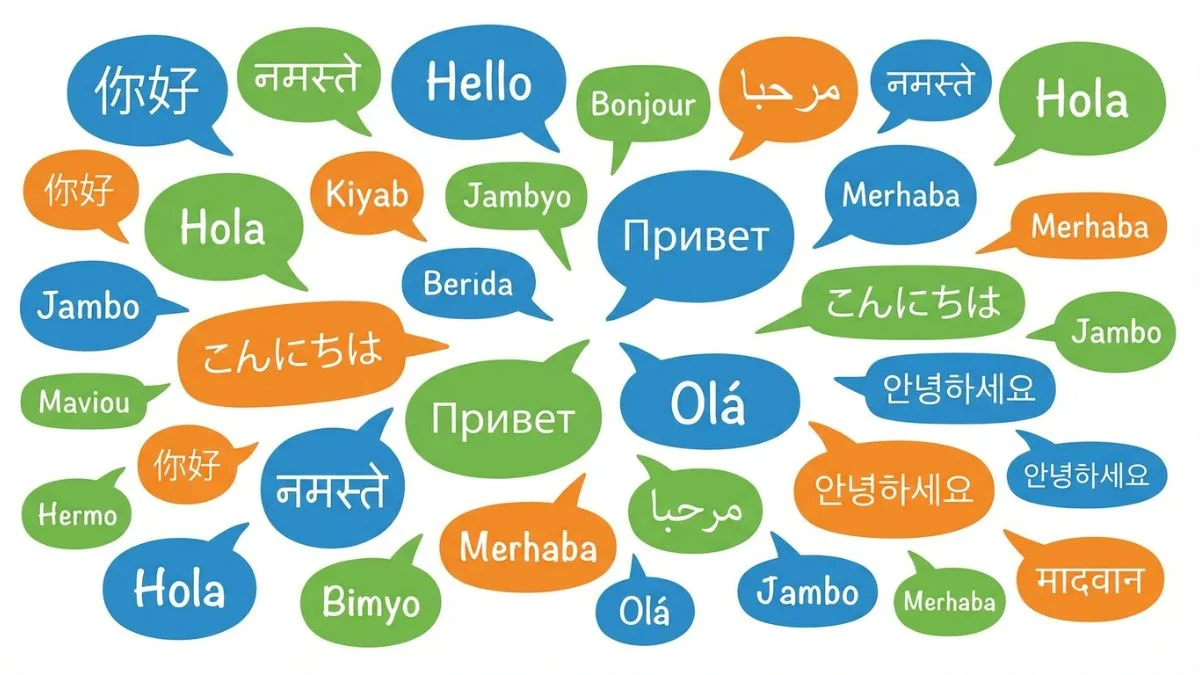
How to Target Multiple Languages in SEO

How to Target Multiple Languages in SEO: The 2026 Global Architecture Guide
Direct Answer: To target multiple languages in SEO effectively in 2026, you must deploy a Language-Specific Directory Structure (e.g., example.com/es/) paired with Bidirectional Hreflang Clusters. This signals to Google's multilingual BERT/MUM algorithms that your content is culturally transcreated, not just machine-translated. Avoid automatic IP-based redirects; instead, implement a Non-Invasive Language Discovery Banner to preserve crawlability. Success requires balancing Semantic Keyword Alignment across regions while maintaining a Technical 'X-Default' Fallback for non-indexed linguistic territories.
🌐 Executive Summary: Multilingual Authority Framework
- Architectural Integrity: Consolidate global link equity using subdirectories on a gTLD to avoid the authority fragmentation of ccTLDs.
- Hreflang Synchronization: Map every linguistic variant with precise ISO 639-1 language codes to prevent regional cannibalization.
- Local Intent Mapping: Perform language-specific keyword research to capture dialectal variations and cultural search nuances.
- UX Adaptation: Adjust UI/UX elements for language-specific reading directions (RTL vs. LTR) and local user behavioral expectations.
How you structure your URLs is the most important decision in multilingual SEO. The choice determines how easily Google can categorize your content.
1. Language-First UX Checklist (LFUC)
Multilingual success isn't just about code; it's about the user experience. Use the LFUC to audit your language versions.
| UX Component | SEO Impact | Best Practice |
|---|---|---|
| Language Selector | High (Bounce Rate). | Flags + ISO labels in footer/header. |
| Font Rendering | Moderate (Readability). | UTF-8 support for all character sets. |
| Reading Direction | Extreme (Usability). | RTL support for Arabic/Hebrew. |
As we noted in what is technical SEO, this structure is the easiest to crawl and manage at scale. By hosting all languages on one domain, you ensure that high-authority links from any linguistic region benefit your entire global footprint.
Chapter 2: The Role of Hreflang Tags in Language Targeting
Hreflang is the technical bridge that connects your language versions.
In 2026, Hreflang Hygiene is the differentiator between global leaders and laggards. Use automated auditing tools to ensure that your 'X-Default' tags are correctly assigned to your primary global version.
1. Translation ROI Predictor (TRP)
Before expanding into a new language, use the TRP to estimate the potential impact on your organic traffic and revenue.
| Market Tier | Translation Strategy | Expected ROI |
|---|---|---|
| Tier 1 (High Value) | 100% Human Transcreation. | Maximum (High Conversion). |
| Tier 2 (Growth) | MT + Human Post-Edit. | High (Balanced Cost). |
| Tier 3 (Test/Long-Tail) | Raw Machine Translation. | Low (Low Risk). |
Perfect hreflang implementation creates a 'Link Juice Bridge' between your markets. A high-authority link to your UK page now indirectly supports the ranking of your French page via the bidirectional cluster connection.
Chapter 3: Content Translation vs. Localization
Translation is about words; localization is about culture.
Simply translating your keywords is a mistake. Users in Spain might use different search terms than users in Mexico, even though they speak the same language. You must perform local international keyword research to understand the nuances of search intent in every market. Localization also includes adapting currencies, date formats, and cultural references. This ensures a high Engagement Rate in Google Analytics, which is a powerful secondary ranking signal.
Google's 2026 local algorithms are highly sensitive to "Foreignness Signals." If your UK page uses US date formats (MM/DD/YYYY) or US terminology ('Sidewalk' instead of 'Pavement'), your local ranking potential is capped. Transcreation is the technical solution.
1. Behavioral Signal Adaptation
Beyond words, you must adapt behavioral signals. Users in Germany may prefer long-form technical documentation before purchasing, while users in Brazil may respond better to social proof and video testimonials. Adapting these elements improves your Dwell Time and CTR, which are dominant signals for localizing content for global SEO success.
Chapter 5: Technical Requirements: Headers and Sitemaps
Speed and discoverability are key.
Your server should send the Content-Language header. Your XML sitemap should also include hreflang attributes to help Google find all your language versions without having to crawl every page source. This reduces the load on your page performance and ensures that your deep language pages are indexed quickly. This is especially important for International Mobile SEO, where bandwidth is often limited.
This is the most common mistake in global SEO. Never force a user to a specific language version based solely on their IP address. This can block Googlebot (which usually crawls from the US) from ever seeing your French or German content.
1. Non-Invasive Language Discovery
Instead of forced redirects, use a Smart Language Banner. This detects the user's browser language and offers a suggestion: "We notice you are in France, would you like to view our French site?" This satisfies both the user's need for relevance and the search engine's need for unrestricted crawlability. As we learned in JavaScript SEO, allowing for crawlability is always more important than 'Smart' automation.
Chapter 7: Verifying Success in Search Console
The International Targeting report in GSC is your best friend.
It will flag missing return tags and language code errors. Monitor your performance by language subdirectory to see which markets are growing. If you see a high Bounce Rate in a specific language, it may imply that your translation is poor or your technical tags are sending users to the wrong page. Use technical issue identification to fix these leaks before they hurt your global authority.
Chapter 8: Language-Based Sentiment Analysis for E-E-A-T
In 2026, Google's Helpful Content System uses sentiment analysis to evaluate the "Expertise" of translated content. If your Spanish translation uses overly formal, robotic language that doesn't match the conversational style of top-ranking local sites, your E-E-A-T score will drop. You must ensure that your transcreation process preserves the Emotional Resonance and 'Human Expert Tone' required by modern algorithms. This is particularly important for YMYL (Your Money Your Life) topics where linguistic nuance determines the perceived safety and reliability of your brand.
1. Local Server-Side Rendering (SSR) for Multilingual Speed
Speed is a global ranking signal, but it is often compromised on multilingual sites due to heavy translation logic. Implementing Local Edge SSR allows you to render the specific language version at the nearest CDN node. This minimizes the 'Time to Content' for users in remote linguistic regions. As we explored in JavaScript SEO, ensuring that the full linguistic context is rendered server-side prevents crawling delays and improves your Cumulative Layout Shift (CLS) scores across all language variants.
Chapter 9: The SEO Impact of Linguistic Quality Assurance (LQA)
LQA is the final technical gatekeeper for multilingual SEO success. It involves a systematic audit of your language versions to catch 'Character Expansion' issues where German or French text breaks your mobile UI layout. Google's 2026 visual algorithms penalize sites with broken UI elements. Furthermore, LQA ensures that your localized images use the correct 'Alt Text' in the native tongue, which is a critical signal for ranking in regional image search results. A robust LQA process turns a simple translation into a search-dominant global asset.
Chapter 10: Cross-Linguistic Entity Building (CLEB)
In 2026, Ranking is about being recognized as a Global Entity. CLEB is the process of synchronizing your brand's data across multiple foreign-language business directories, social platforms, and regional wikis. This creates a cohesive "Entity Cluster" that Google's Knowledge Graph can easily digest. When your brand is recognized as an authority in German, French, and Japanese simultaneously, your ranking power for competitive head terms in your primary language also increases due to the Global Trust Factor.
1. The Multilingual Search Landscape: Beyond Google
While Google dominates much of the world, targeting multiple languages often requires optimizing for regional giants like Baidu (China), Yandex (Russia), and Naver (South Korea). Each of these engines has unique linguistic processing rules. For example, Naver prioritizes "Social Search" results within its main SERP, while Yandex has a much stronger emphasis on 'Regionality' via server-side verification. Expanding your multilingual SEO strategy to include these platforms ensures that your brand achieves true Global Search Dominance.
Chapter 11: Multilingual Voice Search Optimization (MVSO)
In 2026, voice search is a primary driver of international traffic. MVSO involves optimizing for natural language patterns and regional dialects in the native tongue. Users in Spain ask questions differently than users in Argentina, even if the 'Head Term' is the same. By implementing Speakable Schema and providing concise, conversational answers in every target language, you capture the growing number of voice-activated queries from mobile devices and smart home assistants globally. This is the new frontier of multilingual audience engagement.
1. The Future: Generative AI and Real-Time Localization
The next iteration of multilingual SEO will be driven by Real-Time Generative Localization. Imagine a site that dynamically adapts its tone and dialect based on the user's specific linguistic profile and search history. By utilizing AI models like MUM and GPT-5, brands can provide a hyper-personalized experience that transcends static translation. Investing in these next-generation linguistic technologies today ensures that your brand remains at the forefront of the global search landscape for years to come.
Chapter 12: The Ethical Implications of AI-Driven Localization
As we move toward automated localization, the Ethics of Cultural Representation become paramount. AI models can inadvertently perpetuate linguistic biases or cultural stereotypes if not monitored by human experts. In 2026, Google's "Social Responsibility" signals may prioritize brands that demonstrate authentic, respectful cultural engagement over those that simply "Scale" translations via raw algorithms. Ensuring that your multilingual SEO strategy includes a Human-in-the-Loop review process is not just a best practice—it's a requirement for long-term brand equity.
1. Multilingual Link Building: Quality over Quantity
Finalizing your global dominant strategy requires a Tiered Link Building Approach. Instead of buying hundreds of low-quality regional backlinks, focus on acquiring a handful of high-authority links from locally relevant domains (.edu.fr, .gov.de, etc.). These "Trust Anchors" provide the strongest signal to search engines that your language version is a legitimate authority in that specific territory. In international keyword research tips, we discuss how finding these local link opportunities can exponentially speed up your ranking progress in new markets.
Conclusion: The Borderless Brand
Targeting multiple languages is the ultimate scale-up for any digital business. It transforms your website from a local shop into a global powerhouse. In 2026, the brands that win are those that speak to their users in their own tongue, with technical precision and cultural respect.
By choosing a robust URL structure, implementing bidirectional hreflang links, and focusing on true localization rather than just translation, you build a world-class global foundation. You remove the barriers between your content and your audience, ensuring that your message resonates in every corner of the globe. Don't let language be a barrier to your growth. Master the art of multilingual SEO, claim your space in international search results, and build a brand that is truly borderless. The world is searching—it's time you answered. Start your language expansion today.
Frequently Asked Questions on Multilingual SEO
1. What is the best URL structure for multiple languages?
For most sites, subdirectories (e.g., example.com/fr/) are best. They are easy to manage and allow you to share domain authority across all language versions.
2. Can I use Google Translate for my multilingual SEO?
No. Google Translate is fine for a quick check, but using unedited machine translation on your site can be seen as 'Auto-generated content' and may be penalized as spam.
3. What is an hreflang tag?
It is a technical tag that tells search engines which language and region a specific page is intended for, helping them serve the right version to the right user.
4. Do I need a separate domain for every language?
No. While ccTLDs (like .fr or .de) provide a local signal, they are expensive and difficult to maintain. Subdirectories on a .com domain are a perfectly valid alternative.
5. How does Google know which language my page is in?
Google looks at your on-page content, your URL structure, and technical hints like the hreflang tag and the HTTP language header.
6. Should I automatically redirect users based on their location?
No. This is dangerous for SEO because it can prevent search engine bots from crawling all your language versions. Always let the user (and bot) choose their language.
7. Will targeting multiple languages cause duplicate content issues?
Only if you don't use hreflang. Hreflang tells Google that the 'duplicates' are intentional variants for different audiences, which prevents ranking penalties.
8. What is the 'x-default' hreflang tag?
This is a fallback tag that tells Google which page to show to a user whose language doesn't match any of your specific language versions.
9. Does every language version need its own sitemap?
You can have separate sitemaps, but it's often more efficient to have one main sitemap that includes the hreflang alternates for every URL.
10. How do I test my multilingual SEO setup?
Use the 'International Targeting' report in Google Search Console and tools like 'Hreflang Checker' browser extensions to verify your tags and bidirectional links.
11. What is 'Semantic Keyword Alignment?'
Ensuring that translated keywords maintain the same topical search intent as the original version, even if the literal words differ.
12. Can I use 'Subdomains' for languages?
Yes, but it's not ideal. Subdomains fragment your link equity and are harder to manage for 20+ languages compared to subdirectories.
13. What is a 'Language Discovery Banner?'
A non-obtrusive UI element that suggests a specific language version based on the user's browser settings without forcing a redirect.
14. How does 'MUM' affect multilingual SEO?
Google's MUM algorithm can understand information across multiple languages, making correct hreflang and context even more critical.
15. Do I need to translate my 'Privacy Policy?'
Yes. For legal compliance and user trust, all high-stakes legal and technical documentation should be accurately localized.
16. What is 'Hreflang Hygiene?'
The practice of auditing tags to ensure they are bidirectional, accurate, and properly handle self-referencing links.
17. How do I handle 'RTL' (Right-to-Left) languages?
Use CSS direction: rtl; and ensure your layout is flexible enough to flip horizontally for languages like Arabic and Hebrew.
18. What is the impact of 'UTF-8' on SEO?
Ensuring UTF-8 encoding allows your site to correctly display all character sets, preventing 'broken' text that hurts readability and ranking.
19. Can I rank in French if my server is in the US?
Yes. While server location used to matter more, modern CDNs and signals like hreflang and localized content carry much more weight today.
20. What is 'ISO 639-1' coding?
The standard system of two-letter codes (e.g., 'es' for Spanish) used to define language values in your technical SEO tags.
21. How do I manage a 'Language Selector' UI?
Use a dropdown or list with either the native language name (e.g., 'Español') or the ISO code to avoid confusing users with 'Flags-only' selectors.
22. Is 'Transcreation' more expensive than translation?
Yes, as it requires creative input to adapt the emotional intent. However, the ROI in engagement and conversion is significantly higher.
23. What is the 'Translation ROI Predictor?'
A framework for deciding which translation strategy (human vs. machine) to use based on the value and potential of the target market.
24. How do I handle 'Dialectal' variations in Search?
Use region-specific keyword research (e.g., Brazilian vs. European Portuguese) and combine language codes with country codes (pt-BR vs. pt-PT).
25. What is the risk of 'Auto-Redirecting' users?
It can lead to 'Infinite Redirect Loops' for bots and prevent Google from indexing any language variant other than the one matching its US crawl IP.
26. How do I use 'JSON-LD' for multilingual sites?
Inject language-specific structured data that reflects the localized titles, descriptions, and regional entities of the current page.
27. What is 'Entity Synchronization' in global SEO?
Ensuring that your brand is recognized as the same unique entity across different languages in Google's Knowledge Graph.
28. Can I use 'Machine Translation' for blog posts?
Only if followed by human post-editing. Raw machine translation often misses cultural context and can be flagged as low-quality content.
29. What is 'Local Intent Polarization?'
When a keyword has different search intents in different languages, requiring separate landing page designs for each language version.
30. How do I track 'Multilingual Conversion Rate?'
Segment your analytics by language subdirectory to compare how well different linguistic groups are converting on your site.
31. What is the 'Halo Effect' in multilingual SEO?
When massive authority gains in your primary language version boost the visibility of your secondary language subdirectories.
32. How do I optimize 'Video Captions' for SEO?
Provide native transcripts and .vtt files for every language to appear in regional video search carousels.
33. What is 'Character Expansion' in UX?
The phenomenon where translated text (e.g., German) is significantly longer than the original (English), requiring flexible UI design.
34. How do I monitor 'Global Pixel Share' by language?
Tracking the percentage of regional search result pages your brand occupies across different linguistic SERPs.
35. What is the 'Borderless Brand' mindset?
Designing every piece of content with a 'World-First' filter, ensuring it can be easily localized into 50+ languages from day one.