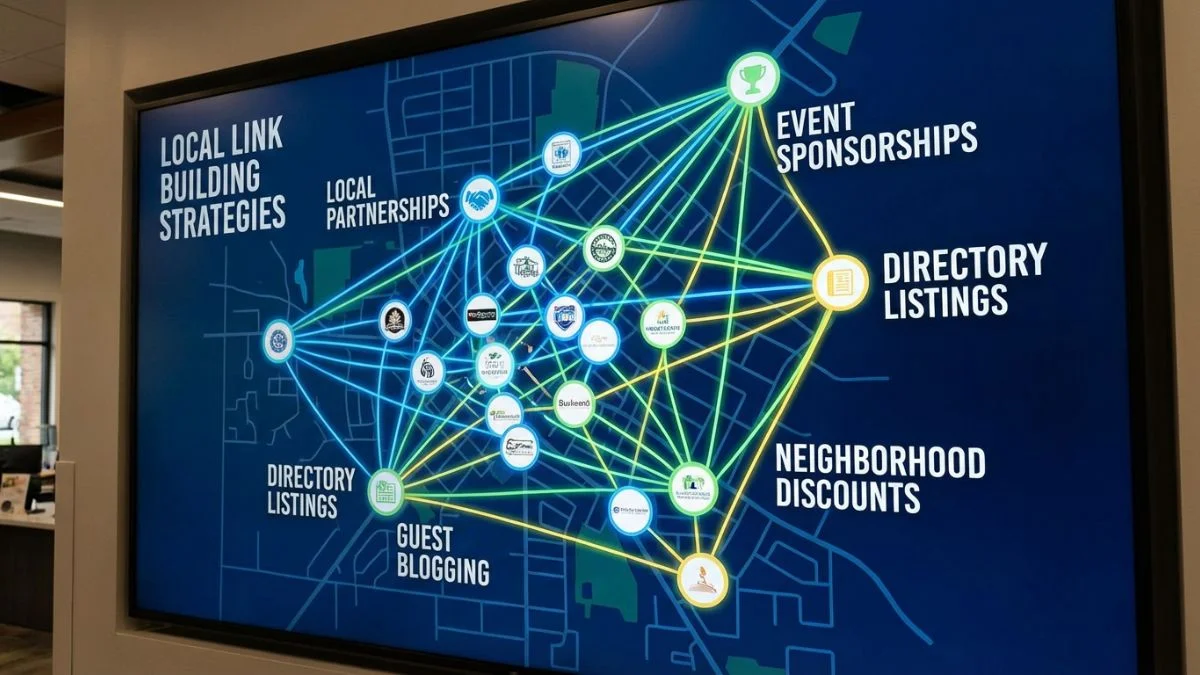
Local Link Building Strategies

Local Link Building Strategies That Work in 2026
Build powerful local backlinks through community connections, partnerships, and strategic outreach.
If you want to dominate local search results, you need more than just a well-optimized Google Business Profile and consistent citations. You need local backlinks—links from websites, organizations, and businesses within your geographic market that signal to Google that you're an established, trusted member of your community.
According to Moz's Local Search Ranking Factors, link signals account for approximately 13% of how Google ranks local businesses. While traditional SEO practitioners chase links from high Domain Authority (DA) sites, smart local businesses focus on locally relevant backlinks that carry disproportionate weight for location-specific searches.
The beauty of local link building is that it's often more achievable than traditional link building. You don't need to compete with national brands for links from Forbes or The New York Times. Instead, you're building authentic relationships within your community—relationships that result in natural, high-quality backlinks that move the needle for Local SEO.
According to Search Engine Journal, businesses with strong local link profiles rank an average of 3-5 positions higher in local search results compared to businesses with similar GBP profiles but fewer local links.
This guide will teach you the most effective local link building strategies for 2026—tactics that actually work for small and medium-sized businesses looking to boost their local visibility.
📋 Key Takeaway
Local link building focuses on earning backlinks from geographically relevant sources like local news sites, chambers of commerce, community organizations, and complementary local businesses. These locally-relevant links are more valuable for Local SEO than generic national links and are often easier to acquire through authentic community involvement.
Why Local Link Building Matters for Local SEO
Before diving into strategies, let's understand why local backlinks are so powerful:
1. Geographic Relevance Signals
When a website in your city links to you, it tells Google: "This business is relevant and trusted in this specific location." This is far more valuable for Local SEO than a generic link from a national directory.
For example, a link from the Austin Chamber of Commerce tells Google you're a legitimate Austin business much more effectively than 10 links from generic nationwide directories.
2. Direct Ranking Impact
Link signals contribute approximately 13% to local pack rankings. According to BrightLocal's research, the factors include:
- Inbound link quantity: Total number of unique linking domains
- Inbound link authority: Domain authority of linking sites
- Link relevance: Topical and geographic relevance of linking sites
- Anchor text: Keywords used in links (though this matters less for Local SEO)
3. Referral Traffic and Customer Acquisition
Local links don't just boost SEO—they drive qualified traffic. Someone clicking from your chamber of commerce profile or a local news article is already interested in local businesses like yours, making them far more likely to convert than random organic visitors.
4. Brand Awareness and Reputation
Building local links requires community involvement—sponsorships, partnerships, media coverage. These activities simultaneously build links and increase brand awareness in your target market.
For broader context on Local SEO fundamentals, see our guide on what is Local SEO and how it works.
Strategy #1: Local Sponsorships
Sponsoring local events, organizations, sports teams, and causes is one of the most effective ways to earn high-quality local backlinks while building community goodwill.
What to Sponsor
| Sponsorship Type | Cost Range | SEO Value | Additional Benefits |
|---|---|---|---|
| Youth Sports Teams | $200-$2,000/season | Medium - team website links | Brand visibility, community goodwill, family market exposure |
| Local Charities/Nonprofits | $500-$5,000/year | High - nonprofit sites often have strong DA | Tax deduction, positive PR, donor recognition |
| Community Events | $250-$3,000/event | High - event site + media coverage | Booth presence, direct customer contact, networking |
| School Programs/Events | $100-$1,500 | Medium-High - .edu links possible | Parent audience, community reputation |
| Conferences/Trade Shows | $1,000-$10,000+ | High - conference websites, attendee lists | Lead generation, B2B networking, speaking opportunities |
| Local Festivals | $500-$5,000 | Medium-High - festival site + local media | Massive brand exposure, sampling opportunities |
How to Maximize Sponsorship SEO Value
✅ Sponsorship Link Building Checklist
- ☐ Confirm link inclusion: Before committing, verify a backlink is part of the sponsorship package
- ☐ Request dofollow links: Politely ask that the link not be nofollowed (though nofollow still provides value)
- ☐ Provide exact URL: Give them your preferred target page (homepage or relevant service page)
- ☐ Check link placement: After the link goes live, verify it's working and follows best practices
- ☐ Leverage for more coverage: Ask if they'll mention you in newsletters, social media, or press releases
- ☐ Document for reporting: Track all sponsorship links for ROI analysis
Pro Tip: Many organizations list sponsors on their website but forget to link. Politely follow up: "Thanks for listing us as a sponsor! Would it be possible to link our business name to our website at [URL]? It helps our customers find us more easily."
Finding Sponsorship Opportunities
Use these search operators to find local sponsorship opportunities:
"[your city]" + "sponsors"
"[your city]" + "events" + "sponsorship opportunities"
"[your industry]" + "[your city]" + "conference"
site:.edu "[your city]" "sponsors"
"[your city]" + "5K run" + "sponsors"
"[your city]" + "nonprofit" + "corporate partners"
Strategy #2: Chamber of Commerce and Business Associations
Joining your local chamber of commerce is often the single best link building investment a local business can make.
Why Chamber Memberships Are SEO Gold
- High-authority links: Chamber websites typically have DA 40-70
- Geographic relevance: Maximum local relevance signal to Google
- Member directory inclusion: Permanent link on member page
- Additional link opportunities: Event sponsorships, committee involvement, member spotlights
- Networking and business development: Referrals and partnership opportunities
Organizations to Join
| Organization Type | Annual Cost | SEO Benefits |
|---|---|---|
| Local Chamber of Commerce | $200-$1,500 | High DA link, member directory profile, local relevance |
| Industry Trade Associations | $300-$2,000 | Industry-relevant link, member directory, credibility |
| Better Business Bureau | $400-$1,000 | High DA (80+), trust signal, review platform |
| Downtown/Business District Associations | $150-$800 | Hyperlocal relevance, neighborhood visibility |
| Professional Organizations | $100-$500 | Professional credibility, industry-specific link |
To find opportunities, search:
"[your city]" + "chamber of commerce"
"[your city]" + "business association"
"[your industry]" + "association" + "[your city]"
"[your neighborhood]" + "merchants association"
Strategy #3: Local Media Coverage and PR
Earning mentions and links from local news sites is among the most powerful local link building tactics. These links carry significant authority and local relevance.
Types of Media Coverage to Pursue
- Local news features: "New business opens," "Local company expands," "Business owner profile"
- Expert commentary: Provide quotes for relevant news stories
- Opinion pieces and letters: Submit op-eds on local business issues
- Community event coverage: Host or sponsor events worthy of coverage
- Human interest stories: Unique business stories, milestone celebrations
- Industry news: Company achievements, awards, innovations
How to Earn Local Media Links
📰 Local Media Outreach Strategy
- Build a media list: Identify local newspapers, news sites, magazines, blogs, and journalists who cover your industry
- Monitor news cycles: Look for opportunities to provide expert commentary on trending local stories
- Create newsworthy stories: Don't just pitch "we exist"—pitch actual news (charity initiatives, major milestones, unique events)
- Use HARO and journalist requests: Sign up for Help A Reporter Out to respond to journalist inquiries
- Develop reporter relationships: Follow local journalists on Twitter, engage with their content, become a trusted source
- Write press releases: Distribute through local channels and wire services like PRWeb or EIN Presswire
- Offer exclusive stories: Give one outlet the exclusive first story for better coverage
- Make it easy: Provide high-quality photos, complete information, and ready-to-publish content
Newsworthy Story Ideas
- Grand opening or major location expansion
- Significant hiring milestones (e.g., "hits 100 employees")
- Charity partnerships or community giveback initiatives
- Free services for underserved populations
- Business anniversary milestones (10 years, 25 years)
- Awards or recognitions received
- Unique business pivots or innovations
- Local economic impact studies or surveys
- Expert predictions or industry trends analysis
Pro Tip: Local news sites desperately need content. Position yourself as a resource rather than someone looking for free publicity, and you'll find journalists eager to work with you.
For more on leveraging PR for links, see our guide on how to use PR for link building.
Strategy #4: Local Business Partnerships
Collaborating with complementary (non-competing) businesses in your area creates natural link opportunities.
Types of Partnership Link Opportunities
- Resource page links: Feature each other on "recommended vendors" or "partners" pages
- Co-marketing campaigns: Joint promotions that include website mentions
- Guest blog posts: Write for each other's blogs with author bio links
- Cross-referrals: "We don't offer X service, but we recommend [Partner]"
- Joint events or workshops: Co-host events with website promotion
- Bundle offerings: Create package deals mentioned on both websites
🤝 Partnership Examples by Industry
- Real estate agent + mortgage broker + home inspector: Cross-refer and link to each other
- Wedding photographer + florist + venue + caterer: Create "preferred vendor" lists
- Gym + nutritionist + physical therapist: Wellness bundle with website promotion
- Law firm + accountant + financial planner: Recommend complementary services
- Restaurant + food delivery service + local farm: "Partners" page highlighting local sourcing
How to Set Up Partnership Links
- Identify complementary businesses: Look for businesses that serve the same customers but don't compete
- Reach out with value: "I'd love to refer customers to you and feature you on our website. Would you be open to doing the same?"
- Create partner/resource pages: Build dedicated pages showcasing trusted partners with links
- Make it mutual: Ensure both parties benefit equally
- Formalize with agreement: Simple partnership agreements keep expectations clear
Strategy #5: Local Resource Page Link Building
Many local websites maintain resource pages linking to helpful local businesses, services, and organizations. These are goldmines for link building.
Where to Find Local Resource Pages
Use these Google search operators to uncover opportunities:
"[your city]" + "resources"
"[your city]" + "useful links"
"[your city]" + "local businesses"
site:.gov "[your city]" "resources"
site:.edu "[your city]" "local services"
"[your city]" + "small business resources"
"[your city]" + intitle:"links"
"[your industry]" + "[your city]" + "directory"
Common Resource Page Locations
- City/county government websites: Business directories, small business resources
- Local libraries: Community resources pages
- Universities and colleges: Local business guides for students
- Tourism and visitor bureaus: "Things to do," restaurant guides, service directories
- Relocation guides: Resources for new residents
- Neighborhood associations: Local business listings
- Community centers and nonprofits: Service provider directories
Resource Page Outreach Template
Subject: Suggested addition to your [City] resources page

Hi [Name],

I came across your helpful [City] resources page at [URL] and noticed you've compiled some great local businesses.

I own [Your Business], a [what you do] serving [City] since [year]. We specialize in [key services] and have helped [number]+ local customers/clients.

Would you consider adding us to your resource list? Here's our information:
- Business Name: [Name]
- Website: [URL]
- Description: [1-sentence description]

Our website also has [unique value proposition that benefits their audience - e.g., "free downloadable guides for [City] residents" or "free consultations for [audience]"].

Thanks for maintaining such a valuable community resource!

Best regards,
[Your Name]
[Your Business]
Success Rate: Expect 10-20% response rates. The key is volume—reach out to 50 resource pages to secure 5-10 links.
Strategy #6: Local Blogger and Influencer Outreach
Local lifestyle bloggers, food bloggers, and microinfluencers can provide valuable backlinks and amplify your local visibility.
How to Find Local Bloggers
"[your city]" + "blogger"
"[your city]" + "blog" + "[your industry]"
"[your city]" + "food blogger" (for restaurants)
"[your city]" + "mom blogger"
"best [your city]" + "blogs"
site:blogspot.com "[your city]"
site:wordpress.com "[your city]"
Types of Blogger Collaboration
| Collaboration Type | Your Investment | SEO Value |
|---|---|---|
| Product/Service Review | Free product or service | High - authentic review with contextual link |
| Local Business Feature | Free or small compensation | High - comprehensive business profile with links |
| Guest Post | Time to write quality content | Medium-High - author bio link, potential in-content links |
| Giveaway/Contest Sponsorship | Product/service donation | Medium - sponsor mention with link |
| Expert Interview/Quote | 30 minutes of your time | Medium - expert attribution link |
| Event Hosting/Sponsorship | Venue/refreshments/gift bags | High - event coverage with multiple links |
Blogger Outreach Best Practices
- Research first: Read their blog, understand their audience, comment on posts
- Personalize outreach: Reference specific posts, show you're a genuine reader
- Lead with value: What's in it for them and their audience?
- Be specific: Don't ask "would you review us?" Ask "would you be interested in trying our new [specific offering]?"
- Make it easy: Provide photos, key information, talking points
- Don't demand placement: Let them control content while hoping for links
- Follow up graciously: One polite follow-up if no response, then move on
Important: FTC guidelines require disclosure of material relationships. Ensure bloggers disclose if they received free products/services.
Strategy #7: Local Scholarship Programs
Creating a small scholarship for local students can earn high-authority .edu backlinks and positive community PR.
How to Set Up a Local Scholarship
- Determine scholarship amount: Even $500-$1,000 scholarships attract interest
- Define eligibility criteria: Local students, specific majors, essay requirements
- Create a dedicated page: Build a scholarship page on your website with full details
- Announce to schools: Contact financial aid offices at local high schools, community colleges, and universities
- Promote widely: Press release to local media, post on social media
- Request links: Ask schools to link to your scholarship page from their financial aid resources
- Select winner and promote: Announce publicly, creating another PR/link opportunity
💡 Scholarship Link Building Benefits
- .edu backlinks: High authority links from educational institutions
- Brand awareness: Exposure to students and families in your community
- Positive PR: Local media often covers scholarship programs
- Tax deduction: Scholarships may be tax-deductible (consult your accountant)
- Community goodwill: Demonstrates commitment to local youth
- Annual recurring links: Schools often keep scholarship links permanently
Resources for scholarship programs:
- Scholarship America - Manages scholarship programs for businesses
- Fastweb - Scholarship listing and promotion
- Scholarships.com - List your scholarship
Strategy #8: Broken Link Building (Local Focus)
Finding broken links on local websites and offering your content as a replacement is an effective "win-win" link building strategy.
How to Execute Local Broken Link Building
- Find local resource pages: Use searches from Strategy #5 above
- Check for broken links: Use tools like Ahrefs Broken Link Checker or Screaming Frog
- Identify relevant broken links: Focus on links to businesses/resources similar to yours
- Create replacement content: If needed, create a page that serves the same purpose
- Reach out to webmaster: Helpfully notify them of the broken link and suggest your resource
Broken Link Outreach Template
Subject: Broken link on your [City] resources page

Hi [Name],

I was browsing your helpful resources page for [City] businesses and noticed that one of the links appears to be broken:

[URL of broken link]

That link returns a 404 error. I thought you'd want to know so you can update it.

If you're looking for a replacement, we offer [similar service/resource] at [your URL]. We've been serving [City] since [year] and might be a good fit for that spot.

Either way, thanks for maintaining such a useful resource for our community!

Best,
[Your Name]
Why This Works: You're providing value first (alerting them to a problem) before asking for anything in return. The replacement suggestion feels helpful rather than salesy.
Strategy #9: Event Hosting and Community Engagement
Hosting or participating in community events creates numerous link opportunities while building your local brand.
Event Ideas That Generate Links
- Educational workshops: Free seminars on topics related to your expertise
- Charity fundraisers: Host events benefiting local causes
- Community meetups: Recurring meetups for local professionals or hobbyists
- Open houses: Business anniversary celebrations, facility tours
- Contest/competition hosting: Business plan competitions, skill competitions
- Sponsorship of existing events: As covered in Strategy #1
How Events Generate Links
- Event listing sites (Eventbrite, local calendars) link to your registration page
- Co-organizers and partners link from their websites
- Local news coverage of significant events
- Community blogs and newsletters promoting events
- Event recap content you can pitch to local media and blogs
- Permanent "past events" pages from venues or organizations
To maximize SEO value, create a dedicated event page on your website (not just a Facebook event) and promote that URL.
Strategy #10: Create Link-Worthy Local Content
Publishing genuinely useful local content naturally attracts links from local websites, bloggers, and media.
Link-Worthy Local Content Ideas
| Content Type | Example | Link Potential |
|---|---|---|
| Local Statistics/Data | "2026 Cost of Living in [City]" or "[City] Small Business Statistics" | High - media and bloggers frequently reference data |
| Comprehensive Local Guides | "Complete Guide to Starting a Business in [City]" | High - becomes go-to resource for topic |
| Local Industry Reports | "State of [Industry] in [City] - 2026 Report" | Very High - authoritative reference content |
| Local Resource Lists | "25 Best [Type of Business] in [City]" | Medium-High - businesses you feature may link back |
| Neighborhood Guides | "Living in [Neighborhood]: Complete Guide for New Residents" | High - real estate sites, relocation guides link to these |
| Salary/Compensation Guides | "[industry] Salaries in [City] - 2026 Data" | High - job seekers and career sites reference these |
| Event Calendars | "[City] Events Calendar 2026" | Medium - useful ongoing resource |
| Interactive Tools/Calculators | "[City] Cost Calculator" or "[Industry] ROI Calculator" | Very High - tools earn many links over time |
Content Promotion Strategy
Creating great content isn't enough—you must promote it:
- Email local journalists and bloggers: "Thought you might find this [City] data interesting..."
- Share in local social media groups: Nextdoor, Facebook groups, Reddit r/YourCity
- Submit to local content aggregators: Community blogs, local Reddit, city-specific sites
- Reach out to referenced sources: If you mention other local businesses/organizations, let them know
- Repurpose for guest posts: Use data/insights from your content as basis for guest contributions
For more on content that attracts links, see our guide on how to create linkable assets.
Tracking Your Local Link Building Success
Monitor these metrics to measure your local link building impact:
📊 Key Link Building Metrics
- Total referring domains: Number of unique websites linking to you
- New local links per month: Measure link velocity from local sources
- link authority (DA/DR): Average authority of your linking domains
- Local vs. non-local links: Ratio of geographically relevant links
- Referral traffic from local links: Visits driven by local backlinks
- Local pack rankings: Position changes for target keywords
- Domain authority growth: Your overall DA improvement over time
- Competitor link gap: How your link profile compares to top competitors
Best Tools for Tracking Local Links
- Ahrefs: Comprehensive backlink analysis, competitor research
- Moz Link Explorer: Link tracking with spam score analysis
- SEMrush: Backlink audit and monitoring
- Google Analytics: Referral traffic from linking sources
- Google Search Console: Links that Google has discovered
- BrightLocal: Local SEO citation and link tracking
For comprehensive Local SEO tracking, see our guide on how to track Local SEO performance.
Common Local Link Building Mistakes
❌ Mistakes That Waste Time and Money
- Buying links from link farms: Violates Google guidelines and can result in penalties
- Obsessing over Domain Authority: Local relevance matters more than DA for Local SEO
- Ignoring link maintenance: Monitor for broken links, dead domains, link removal
- Only targeting homepage links: Links to relevant service pages can be more valuable
- Generic outreach templates: Personalization dramatically improves response rates
- No follow-up process: Most link opportunities require multiple touchpoints
- Neglecting existing relationships: Ask current partners/sponsors for links if you don't have them
- Over-optimized anchor text: Natural anchor text variety is important
- Quantity over quality: 10 relevant local links beat 100 spammy directory links
- Not tracking results: You can't optimize what you don't measure
Frequently Asked Questions
What is local link building?
Local link building is the process of acquiring backlinks from websites, organizations, and businesses within your geographic area. These locally-relevant backlinks signal to search engines that your business is established and trusted in your community, contributing to improved local search rankings.
Why are local backlinks important for Local SEO?
Local backlinks are important because they account for approximately 13% of local ranking factors according to Moz. They establish your authority within your community, validate your local presence, and signal relevance for location-specific searches. Quality local links carry more weight for Local SEO than generic national links.
How is local link building different from regular link building?
Local link building focuses on acquiring links from geographically relevant sources (local newspapers, chambers of commerce, community organizations) rather than just high-authority national sites. It prioritizes local relevance and community connections over pure domain authority, making it more achievable for small businesses.
What are the best local link building strategies?
The best strategies include local sponsorships, chamber of commerce membership, community event participation, local media outreach, partnerships with complementary businesses, scholarship programs, resource page links, local blogger collaborations, and earning mentions through exceptional service or community involvement.
How many local backlinks do I need?
Start with 10-20 high-quality local backlinks from authoritative community sources, then expand to 50+ over time. Quality matters more than quantity—one link from your city's official website or major local newspaper is worth more than dozens from low-quality directories. Competitive markets may require 100+ local links.
How do I find local link opportunities?
Find opportunities by Googling '[your city] + business directory', checking where competitors have links, researching local event sponsors, joining your chamber of commerce, contacting local blogs and news sites, looking for broken links on local websites, and participating in community organizations.
Can I build local links without spending money?
Yes, many effective local links are free: claiming business directory listings, earning media coverage through newsworthy stories, creating shareable local content, guest posting on local blogs, participating in community events, offering expert quotes to journalists, and building genuine partnerships with complementary businesses.
How do local sponsorships help with link building?
Local sponsorships provide backlinks from event websites, sports teams, charities, and community organizations while also building brand awareness and community goodwill. Sponsorships typically include a link from the sponsor page, which is a natural, high-quality local backlink that search engines value.
Should I focus on high DA links or local relevance?
For Local SEO, prioritize local relevance over pure Domain Authority. A link from your local chamber of commerce (DA 40) is more valuable for local rankings than a generic national directory (DA 70). Ideally, target sources with both local relevance and decent authority like local news sites and city government pages.
How long does it take to see results from local link building?
Local link building typically shows results in 4-12 weeks as search engines discover and credit the links. The impact is cumulative—your first 10 links establish credibility, the next 20 build authority, and 50+ create significant competitive advantage. Consistent monthly link building delivers the best long-term results.
Conclusion: Building Your Local Link Foundation
Local link building isn't about gaming the system or manipulating search engines. It's about genuinely embedding yourself in your local community—online and offline—in ways that naturally result in mentions, links, and relationships that benefit your business.
The most successful local businesses don't think of link building as an SEO tactic. They think of it as community building. When you sponsor Little League teams, join the chamber of commerce, partner with complementary businesses, and get featured in local media, links happen naturally as a byproduct of being an active, valuable community member.
Your 90-Day Local Link Building Action Plan:
📅 90-Day Implementation Timeline
Month 1: Foundation
- Join local chamber of commerce
- Claim all business directory listings (BBB, industry associations)
- Reach out to 10 local resource pages
- Build partnership with 2-3 complementary businesses
- Target: 5-10 new local links
Month 2: Expansion
- Sponsor 1-2 local organizations or events
- Pitch 3-5 story ideas to local media
- Collaborate with 2-3 local bloggers/influencers
- Create one piece of link-worthy local content
- Target: 8-12 new local links
Month 3: Scaling
- Launch scholarship program (if appropriate)
- Host or sponsor a community event
- Execute broken link building campaign (20+ outreach emails)
- Expand partnerships to 5-10 total businesses
- Target: 10-15 new local links
Result: 23-37 high-quality local backlinks in 90 days
The businesses dominating local search didn't get there overnight. They systematically built relationships, earned links, and established themselves as community pillars over months and years. With the strategies in this guide, you have a proven roadmap to do the same.
Start with one strategy this week. Master it. Then add another. Consistent effort compounds into significant competitive advantage.
For more Local SEO strategies, explore our guides on local citations, optimizing Google Business Profile, and how to rank in Google Maps.
Now get out there and build those local connections—online and offline.