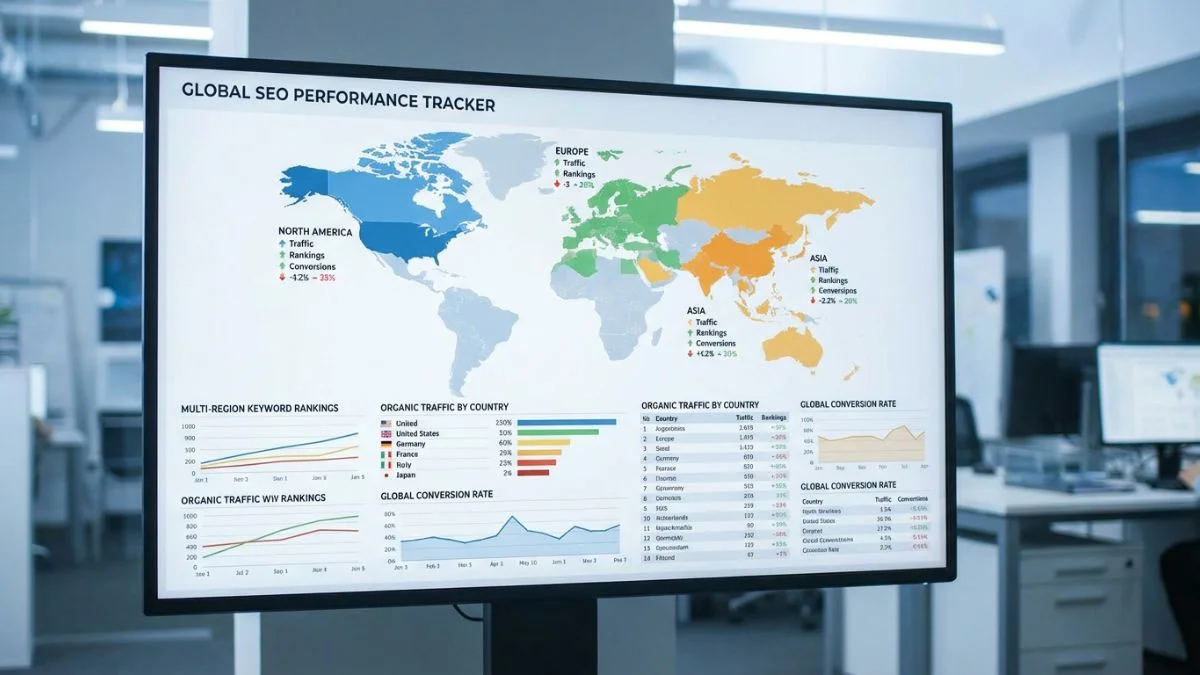
How to Track International SEO Performance

How to Track International SEO Performance in 2026
A complete framework for measuring rankings, traffic, and revenue impact across countries and languages.
International SEO only works if you can measure it. Without a clear tracking framework, global SEO becomes guesswork: you might be investing in markets that underperform or missing obvious wins that could scale quickly. In 2026, the most successful global brands track performance by country, language, device, and intent with market-level KPIs that connect search visibility to revenue.
This guide gives you a practical system to track international SEO performance. You will learn how to structure reports by country, diagnose regional issues, measure language-specific engagement, and connect global rankings to business outcomes. We will use a tool-agnostic framework, but we will reference commonly used platforms like Google Search Console, GA4, Semrush, Ahrefs, and BrightLocal.
Why International SEO Tracking Is Different
Domestic SEO can be tracked with a single dashboard. International SEO cannot. Each country behaves like a separate market with unique language nuances, SERP features, click behavior, and competitive landscapes. A single global line chart hides what matters.
- Different engines and SERPs: Google is dominant in many countries, but in China you must consider Baidu, and in Russia Yandex influences patterns.
- Language intent variance: Direct translations often miss local search behavior. Users in Spain and Mexico may search differently even in the same language.
- Different conversion paths: In some markets, organic search drives awareness; in others, it drives immediate purchases.
Core Metrics to Track by Country and Language
Use a consistent set of global KPIs, then break them down by market. This helps you compare performance apples-to-apples.
| Metric | Definition | Primary Tools |
|---|---|---|
| Organic Sessions | Traffic from unpaid search by country and language | GA4, Adobe Analytics |
| Search Visibility | Average position or visibility score across tracked keywords | Semrush, Ahrefs, BrightLocal, AccuRanker |
| Index Coverage | Indexed vs. submitted URLs per country directory | Google Search Console |
| CTR | Click-through rate by country and device | Search Console |
| Conversion Rate | Leads or sales from organic traffic | GA4, CRM analytics |
| Revenue per Session | Monetary value of each organic visit by market | GA4, ecommerce platforms |
Market Context KPIs
Core KPIs are not enough without market context. Add secondary metrics like seasonality, competition density, and device usage. For example, if mobile traffic in India is 88% but your US audience is 63%, your mobile-first experience is far more critical in India.
Build an International SEO Tracking Framework
Step 1: Define Market Segments
Break your site into segments that match your structure. Most international sites use one of these models:
- Country subfolders: /us/, /uk/, /de/
- Language subfolders: /en/, /es/, /fr/
- Subdomains: us.example.com, de.example.com
- ccTLDs: example.de, example.co.uk
Your tracking should mirror that structure. For example, if your German content lives in /de/, create a GA4 segment and GSC property filter for that directory.
Step 2: Align KPIs to Business Goals
Each country may have different goals. A new market may focus on visibility and brand discovery, while a mature market focuses on conversions. Your reports should reflect those goals.
| Market Stage | Primary KPI | Secondary KPI |
|---|---|---|
| Market Entry | Search visibility | Indexed pages, brand impressions |
| Growth | Organic traffic | CTR, top keyword expansion |
| Mature | Conversions and revenue | Conversion rate, repeat visits |
How to Track International SEO in Google Search Console
Google Search Console is essential for international SEO. It provides country-level impressions, clicks, and indexing data.
Key GSC Reports for Global SEO
- Performance by country: Identify which markets are winning
- Search queries by country: Validate keyword localization
- Coverage report: Track indexing issues per market
- Page experience: Compare Core Web Vitals by region
Use the "Countries" tab in the Performance report to compare impressions, CTR, and average position for each market. If a country has high impressions but low CTR, consider localized titles and meta descriptions.
GA4 Setup for International SEO Tracking
GA4 is your core analytics platform. It shows user behavior across markets and reveals how search traffic converts. For international tracking, build a dashboard with these dimensions:
- Country
- Language
- Device category
- Landing page path
- Organic session source
Recommended GA4 reports for international SEO include:
- Organic sessions by country and language
- Engagement time by market
- Conversion rate by market
- Revenue per session by market
Rank Tracking by Country and Language
Rank tracking gives you visibility into keyword-level performance. Use Semrush, Ahrefs, or BrightLocal to track rankings per market. Focus on local keyword sets rather than direct translations.
International SEO Dashboard: What to Include
A great international dashboard aligns performance with action. Include both leading and lagging indicators.
| Dashboard Section | Metrics to Include |
|---|---|
| Visibility | Keyword rankings, impressions, visibility score |
| Traffic | Organic sessions, CTR, landing page performance |
| Engagement | Bounce rate, engagement time, pages per session |
| Conversions | Leads, sales, conversion rate, revenue per session |
| Technical Health | Index coverage, hreflang errors, Core Web Vitals |
Common Problems and How to Diagnose Them
Problem 1: High Impressions, Low CTR in a Market
This often means your snippets are not localized. Use local language in titles and meta descriptions. Check for cultural mismatches.
Problem 2: Rankings Dropped in One Country
Check for:
- Hreflang errors
- Indexing issues for that directory
- Competitors launching new local content
- Changes in local SERP features
Problem 3: High Traffic but Low Conversions
This is usually a localization issue. The content may rank but not resonate. Check currency, delivery options, trust symbols, and translated UX elements.
International SEO Reporting Frequency
Global SEO needs a cadence that balances speed with stability.
- Weekly: Rank tracking, visibility changes
- Monthly: Traffic, engagement, conversions by market
- Quarterly: Market expansion, ROI comparison, strategy updates
Best Practices for 2026
- Track by country, language, and device
- Localize keyword lists for each market
- Monitor hreflang errors weekly
- Use market-level goals, not global averages
- Align reporting with business priorities per region
Recommended Tools for International Tracking
Internal Resources from Bright SEO Tools
- Website SEO Score Checker
- SERP Checker
- Keyword Position Tool
- How to Track SEO Performance With Analytics
- How to Measure SEO Success
- Most Important SEO Metrics
- SEO for Beginners
- SEO Audit Guide
- Website Tracking Tools
- SEO Checker Tools
Frequently Asked Questions
How do I track international SEO performance by country?
Use Google Search Console's country filter, GA4 country dimension, and rank tracking tools with country-specific SERP settings. Make separate dashboards for each market.
What is the most important KPI for global SEO?
The most important KPI depends on your market stage. For new markets, visibility and impressions matter most. For mature markets, conversion rate and revenue per session are the key.
How often should I report on international SEO?
Track rankings weekly, report traffic and conversions monthly, and review ROI quarterly. This cadence balances speed with strategic analysis.
How do I measure localization success?
Compare engagement metrics, conversion rates, and CTR between localized pages and their original versions. Improved CTR and conversion rates indicate effective localization.
What causes indexing issues in international SEO?
Common causes include hreflang errors, incorrect canonical tags, duplicate content, and blocked directories in robots.txt.
Should I track keywords separately for each country?
Yes. Each market has unique language and intent patterns. Use separate keyword lists for each country or language.
How do I track international SEO if I use ccTLDs?
Create separate GSC properties for each ccTLD and combine data in a unified dashboard. Use GA4 views or segments by hostname.
What tools are best for international rank tracking?
Semrush, Ahrefs, SISTRIX, and BrightLocal all support country-specific rank tracking. Choose a tool that supports your target markets.
How do I measure SEO ROI in each market?
Track revenue per session and conversion value by country in GA4. Compare SEO-driven revenue against content and localization costs per market.
What is the best way to detect global SEO declines?
Use weekly rank tracking and automated alerts for keyword drops. If a decline is isolated to one market, prioritize that region for troubleshooting.