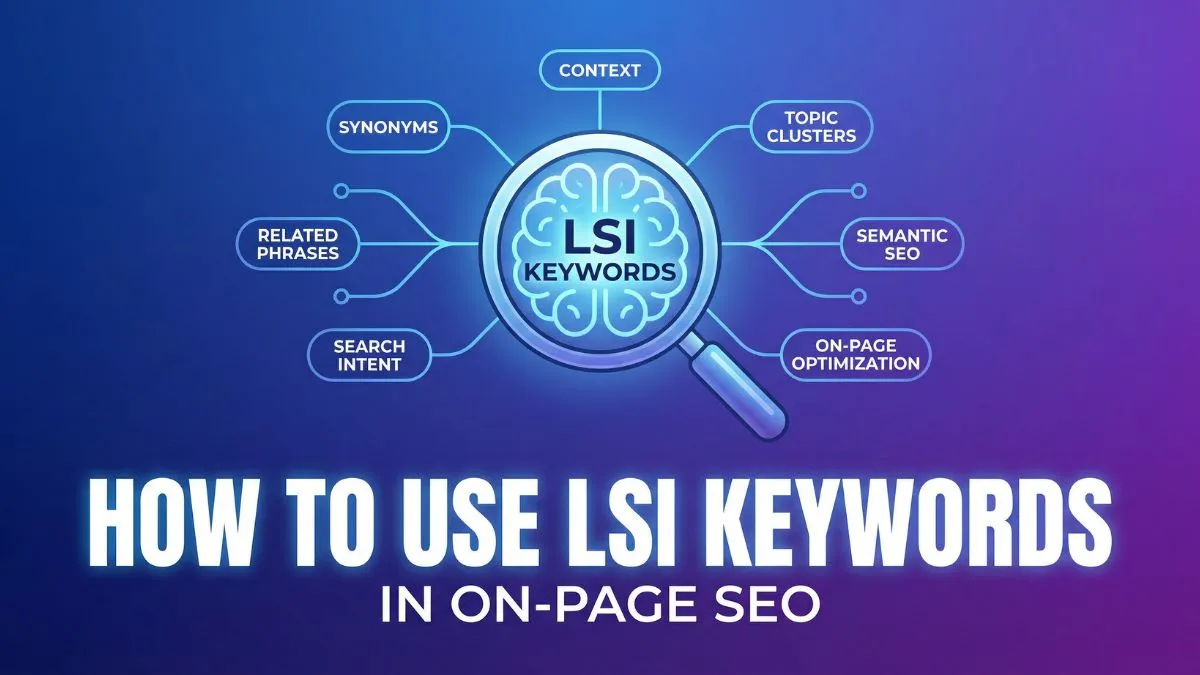
How to Use LSI Keywords in On-Page SEO

How to Use LSI Keywords in On-Page SEO: The Complete Guide to Semantic Search Optimization
In the ever-evolving landscape of search engine optimization, understanding and implementing LSI (Latent Semantic Indexing) keywords has become crucial for achieving higher rankings. This comprehensive guide will walk you through everything you need to know about using LSI keywords effectively in your on-page SEO strategy.
What Are LSI Keywords and Why Do They Matter?
LSI keywords are terms and phrases that are semantically related to your main keyword. They help search engines understand the context and relevance of your content beyond simple keyword matching. When Google crawls your page, it doesn't just look for exact keyword matches—it analyzes the entire semantic structure of your content.
For example, if your primary keyword is "apple," LSI keywords help Google determine whether you're writing about the fruit (with related terms like "nutrition," "orchard," "harvest") or the technology company (with related terms like "iPhone," "MacBook," "iOS").
The importance of LSI keywords in modern SEO cannot be overstated. Search engines have become increasingly sophisticated, moving away from simple keyword density calculations toward understanding user intent and content relevance. By incorporating LSI keywords naturally into your content, you signal to search engines that your page provides comprehensive, contextually relevant information.
The Evolution of Search: From Keywords to Context
Search engines have undergone a massive transformation over the past decade. Google's algorithms, particularly updates like Hummingbird, RankBrain, and BERT, have shifted focus from exact-match keywords to semantic understanding. This evolution means that technical SEO strategies must now account for contextual relevance and user intent.
Traditional keyword stuffing not only fails to improve rankings but can actively harm your site's performance. Modern SEO best practices emphasize natural language, comprehensive coverage of topics, and semantic relationships between concepts.
How to Find LSI Keywords: Proven Research Methods
Finding the right LSI keywords requires a combination of tools, techniques, and strategic thinking. Here are the most effective methods to discover LSI keywords for your content:
Method 1: Google's Auto-Suggest Feature
Start typing your main keyword into Google's search bar and observe the suggestions that appear. These auto-complete suggestions are based on real user queries and represent semantically related terms that people are actively searching for.
Method 2: Related Searches at the Bottom of SERPs
After performing a Google search, scroll to the bottom of the results page. The "Related searches" section provides valuable LSI keyword suggestions that Google considers relevant to your primary keyword.
Method 3: Google's "People Also Ask" Boxes
These expandable question boxes contain queries that users commonly ask related to your topic. Each question represents an opportunity to incorporate LSI keywords and address user intent comprehensively.
Method 4: Competitor Analysis
Analyze the top-ranking pages for your target keyword using a website SEO score checker. Examine their content structure, subheadings, and the semantic terms they use throughout their articles.
Method 5: Advanced Keyword Research Tools
While manual methods are effective, professional keyword research tools can accelerate the process and provide more comprehensive LSI keyword suggestions. These tools analyze search patterns, semantic relationships, and competitive landscapes to surface valuable keyword opportunities.
Strategic Placement of LSI Keywords in Your Content
Understanding where to place LSI keywords is as important as finding them. Strategic placement ensures that search engines can properly index and understand your content's context while maintaining natural readability for human visitors.
Title Tags and Meta Descriptions
Your title tag remains one of the most important on-page SEO elements. While your primary keyword should appear in the title, incorporating one or two LSI keywords can enhance relevance. Use a meta tag generator to craft compelling titles that include both primary and LSI keywords naturally.
Meta descriptions, while not a direct ranking factor, influence click-through rates. Including LSI keywords in meta descriptions can make your listing more relevant to varied search queries, improving visibility across multiple search terms.
Header Tags (H1, H2, H3)
Header tags create a hierarchical structure that helps both users and search engines understand your content organization. Distribute LSI keywords naturally across your H2 and H3 subheadings. This approach aligns with advanced SEO settings that emphasize content structure.
For instance, if your main keyword is "website optimization," your H2 headers might include LSI terms like "page load speed," "mobile responsiveness," and "user experience metrics."
Introduction and Opening Paragraphs
The opening 100-150 words of your content carry significant weight. Include your primary keyword early, but also weave in 2-3 LSI keywords naturally. This establishes topical relevance from the outset and helps search engines quickly understand your content's focus.
Body Content Distribution
Throughout your main content, aim for a natural distribution of LSI keywords. Rather than forcing keywords into every paragraph, focus on comprehensive topic coverage. When you thoroughly address a subject, LSI keywords will naturally emerge in your writing.
Image Alt Text and File Names
Images provide additional opportunities for LSI keyword inclusion. Use descriptive, keyword-rich file names and alt text that incorporate LSI terms. An image compressor can help optimize your images for faster loading while maintaining quality, which is crucial for both SEO and user experience.
URL Structure
Clean, descriptive URLs that include relevant keywords perform better in search results. While your primary keyword should appear in the URL, you can sometimes incorporate LSI keywords naturally. Keep URLs concise and readable, avoiding unnecessary parameters or numbers.
Creating Content Depth with LSI Keywords
LSI keywords aren't just about sprinkling related terms throughout your text—they're about creating comprehensive, authoritative content that fully addresses a topic. This approach aligns with proven SEO strategies that prioritize content quality and depth.
Topic Clustering and Content Hubs
Organize your content into topic clusters, with a pillar page covering the main topic broadly and supporting pages diving deep into specific subtopics. LSI keywords help you identify these subtopics and create a cohesive internal linking structure.
For example, a pillar page about "website performance" might link to supporting articles about page load optimization, Core Web Vitals, and mobile optimization.
Answering User Intent
Modern SEO is fundamentally about matching user intent. LSI keywords help you understand the questions, concerns, and information needs surrounding your main topic. By addressing these comprehensively, you create content that satisfies both users and search engines.
Use tools like SERP checkers to analyze what type of content currently ranks for your target keywords. Are top results informational guides, product pages, or comparison articles? This insight helps you craft content that matches search intent.
Avoiding Over-Optimization
While LSI keywords are valuable, over-optimization remains a risk. Focus on natural, user-friendly writing rather than keyword density targets. If your content reads awkwardly or feels forced, you've likely crossed into over-optimization territory.
Google's algorithms are sophisticated enough to recognize unnatural keyword stuffing, even with LSI keywords. The best approach is to write for humans first, ensuring your content is informative, engaging, and valuable, while naturally incorporating relevant terms.
Technical Implementation of LSI Keywords
Beyond content creation, technical SEO elements play a crucial role in how search engines interpret and rank your pages. Understanding these technical aspects helps you maximize the impact of your LSI keyword strategy.
Schema Markup and Structured Data
Implementing schema markup helps search engines understand your content's context and relationships. While schema doesn't directly use LSI keywords, it reinforces the semantic signals you're sending through your content. Properly structured data can enhance your search listings with rich snippets, improving visibility and click-through rates.
Internal Linking Strategy
Internal links are among the most powerful yet underutilized SEO tools. When building internal links, use anchor text that includes LSI keywords naturally. This practice strengthens the semantic relationships between your pages and helps search engines understand your site's topical structure.
For instance, when discussing website performance issues, you might link to articles about reducing bounce rate or fixing crawl errors using descriptive anchor text that includes relevant LSI terms.
Page Speed and User Experience
Technical performance directly impacts SEO success. Use tools like a mobile-friendly test and GZIP compression checker to ensure your pages load quickly and provide excellent user experience. While not directly related to LSI keywords, page speed affects how much content users consume and how search engines perceive your site's quality.
XML Sitemap Optimization
Your XML sitemap helps search engines discover and index your content efficiently. Generate a comprehensive sitemap using an XML sitemap generator that includes all your important pages. Proper sitemap structure supports the semantic relationships you're building through LSI keywords.
Measuring LSI Keyword Success
Implementing LSI keywords is only half the battle—measuring their impact is equally important. Here's how to track the effectiveness of your semantic optimization efforts:
Tracking Keyword Rankings
Monitor rankings not just for your primary keywords but also for LSI terms and long-tail variations. Tools that track keyword rankings across search engines help you understand which semantic terms are driving visibility and traffic.
Analyzing Organic Traffic Patterns
Examine your organic traffic sources to identify which LSI keywords are bringing visitors to your site. Google Search Console provides valuable data about the search queries that trigger your pages in search results. Look for patterns in these queries to identify successful LSI keyword implementations.
User Engagement Metrics
Beyond rankings, analyze how visitors interact with your content. Metrics like time on page, bounce rate, and pages per session indicate whether your content satisfies user intent. High engagement suggests that your LSI keyword strategy is attracting the right audience and meeting their needs.
Conversion Tracking
Ultimately, SEO success is measured by conversions—whether that's sales, sign-ups, downloads, or other goal completions. Track which pages and keywords drive the most valuable traffic. This data helps you refine your LSI keyword strategy to focus on terms that attract qualified, conversion-ready visitors.
Competitive Analysis
Regularly analyze how your competitors are using LSI keywords. Tools that perform domain analysis and competitive research can reveal opportunities you're missing. If competitors are ranking for valuable LSI terms that you're not targeting, adjust your content strategy accordingly.
Common LSI Keyword Mistakes to Avoid
Even experienced SEO professionals can make mistakes when implementing LSI keywords. Avoiding these common pitfalls will help ensure your strategy succeeds:
Mistake 1: Forcing Unnatural Language
The biggest mistake is sacrificing readability for keyword inclusion. If an LSI keyword doesn't fit naturally into your content, don't force it. Search engines value user experience above keyword optimization, and awkward, forced language will hurt your rankings rather than help them.
Mistake 2: Ignoring User Intent
LSI keywords should align with what users actually want when they search. Using semantically related terms that don't match search intent will increase bounce rates and reduce engagement. Always prioritize relevance and user needs over pure semantic relationships.
Mistake 3: Neglecting Long-Tail Variations
Many marketers focus solely on high-volume keywords while overlooking valuable long-tail variations. LSI keywords often include these longer, more specific phrases that can drive highly targeted traffic with less competition. Use a related keywords finder to discover these opportunities.
Mistake 4: Inconsistent Implementation
Sporadic use of LSI keywords across your site creates mixed signals for search engines. Develop a comprehensive strategy that consistently applies LSI keyword principles across all your content. This creates a stronger, more cohesive topical authority.
Mistake 5: Failing to Update Content
Search trends and user behavior evolve constantly. Content that performed well last year may need refreshing to maintain rankings. Regularly audit your website to identify pages that need LSI keyword updates or content expansion.
Advanced LSI Keyword Strategies
Once you've mastered the basics, these advanced strategies can further enhance your SEO performance:
Semantic Content Expansion
Rather than creating isolated articles, develop comprehensive content hubs that exhaustively cover topics. Each hub page should target a primary keyword with supporting pages addressing LSI terms and related subtopics. This structure builds topical authority and captures more organic traffic.
Voice Search Optimization
Voice search queries tend to be longer and more conversational than typed searches. LSI keywords help you optimize for these natural language queries. Consider the questions people might ask voice assistants and incorporate relevant LSI terms that match these conversational patterns.
Entity-Based SEO
Modern search algorithms understand entities (people, places, things, concepts) and their relationships. LSI keywords help you build content around these entity relationships. For instance, if writing about "content marketing," LSI keywords might include related entities like "blog posts," "social media," "lead generation," and "email marketing."
Multilingual LSI Strategies
If your site targets multiple languages or regions, understand that LSI keywords vary by language and culture. Direct translations often miss important semantic nuances. Research LSI keywords specifically for each target market to ensure cultural and linguistic relevance.
Video and Multimedia SEO
LSI keywords aren't limited to text content. Video transcripts, image captions, and multimedia content should all incorporate relevant semantic terms. This comprehensive approach ensures your entire content library is optimized for semantic search.
Integrating LSI Keywords with Content Marketing
LSI keywords should inform your entire content marketing strategy, not just individual pieces:
Content Calendar Planning
Use LSI keyword research to develop a strategic content calendar that systematically addresses all aspects of your main topics. This ensures comprehensive coverage and helps you avoid content gaps that competitors might exploit.
Content Repurposing
Transform existing content into different formats while maintaining LSI keyword optimization. A comprehensive blog post can become a video script, infographic, podcast episode, or social media series—each optimized with relevant semantic terms for its platform.
Guest Posting and Outreach
When guest posting or conducting outreach, use LSI keywords to identify relevant sites and publications. Look for platforms that already rank for terms semantically related to your content topics, as these audiences are more likely to engage with your material.
Social Media Optimization
While social signals aren't direct ranking factors, social media helps distribute content and generate engagement signals. Use LSI keywords in social media posts, hashtags, and descriptions to reach audiences interested in related topics.
The Future of LSI Keywords and Semantic SEO
The role of LSI keywords will continue evolving as search technology advances:
AI and Machine Learning
Search engines increasingly use artificial intelligence and machine learning to understand content. These technologies go beyond simple LSI keyword matching to comprehend context, sentiment, and user intent at deeper levels. Future SEO strategies must account for these sophisticated capabilities.
Natural Language Processing Advances
As natural language processing improves, search engines better understand conversational queries and nuanced language. LSI keyword strategies must adapt to prioritize natural, conversational content that matches how people actually speak and think about topics.
Personalization and Context
Search results are increasingly personalized based on user history, location, and behavior. LSI keywords help ensure your content appears across various personalized contexts by covering topics comprehensively and addressing diverse user needs.
Zero-Click Searches
Featured snippets and other SERP features mean users increasingly find answers without clicking through to websites. Optimizing for zero-click SEO requires understanding LSI keywords that trigger these features and structuring content accordingly.
Practical LSI Keyword Implementation Checklist
Here's a practical checklist to implement LSI keywords effectively:
Research Phase
- Identify primary target keywords
- Use Google auto-suggest and related searches
- Analyze competitor content
- Document 15-20 LSI keywords per topic
- Prioritize LSI terms by search volume and relevance
Content Planning Phase
- Create detailed content outlines incorporating LSI terms
- Plan header structure with natural LSI keyword inclusion
- Identify internal linking opportunities
- Plan supporting visual content
- Map user intent to content sections
Content Creation Phase
- Write naturally, focusing on comprehensive topic coverage
- Include primary keyword in the first 100 words
- Distribute LSI keywords naturally throughout content
- Use LSI terms in headers where appropriate
- Optimize images with LSI keyword-rich alt text
Technical Optimization Phase
- Implement schema markup
- Optimize URL structure
- Configure internal links with descriptive anchor text
- Ensure mobile responsiveness using a mobile-friendly test
- Verify page speed with performance tools
Quality Assurance Phase
- Read content aloud to check natural flow
- Verify all links work properly using a broken link checker
- Test across devices and browsers
- Confirm schema markup is error-free
- Check all images display correctly
Monitoring Phase
- Track rankings for primary and LSI keywords
- Monitor organic traffic and engagement metrics
- Analyze which LSI terms drive conversions
- Identify content gaps and opportunities
- Schedule regular content audits and updates
Case Studies: LSI Keywords in Action
Understanding theoretical concepts is valuable, but real-world examples demonstrate how LSI keywords drive measurable results:
Case Study 1: E-commerce Product Pages
An online retailer selling kitchen appliances implemented LSI keywords across their product pages. Instead of just targeting "stand mixer," they incorporated related terms like "dough hook," "planetary mixing action," "batch baking," and "bread making." This semantic expansion helped their pages rank for dozens of related queries, increasing organic traffic by 156% over six months.
Case Study 2: B2B SaaS Blog
A software company targeting "project management tools" expanded their content strategy to include LSI keywords like "team collaboration," "task tracking," "workflow automation," and "resource allocation." By creating comprehensive content addressing these related concepts, they established topical authority and improved their main keyword ranking from page 3 to position 4 on page 1.
Case Study 3: Local Service Business
A plumbing company optimized their website with LSI keywords related to their services. For "emergency plumbing," they incorporated terms like "burst pipes," "water damage prevention," "24-hour service," and "leak detection." This semantic optimization improved their visibility for numerous local searches and increased qualified leads by 89%.
Tools and Resources for LSI Keyword Research
While manual research methods are valuable, leveraging the right tools accelerates the process and uncovers opportunities you might otherwise miss:
Free Tools
- Google Search Console: Reveals actual search queries driving traffic to your site
- Google Trends: Shows seasonal patterns and related topics
- Answer the Public: Generates question-based keywords around your topic
- Google's Related Searches: Provides immediate LSI keyword suggestions
Website Analysis Tools
Use comprehensive SEO checker tools to analyze how well your pages are optimized. A thorough website SEO score checker evaluates multiple factors including keyword usage, content depth, and technical optimization.
Content Optimization Tools
Several platforms analyze your content and suggest LSI keywords based on top-ranking competitors. These tools help ensure you're covering topics as comprehensively as successful pages while identifying gaps in your content.
Technical SEO Tools
Don't overlook technical aspects that support your LSI keyword strategy. Tools like robots.txt checkers and HTTP header analyzers ensure search engines can properly crawl and index your optimized content.
Industry-Specific LSI Keyword Strategies
Different industries require tailored approaches to LSI keyword implementation:
E-commerce and Retail
E-commerce sites should focus on product-related LSI keywords including materials, features, uses, and comparisons. Include terms related to shopping behavior like "free shipping," "customer reviews," and "return policy" naturally within product descriptions and category pages.
Healthcare and Medical
Medical content requires careful LSI keyword implementation that maintains accuracy while covering symptoms, treatments, and related conditions. Always prioritize authoritative, evidence-based content and avoid keywords that might promote misinformation.
Finance and Banking
Financial sites should incorporate LSI keywords related to specific financial products, terms, and concepts. Terms like "interest rates," "credit scores," "investment returns," and "financial planning" help search engines understand the specific financial topics you're addressing.
Technology and Software
Tech content benefits from LSI keywords covering features, use cases, integrations, and technical specifications. Include terms related to programming languages, platforms, and development processes relevant to your specific technology.
Education and Training
Educational content should incorporate LSI keywords related to learning objectives, skill development, certification, and career advancement. Terms like "course curriculum," "learning outcomes," and "practical applications" strengthen semantic relevance.
Mobile Optimization and LSI Keywords
With mobile-first indexing, optimizing LSI keyword implementation for mobile devices is essential:
Mobile User Behavior
Mobile users often search differently than desktop users, using shorter queries and voice commands. Your LSI keyword strategy should account for these mobile-specific search patterns. Consider how users might phrase queries when speaking versus typing.
Page Speed Considerations
Mobile users expect fast-loading pages. Use tools to check GZIP compression and implement speed optimization techniques that don't sacrifice content quality. Fast pages rank better and keep users engaged long enough to benefit from your comprehensive LSI keyword coverage.
Mobile-Friendly Content Structure
Format content for easy mobile consumption with short paragraphs, clear headers, and scannable sections. Your LSI keywords should appear in headers and throughout content in ways that make sense to users scrolling quickly on mobile devices.
Local SEO and LSI Keywords
For businesses targeting local markets, LSI keywords take on additional dimensions:
Geographic Modifiers
Incorporate location-specific LSI keywords naturally throughout your content. Instead of just "pizza delivery," use terms like "neighborhood pizza delivery," "local restaurants," and "same-day delivery" combined with geographic indicators.
Local Intent Signals
Understand the local intent behind searches. Terms like "near me," "open now," "directions," and "phone number" are LSI keywords that signal local intent. Structure your content and technical SEO elements to capture these searches.
Local Business Categories
Include LSI keywords related to your business category and the services you provide. A dental practice might incorporate terms like "teeth cleaning," "dental exam," "emergency dentist," and "cosmetic dentistry" to capture various local search intents.
Content Updates and LSI Keyword Maintenance
SEO isn't a one-time effort—maintaining and updating content is crucial for sustained success:
Regular Content Audits
Conduct quarterly audits using a comprehensive SEO audit checklist to identify pages that need LSI keyword updates. Search trends evolve, and pages that once ranked well may need refreshing to maintain positions.
Identifying Decay Signals
Watch for ranking declines, traffic drops, or decreased engagement as signs that content needs updating. These signals often indicate that competitor content has surpassed yours or that search intent has shifted.
Strategic Content Expansion
Rather than complete rewrites, strategically expand existing content with new sections addressing emerging LSI keywords and related topics. This approach preserves existing rankings while enhancing comprehensiveness.
Historical Optimization
For evergreen content, update statistics, examples, and references while maintaining core LSI keyword optimization. This "historical optimization" refreshes content without starting from scratch.
Frequently Asked Questions
1. What exactly are LSI keywords and how do they differ from regular keywords?
LSI (Latent Semantic Indexing) keywords are terms and phrases that are conceptually related to your primary keyword. Unlike synonyms, LSI keywords encompass the broader context and related concepts that naturally appear when discussing a topic. For example, if your main keyword is "coffee," LSI keywords might include "caffeine," "beans," "brewing," "espresso," and "roasting." Regular keywords are the specific terms you're targeting, while LSI keywords are the supporting semantic terms that help search engines understand your content's full context.
2. How many LSI keywords should I include in a single piece of content?
There's no magic number, but quality matters more than quantity. Focus on natural, comprehensive coverage of your topic rather than hitting a specific LSI keyword count. A 2,000-word article might naturally incorporate 15-25 LSI keywords, while a 500-word page might include 5-8. The key is ensuring your content thoroughly addresses the topic, which will naturally result in appropriate LSI keyword usage. Avoid forcing keywords—if your content feels unnatural or repetitive, you've likely overdone it.
3. Can I rank well without using LSI keywords?
While it's technically possible to rank without explicitly targeting LSI keywords, it's increasingly difficult and limits your visibility potential. Modern search algorithms evaluate content comprehensiveness and contextual relevance—factors that LSI keywords help demonstrate. Pages that thoroughly cover topics with appropriate semantic terms consistently outperform thin content targeting only primary keywords. Implementing a proper SEO strategy that includes LSI keywords gives you a significant competitive advantage.
4. Do LSI keywords affect keyword density calculations?
Keyword density as a metric has largely become obsolete in modern SEO. Search engines no longer rely on simple density calculations but instead evaluate semantic relevance and context. LSI keywords actually help you avoid over-optimization of your primary keyword by allowing you to discuss your topic using varied, natural language. Focus on comprehensive, valuable content rather than hitting specific density targets.
5. How do I know if I'm using too many LSI keywords?
If your content sounds unnatural, forced, or repetitive, you're likely overusing LSI keywords. Read your content aloud—it should flow naturally and provide value to readers first and foremost. Another warning sign is if you're incorporating LSI keywords that don't genuinely relate to your specific content angle or if you're sacrificing clarity to include more semantic terms. Use tools that analyze SEO performance to get objective feedback on your optimization levels.
6. Are LSI keywords the same across different languages?
No, LSI keywords are language and culture-specific. Direct translation rarely captures the appropriate semantic relationships in different languages. When optimizing content for multiple languages, research LSI keywords specifically for each target language and market. Cultural context significantly influences which terms are semantically related, so always conduct localized keyword research.
7. How do LSI keywords relate to search intent?
LSI keywords help you address multiple aspects of search intent by covering related topics and questions users might have. When you incorporate appropriate LSI keywords, you naturally create more comprehensive content that satisfies informational, navigational, commercial, and transactional intents related to your main topic. This comprehensive coverage improves your chances of ranking for a broader range of related queries.
8. Should I use different LSI keywords for different pages on my site?
Yes, each page should target a specific primary keyword with its own set of relevant LSI keywords, though some overlap is natural and even beneficial. This approach helps you build topical authority across your site while avoiding internal competition. Create a content mapping strategy that assigns specific keyword clusters to appropriate pages based on search intent and user journey stage.
9. How often should I update my LSI keyword strategy?
Review and update your LSI keyword strategy quarterly at minimum, or more frequently for rapidly changing industries. Monitor your rankings, traffic patterns, and competitor content regularly. When you notice ranking declines or new competitors entering your space, conduct fresh LSI keyword research to identify gaps and opportunities. Staying current with SEO trends helps ensure your LSI keyword strategy remains effective.
10. Can I use the same LSI keywords for blog posts and product pages?
While some LSI keywords may overlap, blog posts and product pages typically serve different purposes and should use LSI keywords appropriate to their intent. Product pages should include LSI keywords related to features, specifications, and purchasing decisions, while blog posts should incorporate terms related to problems, solutions, and educational content. This differentiation helps search engines understand each page's specific purpose and match it with appropriate queries.
11. How do LSI keywords impact voice search optimization?
Voice search queries tend to be longer and more conversational, making LSI keywords particularly valuable. Voice searchers often ask complete questions using natural language, which inherently includes many LSI terms. By incorporating conversational LSI keywords and question-based phrases, you optimize for both traditional and voice search simultaneously. Focus on long-tail variations and natural language patterns that match how people actually speak.
12. Do LSI keywords help with featured snippets?
Yes, LSI keywords significantly improve your chances of earning featured snippets. Featured snippets typically aim to comprehensively answer questions, and incorporating relevant LSI keywords demonstrates that your content thoroughly addresses the topic. Structure your content with clear headers, concise answers, and comprehensive coverage using appropriate semantic terms to maximize featured snippet opportunities.
13. How do I balance LSI keywords with user experience?
Always prioritize user experience over keyword optimization. Write naturally and focus on providing genuine value, allowing LSI keywords to emerge organically as you thoroughly cover your topic. If you must choose between including an LSI keyword and maintaining readability, choose readability every time. Search engines increasingly prioritize user engagement metrics, which depend on quality content rather than keyword density.
14. Can too much focus on LSI keywords hurt my rankings?
Yes, over-optimization with LSI keywords can trigger quality filters or simply create poor user experience that leads to high bounce rates. Search engines recognize unnatural keyword stuffing even with semantically related terms. The most common SEO mistakes include over-optimization, so maintain balance and focus on natural, valuable content creation.
15. How do LSI keywords relate to topic clusters and pillar pages?
LSI keywords help you identify subtopics for supporting cluster content around pillar pages. Your pillar page should broadly cover a topic using a variety of LSI keywords, while cluster pages dive deep into specific LSI terms. This structure builds comprehensive topical authority and creates natural internal linking opportunities using semantic anchor text.
16. Should I include LSI keywords in my URL structure?
While URLs should be descriptive and user-friendly, avoid stuffing them with LSI keywords. Include your primary keyword in the URL when possible, but keep it concise and readable. URLs like "example.com/coffee-brewing-methods" work better than "example.com/coffee-brewing-methods-beans-grind-temperature-water." Use LSI keywords throughout your content and internal linking strategy rather than cramming them into URLs.
17. How do LSI keywords work with schema markup?
Schema markup and LSI keywords complement each other by providing search engines with both structured data and semantic context. While schema tells search engines what entities and relationships exist on your page, LSI keywords in your content provide the semantic signals that support this structured data. Together, they create a comprehensive picture of your content's meaning and relevance.
18. Do LSI keywords matter for image SEO?
Absolutely. Image file names, alt text, captions, and surrounding content should all incorporate relevant LSI keywords naturally. This helps search engines understand image context and improves visibility in image search results. When optimizing images for SEO, use descriptive, keyword-rich file names and alt text that include appropriate semantic terms.
19. How can I verify that my LSI keyword strategy is working?
Monitor rankings for both primary keywords and LSI term variations using rank tracking tools. Check Google Search Console to see which actual queries are driving traffic—if you're ranking for numerous related terms beyond your primary keywords, your LSI strategy is working. Also track engagement metrics like time on page and bounce rate, which indicate whether your comprehensive content satisfies user intent.
20. What's the relationship between LSI keywords and E-E-A-T (Experience, Expertise, Authoritativeness, Trustworthiness)?
LSI keywords help demonstrate expertise and authoritativeness by showing comprehensive topic knowledge. When you naturally incorporate appropriate semantic terms and cover topics thoroughly, you signal expertise to both users and search engines. However, LSI keywords alone don't establish E-E-A-T—you must combine them with credible sources, author credentials, accurate information, and other trust signals. Comprehensive coverage using LSI keywords is one component of establishing topical authority in your niche.
Mastering LSI keywords is essential for modern on-page SEO success. By understanding semantic relationships, creating comprehensive content, and implementing LSI keywords naturally, you can significantly improve your search visibility and rankings.
Remember that LSI keywords aren't about gaming search algorithms—they're about creating genuinely valuable, comprehensive content that thoroughly addresses topics users care about. When you focus on quality, relevance, and user satisfaction, appropriate LSI keyword usage follows naturally.