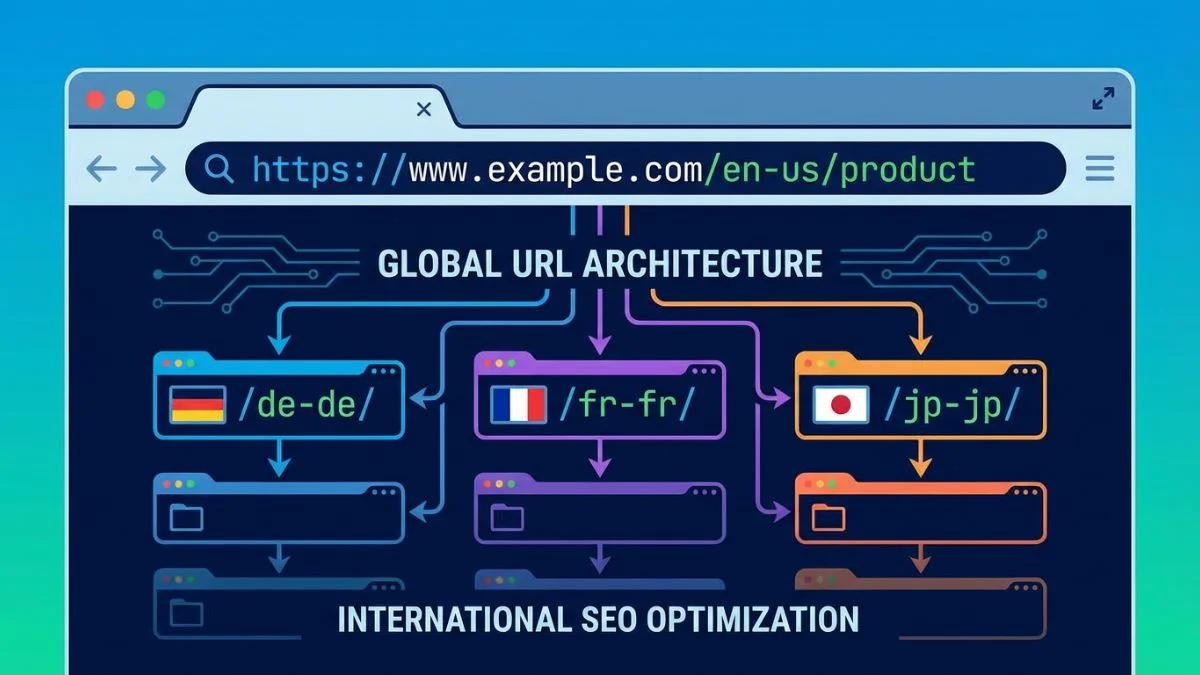
How to Optimize URL Structure for International SEO

How to Optimize URL Structure for International SEO
Build a scalable, search-friendly international architecture that supports multiple countries and languages in 2026.
URL structure is the backbone of international SEO. It determines how search engines understand your geographic targeting, how users trust your site, and how easily you can scale to new markets. If you build it wrong, global SEO becomes expensive, slow, and hard to fix.
This guide shows you how to design an international URL structure that is clear to users, search engines, and your internal team. You will learn how to choose between subfolders, subdomains, and ccTLDs, how to build consistent language paths, how to map hreflang, and how to avoid common architecture mistakes.
Why URL Structure Matters in International SEO
International SEO is about relevance and clarity. Google needs to understand which pages serve which countries and languages. Users need to understand which version is meant for them. A clean URL structure helps both.
- Geo-targeting clarity: URLs indicate country or language.
- Indexing efficiency: Clean paths help crawlers.
- Link equity flow: Centralized structures share authority.
- Analytics segmentation: Easier reporting by folder or domain.
URL Structure Options for Global Websites
| Structure | Example | Best For |
|---|---|---|
| Subfolders | example.com/de/ | Fast scaling, shared authority |
| Subdomains | de.example.com | Separate markets, moderate complexity |
| ccTLDs | example.de | Maximum local trust, large budgets |
Google supports all three structures. The best choice depends on your market priorities and operational capacity. See Google Search Central international SEO for official guidance.
Subfolders: The Default Recommendation
Subfolders are the most efficient option for most businesses. They consolidate authority and simplify analytics. Example: example.com/fr/ for France or example.com/en-gb/ for British English.
Subfolder Best Practices
- Use consistent language or country codes
- Keep URLs short and readable
- Avoid mixing language and country in confusing ways
- Map internal links to the correct locale
Subdomains: The Middle Ground
Subdomains (like de.example.com) can be useful when different teams manage different markets. They provide clear separation but do not share authority as well as subfolders.
ccTLDs: Maximum Local Trust
ccTLDs are the strongest local signal. They often improve trust and click-through rate in certain regions. But they require separate SEO investment for each country. See our full guide: ccTLDs vs subfolders.
Language vs Country URLs: Which Should You Choose?
Decide whether you are targeting countries, languages, or both. The URL should reflect your targeting model.
| Targeting Type | Recommended URL Pattern |
|---|---|
| Language only | example.com/es/ |
| Country only | example.com/uk/ |
| Language + Country | example.com/en-gb/ |
Use ISO Codes Consistently
Use ISO 639-1 for languages (en, fr, es) and ISO 3166-1 for countries (US, GB, DE). This helps hreflang and keeps structure consistent.
Hreflang and URL Structure
Hreflang is essential for international SEO. It tells Google which URL serves which language or region. Every localized URL must have bidirectional hreflang tags.
Use the official hreflang documentation and test with Search Console.
International URL Structure Checklist
- Choose a single structure for all markets
- Use consistent language and country codes
- Implement hreflang across all versions
- Separate content per locale, avoid duplicates
- Use localized keywords in URLs when relevant
- Set up sitemaps per locale
Common Mistakes to Avoid
- Mixing languages and countries randomly
- Using auto-redirects without user choice
- Forgetting hreflang or using incorrect codes
- Duplicating content across locales
- Using inconsistent URL patterns across markets
Tools and Resources
- Google Search Central
- Google Localized Versions
- Moz International SEO
- Ahrefs International SEO Guide
- Semrush International SEO
- Search Engine Journal
- SISTRIX
- Similarweb
- Google Trends
- Cloudflare: TLDs
- W3C Internationalization
- Google Hreflang Overview
- Search Engine Land
- Google Crawlers Overview
- BrightLocal Learning Center
Internal Resources from Bright SEO Tools
- URL Structure Best Practices
- Schema Markup Guide
- On-Page SEO Checklist
- SEO for Beginners
- SEO-Friendly Landing Pages
- Use Keywords Effectively
- Website SEO Score Checker
- Keyword Research Tool
- Content Marketing and SEO
- Improve Content Readability
Frequently Asked Questions
What is the best URL structure for international SEO?
Subfolders are best for most businesses because they share authority and simplify management. ccTLDs are best when local trust is critical and you have resources for each market.
Should I target countries or languages in URLs?
Target languages if your content is shared across countries. Target countries if offerings, pricing, or regulations differ.
Do I need hreflang if I use subfolders?
Yes. Hreflang is needed for any multi-language or multi-region site structure to avoid duplication and mismatched results.
Is it bad to mix subfolders and ccTLDs?
It is possible but complex. Only do this if you have major markets that need ccTLDs and smaller markets that can live in subfolders.
Should URLs be translated?
Yes, when it is natural and consistent. Use localized keywords in URLs, but keep them short and readable.
How do I avoid duplicate content across locales?
Use unique localized copy, proper hreflang, and avoid auto translations without edits.
What is the biggest URL structure mistake?
Inconsistent patterns. Once you choose a structure, apply it across every market.
How do I track performance by locale?
Use Search Console and GA4 segments by directory or hostname. Use separate properties if you operate ccTLDs.
Does URL structure affect indexing speed?
Yes. Cleaner, consistent structures are easier to crawl and often index faster.
Can I change URL structure later?
Yes, but it requires a full migration with redirects, hreflang updates, and careful monitoring. It is better to decide early.