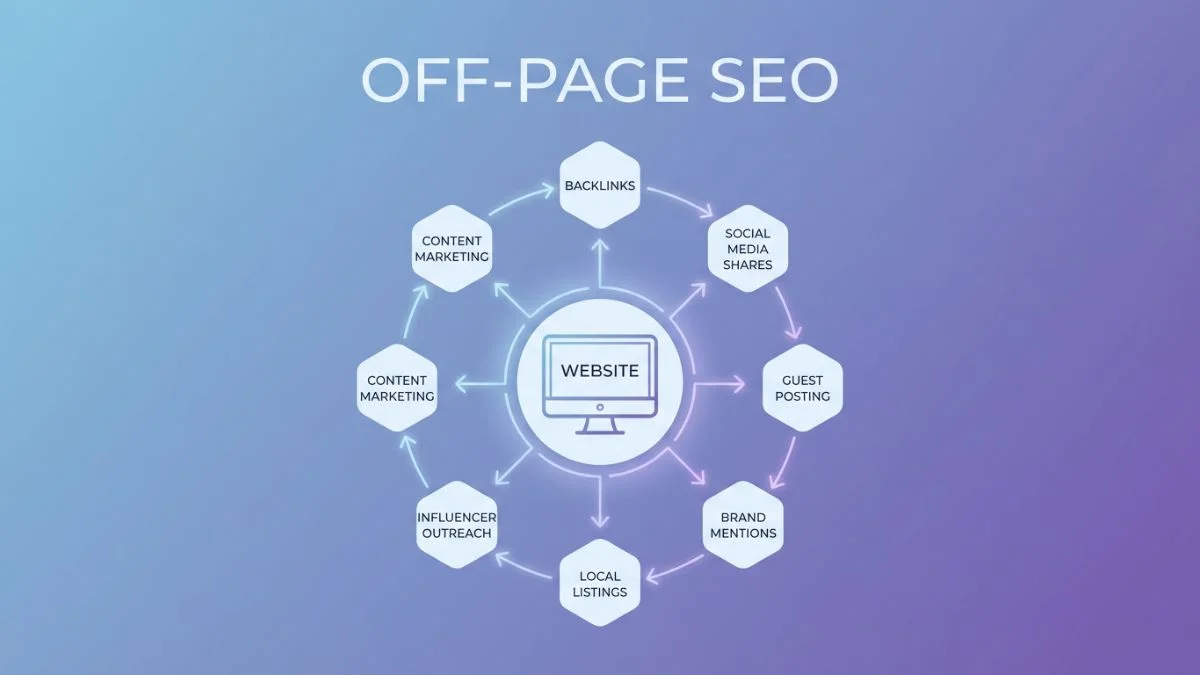
What is Off-Page SEO

What is Off-Page SEO? The Complete Guide to Ranking Higher in 2026
You have spent hours perfecting your website content, fine-tuning title tags, and making sure every image has an alt attribute. Yet your pages sit on page two of Google while competitors with seemingly average content dominate the top spots. What gives?
The answer almost always comes down to off-page SEO. It is the secret weapon that separates sites that merely exist online from those that consistently attract organic traffic month after month. According to a Backlinko study analyzing 11.8 million search results, the number one result on Google has an average of 3.8 times more backlinks than positions two through ten. That single stat reveals exactly how much external authority matters.
In this guide, you will learn exactly what off-page SEO is, why it is critical to your rankings, which strategies actually work in 2026, and how to build an off-page SEO plan that delivers measurable results. Whether you are a beginner or an experienced marketer, this article breaks down everything you need to know.
Quick Info: Off-Page SEO at a Glance
- What it is: SEO activities performed outside your website to improve rankings
- Primary focus: Building backlinks, brand authority, and trust signals
- Key techniques: Link building, social media, PR, influencer outreach, guest posting
- Time to results: Typically 3-6 months for noticeable improvement
- Difficulty level: Moderate to advanced
- Tools you need: BrightSEOTools SEO Checker, Google Search Console, Ahrefs or Moz
Understanding Off-Page SEO: A Clear Definition
Off-page SEO encompasses every action taken outside your own website that influences your rankings within search engine results pages (SERPs). While on-page SEO deals with what happens on your website, off-page SEO is all about building your site's reputation, authority, and trustworthiness across the broader internet.
Think of it this way: on-page SEO is your resume, while off-page SEO is what other people say about you during a reference check. Search engines like Google need external validation to determine whether your site deserves a top ranking. That validation comes in the form of backlinks, brand mentions, social signals, and other off-site factors.
Google's own documentation confirms that its algorithms analyze "the number and quality of other websites that link to the page" when determining search rankings. Off-page SEO is how you earn those votes of confidence.
Why Off-Page SEO Matters More Than Ever in 2026
Search engine algorithms have grown remarkably sophisticated. Google now processes trillions of searches per year and uses hundreds of ranking signals. Yet even with advances in AI-powered search and natural language understanding, off-page signals remain a cornerstone of how Google decides which pages deserve the top spots.
Here is why off-page SEO matters so much right now:
1. Backlinks Remain a Top Ranking Factor
Ahrefs research shows a clear correlation between the number of referring domains pointing to a page and its organic search traffic. Pages with zero backlinks account for over 90% of all web pages that receive no traffic from Google. Without external links pointing to your content, ranking for competitive terms is nearly impossible.
2. E-E-A-T Depends on Off-Page Signals
Google's E-E-A-T guidelines (Experience, Expertise, Authoritativeness, Trustworthiness) rely heavily on off-page signals. When authoritative sites in your industry link to your content or mention your brand, it signals to Google that you are a trusted voice. The Search Quality Evaluator Guidelines specifically instruct human raters to assess a site's reputation based on external sources.
3. Competition Is Fierce
According to Internet Live Stats, there are over 1.9 billion websites on the internet. With every niche becoming more crowded, the sites that invest in off-page SEO are the ones that stand out. A well-developed SEO strategy must include off-page elements to compete effectively.
4. Brand Signals Are Growing in Importance
Google has increasingly favored brands in search results. Moz's analysis found that brand searches, brand mentions, and branded anchor text all correlate strongly with higher rankings. Off-page SEO is the primary way you build brand recognition across the web.
On-Page SEO vs. Off-Page SEO: A Side-by-Side Comparison
| Factor | On-Page SEO | Off-Page SEO |
|---|---|---|
| Location | Within your website | Outside your website |
| Control Level | Full control | Limited direct control |
| Key Activities | Content optimization, meta tags, internal linking, site speed | Link building, social media, PR, brand mentions, influencer outreach |
| Time to Impact | Days to weeks | Weeks to months |
| Primary Goal | Make content relevant and crawlable | Build authority and trust |
| Tools Needed | SEO Score Checker, Google Search Console | Backlink Checkers, Ahrefs, Moz |
| Difficulty | Beginner-friendly | Intermediate to advanced |
The Core Components of Off-Page SEO
Off-page SEO is not just about backlinks. While link building is the most well-known tactic, a comprehensive off-page strategy includes multiple components that work together to build your site's authority. Let us break them down.
1. Link Building (Backlinks)
Backlinks are the backbone of off-page SEO. Every link from another website to yours acts as a vote of confidence. However, not all links are created equal. A single link from The New York Times carries far more weight than 100 links from unknown blogs.
The key metrics that determine a backlink's value include:
- Domain Authority (DA): A score developed by Moz that predicts how well a website will rank. Higher DA means a more powerful link.
- Relevance: Links from sites in your niche carry more weight than links from unrelated sites.
- Anchor Text: The clickable text of the link should be natural and relevant to the linked page.
- Link Placement: Links placed within the body of content (editorial links) are more valuable than footer or sidebar links.
- Follow vs. Nofollow: While nofollow links pass less direct ranking value, they still contribute to a natural backlink profile.
Use free backlink checker tools to analyze your current link profile and identify opportunities for improvement.
2. Brand Mentions and Citations
When other websites mention your brand without linking to you, Google still recognizes this as a trust signal. These are called "implied links." A Google patent specifically describes the concept of using unlinked brand mentions as a ranking signal.
Building brand mentions involves getting your company name, products, or services mentioned on news sites, industry blogs, forums, and social media. Tools like Google Alerts and Mention.com help you track where your brand is being discussed online.
3. Social Media Signals
While Search Engine Journal reports that Google has stated social signals are not a direct ranking factor, the indirect benefits are undeniable. Active social media profiles increase content distribution, build brand awareness, and create opportunities for earning natural backlinks.
Platforms like LinkedIn, X (formerly Twitter), and Facebook can amplify your content to audiences who may link to it from their own sites. A solid social presence also strengthens your overall digital marketing strategy.
4. Guest Blogging
Writing articles for reputable websites in your niche is one of the most effective ways to build quality backlinks and establish thought leadership. The key is to target sites that have genuine audiences and editorial standards. Neil Patel's guide on guest blogging provides a thorough framework for finding and pitching guest post opportunities.
When done correctly, a single guest post on a high-authority site can send referral traffic and pass significant link equity to your website.
5. Influencer Outreach and Collaborations
Partnering with influencers in your industry can earn you high-quality mentions, links, and exposure to new audiences. According to Influencer Marketing Hub, businesses earn an average of $5.78 for every dollar spent on influencer marketing, and the SEO benefits can be equally impressive.
6. Digital PR
Digital PR involves getting your brand featured in online publications, news sites, and media outlets. This generates high-authority backlinks that are extremely difficult to replicate through other methods. Tools like HARO (Help a Reporter Out) connect you with journalists looking for expert sources.
A well-executed PR strategy can land links from major outlets like Forbes, Entrepreneur, and Inc.com, dramatically boosting your domain authority.
7. Forum and Community Participation
Engaging in online communities like Reddit, Quora, and niche-specific forums builds your authority while driving targeted traffic. The key is to provide genuine value rather than dropping links. When people find your contributions helpful, they naturally visit your site and share your content.
8. Content Marketing and Linkable Assets
Creating content so valuable that other sites cannot help but link to it is the holy grail of off-page SEO. Linkable assets include original research, comprehensive guides, infographics, free tools, and data-driven studies. BuzzSumo can help you identify what types of content earn the most links and shares in your industry.
Off-Page SEO Strategies: Effectiveness vs. Difficulty
Strategy Effectiveness Chart
| Strategy | Effectiveness | Difficulty | Time to Results |
|---|---|---|---|
| High-Quality Guest Blogging | ★★★★★ | Medium | 1-3 months |
| Digital PR / HARO | ★★★★★ | High | 1-6 months |
| Linkable Assets / Original Research | ★★★★★ | High | 2-6 months |
| Broken Link Building | ★★★★ | Medium | 1-3 months |
| Social Media Engagement | ★★★ | Low | 1-3 months |
| Influencer Outreach | ★★★★ | Medium | 1-4 months |
| Forum / Community Participation | ★★★ | Low | 2-4 months |
| Podcast Appearances | ★★★★ | Medium | 1-3 months |
How Google Evaluates Off-Page SEO Signals
Understanding how Google processes off-page signals helps you prioritize the right activities. Google's ranking algorithm, powered by systems like BERT and the AI-driven Search Generative Experience, evaluates off-page factors through multiple lenses:
- Link Quality Over Quantity: Google's PageRank algorithm (though now one of many signals) still values the quality and relevance of linking pages over sheer volume.
- Link Velocity: The rate at which you acquire new backlinks matters. A natural growth pattern looks different from a sudden spike of links, which can trigger spam filters.
- Anchor Text Distribution: An unnatural concentration of exact-match anchor text can signal manipulation. A healthy profile includes branded, naked URL, and natural language anchors.
- Linking Domain Diversity: Links from many different domains carry more weight than multiple links from the same domain.
- Topical Relevance: Google's algorithms, including the Helpful Content system, evaluate whether linking sites are topically relevant to your content.
Step-by-Step Off-Page SEO Strategy for 2026
Here is a practical, actionable framework you can follow to build your off-page SEO from scratch or improve an existing strategy.
Step 1: Audit Your Current Off-Page SEO Profile
Before building new links, you need to understand your starting point. Use BrightSEOTools' SEO Score Checker to assess your overall site health, and check your backlink profile using free tools. Pay attention to:
- Total number of referring domains
- Domain authority of linking sites
- Any toxic or spammy backlinks
- Anchor text distribution
- Competitor backlink profiles for comparison
Step 2: Research Competitors' Backlinks
Your competitors' backlink profiles are a goldmine of opportunities. Use tools like Ahrefs Site Explorer or Moz Link Explorer to see who links to your competitors. If a site links to a competitor, there is a good chance they would link to your content too, especially if yours is better.
Step 3: Create Linkable Content
Content that earns links naturally is your most sustainable off-page asset. Focus on creating:
- Original research and data studies: Publishers love citing unique statistics and findings.
- Ultimate guides: Comprehensive resources that become the go-to reference in your niche.
- Free tools and calculators: Interactive content that solves a specific problem for users.
- Infographics: Visual content that is easy to share and embed. Canva and Piktochart make creating professional infographics simple.
Make sure your content is optimized for on-page SEO as well. Check your on-page SEO checklist to cover all the fundamentals before promoting content externally.
Step 4: Build Relationships Before Asking for Links
Cold outreach emails with link requests have a notoriously low success rate. Instead, build genuine relationships with site owners, bloggers, and journalists first. Engage with their content on social media, leave thoughtful comments on their blogs, and share their work before ever asking for a link.
Step 5: Execute a Multi-Channel Link Building Campaign
Do not rely on a single tactic. Diversify your approach across multiple channels:
- Guest posting: Pitch 5-10 relevant sites per month.
- Broken link building: Find broken links on authority sites and offer your content as a replacement.
- HARO responses: Answer journalist queries daily to earn editorial links.
- Resource page link building: Find curated resource pages and suggest your content for inclusion.
- Unlinked brand mention outreach: Find sites that mention your brand without linking and request a link.
Step 6: Amplify Through Social Media
Every piece of content you publish should be promoted across your social channels. Buffer and Hootsuite can help you schedule and manage social media promotion at scale.
Engage with your audience, participate in relevant conversations, and build a community around your brand. Social amplification increases the chances of your content being discovered and linked to by others.
Step 7: Monitor, Measure, and Adjust
Track your off-page SEO progress with these key metrics:
- Referring domains growth: Are you gaining new linking domains each month?
- Domain authority trend: Is your DA/DR steadily increasing?
- Organic traffic growth: Use Google Analytics to monitor traffic from organic search.
- Keyword ranking improvements: Track positions for target keywords using keyword position tracker.
- Brand mention frequency: Monitor how often your brand is mentioned across the web.
Use analytics to track your SEO performance and make data-driven adjustments to your strategy.
Common Off-Page SEO Mistakes to Avoid
Off-page SEO done wrong can actually hurt your rankings. Here are the biggest mistakes to watch out for:
Warning: Off-Page SEO Practices That Can Trigger Penalties
- Buying backlinks: Google's spam policies explicitly prohibit paid link schemes. Getting caught can result in a manual action penalty.
- Using private blog networks (PBNs): Google has become exceptionally good at identifying and devaluing PBN links.
- Excessive link exchanges: "Link to me and I'll link to you" arrangements at scale violate Google's guidelines.
- Spamming forums and comments: Dropping links in low-quality forums and blog comments creates toxic backlinks.
- Using automated link building tools: Software that generates backlinks automatically almost always creates spammy, penalizable links.
- Ignoring anchor text diversity: Over-optimized anchor text patterns are a red flag for Google's algorithms.
If you have already accumulated bad backlinks, you need to identify and address these SEO mistakes before they cause lasting damage. Google's Disavow Tool allows you to tell Google to ignore specific toxic backlinks.
Off-Page SEO Tools You Should Be Using
The right tools make off-page SEO significantly more efficient. Here is a list of essential tools for every off-page SEO practitioner:
| Tool | Best For | Price |
|---|---|---|
| BrightSEOTools SEO Checker | Overall SEO health scoring and audits | Free |
| Ahrefs | Backlink analysis and competitor research | From $99/mo |
| Moz Pro | Domain authority tracking and link building | From $99/mo |
| SEMrush | Comprehensive SEO and backlink auditing | From $129/mo |
| BuzzSumo | Content research and influencer identification | From $199/mo |
| Google Alerts | Brand mention monitoring | Free |
| HARO | Journalist outreach for PR links | Free / Paid |
| Hunter.io | Finding email addresses for outreach | Free / Paid |
For a comprehensive list of free options, check out 10 powerful free SEO tools that actually work and our top free SEO tools for beginners.
The Role of Content in Off-Page SEO Success
You cannot separate off-page SEO from content. Great content is the foundation upon which all off-page success is built. Nobody links to mediocre articles. Nobody shares boring content on social media. Nobody mentions a brand that produces nothing worth talking about.
Here is how to align your content strategy with your off-page goals:
- Create 10x content: Produce content that is ten times better than anything currently ranking for your target keywords. This is the approach recommended by SparkToro founder Rand Fishkin, and it remains effective in 2026.
- Publish original data: Conduct surveys, analyze trends, or compile industry statistics that others will reference and cite.
- Build free tools: Interactive tools and calculators attract links naturally. BrightSEOTools is a perfect example of how free tools generate massive organic backlinks.
- Write for your audience first: Content that genuinely helps readers naturally earns shares, mentions, and links. Follow content marketing best practices to maximize results.
Off-Page SEO and Local Search
If you run a local business, off-page SEO takes on additional dimensions. Local citations (mentions of your business name, address, and phone number across the web), reviews on platforms like Google Business Profile and Yelp, and local directory listings all contribute to your local search visibility.
Key local off-page activities include:
- Building consistent NAP (Name, Address, Phone) citations across directories
- Earning reviews from satisfied customers
- Getting listed in industry-specific local directories
- Building relationships with local bloggers and media outlets
- Sponsoring local events for community backlinks
For a deeper dive into local strategies, read our guide on what SEO is and why it matters and check out the SEO for beginners guide.
Future Trends in Off-Page SEO
Off-page SEO continues to evolve. Here are the trends shaping the future of off-page optimization:
- AI-generated content scrutiny: As AI content proliferates, human-authored, expert-backed content will earn more links and trust. Search Engine Journal's coverage highlights how Google is distinguishing between helpful and unhelpful AI content.
- Entity-based SEO: Google increasingly understands entities (people, brands, places) and their relationships. Building a strong entity presence through consistent brand mentions and structured data will become more important.
- Voice search optimization: As voice search grows, being cited as a trusted source by voice assistants creates new off-page opportunities.
- Video and podcast link building: Multimedia content is earning more backlinks than ever. Appearing on podcasts and creating video content generates natural links from show notes, transcripts, and video descriptions.
- Zero-click search adaptation: With more zero-click searches, brands need to think beyond traditional link building and focus on visibility across featured snippets, knowledge panels, and AI overviews.
Measuring Off-Page SEO ROI
Proving the value of off-page SEO requires tracking the right metrics. Here is a framework for measuring return on investment:
- Organic traffic growth: Monitor month-over-month organic traffic increases using Google Analytics.
- Keyword ranking improvements: Track your target keyword positions using BrightSEOTools SERP Checker.
- Referring domain count: A steadily increasing number of unique referring domains is the clearest indicator of off-page progress.
- Domain authority growth: Track your DA/DR score over time.
- Referral traffic: Measure traffic coming directly from your backlinks.
- Conversion attribution: Tie organic traffic and referral traffic back to conversions using goal tracking.
Learn more about measuring success in our guide on how to measure SEO success and the 10 most important SEO metrics.
Wrapping Up: Your Off-Page SEO Action Plan
Off-page SEO is not optional if you want to rank competitively in 2026. It is the external validation that tells Google your content deserves visibility. While it requires more time and effort than on-page optimization, the rewards are substantial and compounding.
Start by auditing your current backlink profile with BrightSEOTools' free SEO checker. Identify gaps, research competitor strategies, create linkable content, and execute a diversified link building plan. Be patient, stay consistent, and focus on quality over quantity.
Remember: every great off-page SEO strategy starts with great content. Make sure your on-page SEO techniques are solid before investing heavily in off-page tactics. When both work together, the results can be transformative for your organic growth.
Ready to take your SEO to the next level? Explore our 10 proven SEO tips to skyrocket traffic and the complete SEO checklist for beginners to build a comprehensive strategy that covers every angle.