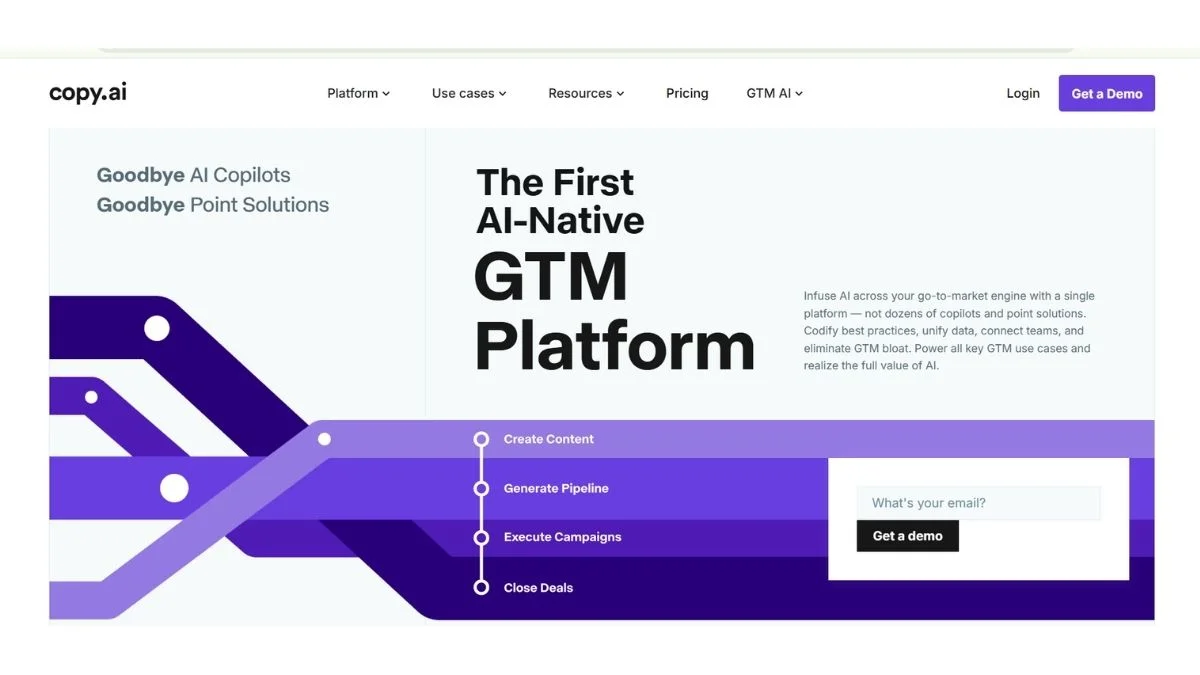
9 Best Copy.ai Alternatives That Actually Deliver (2026)

Copy.ai promised to change the way you write forever. And for a while, it delivered. But if you've hit its usage limits, found its outputs too generic, or simply outgrown it — you're not alone.
The good news? There are better options out there right now. Some are cheaper. Some are smarter. And a few do things Copy.ai simply can't.
In this guide, you'll get a no-fluff breakdown of the 9 best Copy.ai alternatives — what each one does well, who it's built for, and where it falls short. By the end, you'll know exactly which one to try first.
Why Look for a Copy.ai Alternative?
Copy.ai is a solid tool — there's no denying that. But it has some real limitations that push users toward alternatives:
- Word/credit limits on lower plans
- Repetitive, templated output that feels robotic after a while
- Limited long-form support for blogs and detailed articles
- No built-in SEO features for keyword optimization
- Pricing that scales fast as your team grows
If any of those hit home, keep reading.
Quick Comparison Table
| Tool | Best For | Free Plan | Starting Price | Long-Form? | SEO Features? |
|---|---|---|---|---|---|
| Jasper AI | Marketing teams & agencies | ❌ | ~$39/mo | ✅ | ✅ |
| Writesonic | SEO blog writing | ✅ (limited) | $16/mo | ✅ | ✅ |
| Rytr | Budget-conscious writers | ✅ | $9/mo | ✅ | ❌ |
| Anyword | Data-driven ad copy | ❌ | $39/mo | ✅ | ✅ |
| Hypotenuse AI | E-commerce product copy | ❌ | $29/mo | ✅ | ✅ |
| Scalenut | Full SEO content workflow | ✅ (trial) | $19/mo | ✅ | ✅ |
| Sudowrite | Fiction & creative writing | ❌ | $10/mo | ✅ | ❌ |
| Simplified | All-in-one creators | ✅ | $18/mo | ✅ | ❌ |
| ChatGPT | Flexible general writing | ✅ | Free / $20/mo | ✅ | ❌ |
1. Jasper AI — Best for Marketing Teams and Agencies
If Copy.ai is the Honda Civic of AI writing, Jasper is the BMW. It's polished, powerful, and built for professionals who write at scale.
Jasper started as a blog writing tool but has evolved into a full-blown AI content platform. It handles everything from ad copy and email sequences to long-form articles and brand voice guidelines.
Best Use Case: Marketing agencies, content teams, and businesses running multiple campaigns.
Pros
- Excellent brand voice training — Jasper actually learns your tone
- Templates for 50+ content types
- Native integration with Surfer SEO for optimization
- Strong long-form document editor
Cons
- No free plan (only a 7-day trial)
- Pricing is on the higher end — starts around $39/month
- Can feel feature-heavy if you only need short copy
Who Should Use It: Content managers, growth marketers, and agencies producing high volumes of copy.
Key Advantage: Jasper's brand voice feature is genuinely impressive. Once trained, it maintains a consistent tone across all outputs — something Copy.ai still struggles with.
💡 Pro Tip: Pair Jasper with Surfer SEO for a complete SEO content workflow that goes from keyword to published article.
2. Writesonic — Best for SEO Blog Writing (#2 is a serious contender)
Writesonic is probably the most direct Copy.ai alternative on this list. It covers almost all the same use cases but adds real SEO functionality on top.
Its Article Writer 6.0 can produce factual, well-structured blog posts with citations — something most AI tools still fake. It also integrates with Google Search Console so you can write content based on actual ranking data.
Best Use Case: Bloggers, affiliate marketers, and content agencies focused on organic search traffic.
Pros
- Factual article writer with real citations
- AI chatbot (Chatsonic) with web access
- Supports 25+ languages
- Generous free plan for new users
- Built-in AI image generation
Cons
- Outputs sometimes need more editing than Jasper
- The interface has a learning curve
- Long-form quality varies by topic
Who Should Use It: SEO-focused content creators and small agencies that need quality + volume.
Key Advantage: The Google Search Console integration makes Writesonic uniquely useful for writers who want data-driven content decisions without switching tools.
3. Rytr — Best Budget Copy.ai Alternative
Rytr is what you reach for when you want solid AI copy without spending $30–$50/month. It's lean, fast, and surprisingly capable for its price.
It covers over 40 use cases — product descriptions, email subject lines, ad copy, blog intros — and produces decent output on the first try, more often than you'd expect from a budget tool.
Best Use Case: Freelancers, solopreneurs, and small business owners who need everyday copy without the enterprise price tag.
Pros
- Extremely affordable ($9/month for the Saver plan)
- Usable free plan (10,000 characters/month)
- Plagiarism checker built in
- Simple, no-nonsense interface
Cons
- No true long-form editor
- Limited customization compared to Jasper
- Can feel basic for complex campaigns
Who Should Use It: Budget-conscious creators, virtual assistants, and anyone just getting started with AI writing tools.
Key Advantage: Rytr's free plan is the most generous in this category — 10,000 characters per month with access to 40+ templates. Compare that to Copy.ai's increasingly restrictive free tier.
4. Anyword — Best for Data-Driven Ad Copy (This one surprises most people)
Here's where it gets interesting. Anyword isn't just an AI writer — it's an AI writer that tells you how well your copy is likely to perform before you publish it.
Every piece of copy Anyword generates comes with a Predictive Performance Score — a number that estimates how likely that specific headline, ad, or email subject line is to drive conversions based on historical data.
Best Use Case: Performance marketers, e-commerce brands, and anyone running paid ads who cares about conversion rates, not just word count.
Pros
- Unique predictive performance scoring
- Strong ad copy templates (Google, Facebook, LinkedIn)
- Blog Wizard for long-form content
- Continuous copy optimization based on data
Cons
- No free plan
- More complex than basic tools
- Best value only for teams running active ad campaigns
Who Should Use It: Digital marketers, paid media specialists, and growth teams who need to maximize ROI on ad spend.
Key Advantage: No other tool in this list can tell you which version of your headline will perform better before you go live. That alone makes Anyword worth the price for the right user.
5. Hypotenuse AI — Best for E-Commerce Product Copy
Running an online store with hundreds — or thousands — of products? Hypotenuse AI is built specifically for this problem.
It can generate product descriptions, category pages, and ad copy in bulk, pulling from your product data and keeping everything on-brand. You can import a spreadsheet and get 500 product descriptions in minutes.
Best Use Case: Shopify merchants, Amazon sellers, and e-commerce brands that need to scale product content fast.
Pros
- Bulk product description generation
- Understands e-commerce context (SKUs, specs, features)
- Strong brand voice consistency
- Content Detective feature for factual research
Cons
- Not ideal for non-e-commerce content
- Pricier than general alternatives at $29/month
- Limited templates outside of product copy
Who Should Use It: E-commerce store owners, product managers, and digital agencies managing retail clients.
Key Advantage: The bulk generation feature is a time-saver unlike anything else on this list. What would take a human copywriter weeks can be done in an afternoon.
Want to learn more about AI tools for online stores? Check out our Best AI Tools for E-commerce Stores guide and our breakdown of Best AI Tools for Shopify with step-by-step setup instructions.
6. Scalenut — Best for Full SEO Content Workflow
Scalenut isn't just an AI writer — it's a full content lifecycle tool. From keyword research to topic clustering to writing to optimization, it wants to own the entire process.
The Cruise Mode can generate a full SEO blog post in under 5 minutes. But more importantly, Scalenut's NLP Optimizer helps you hit semantic keyword targets that actually improve rankings.
Best Use Case: SEO content strategists, niche site builders, and in-house content teams with search traffic as their primary goal.
Pros
- Keyword clustering and content planning built in
- NLP optimization with fix suggestions
- Real-time SEO score while writing
- Competitive content research
- Solid free trial available
Cons
- Interface takes time to learn
- AI output sometimes needs heavier editing
- Full features only available on higher-tier plans
Who Should Use It: SEO professionals and content teams that want a single platform from research to publication.
Key Advantage: Scalenut's keyword clustering turns a list of keywords into a content strategy. That's strategic thinking most tools don't even attempt.
Related reading: How to Do Keyword Research Without Paying for Expensive Tools and our Free Keyword Research Tool to get started.
7. Sudowrite — Best for Fiction and Creative Writing
Most AI writing tools are built for marketers. Sudowrite is built for storytellers.
It's designed specifically for novelists, screenwriters, and creative writers who need help with plot, character development, description, and prose — not product descriptions or email funnels.
Best Use Case: Fiction authors, novelists, and creative writers who want an AI co-author, not a marketing assistant.
Pros
- Unique "Describe" feature for rich sensory details
- Story Bible for character/world tracking
- "Rewrite" tool that matches your prose style
- Canvas view for plot and story structure
Cons
- Completely wrong tool for business or marketing copy
- No free plan (only a trial)
- Niche use case won't work for most business writers
Who Should Use It: Anyone writing fiction, screenplays, short stories, or creative non-fiction.
Key Advantage: Sudowrite understands narrative in a way no other AI tool does. It's the only one that can tell you if your scene is moving too fast — and suggest how to slow it down.
8. Simplified — Best All-in-One Tool for Content Creators
Simplified is trying to be the Canva of AI content. It combines AI writing, graphic design, video creation, and social media scheduling into one platform.
If you're a creator who constantly switches between tools — writing in one place, designing in another, scheduling in a third — Simplified consolidates all of that.
Best Use Case: Social media managers, solo content creators, and small marketing teams managing multiple platforms.
Pros
- AI writer + graphic design + video in one tool
- Generous free plan available
- Social media scheduler included
- Template library for every platform
Cons
- Jack of all trades, master of none
- AI writing quality doesn't match dedicated tools like Jasper
- Can feel overwhelming with so many features
Who Should Use It: Individual creators and small teams who value workflow consolidation over raw writing quality.
Key Advantage: The integration of writing, design, and scheduling eliminates tool-switching friction — which is a real productivity drain for small teams.
See also: Best AI Tools for Content Creators and Best Free AI Social Media Tools for more options.
9. ChatGPT — The Wildcard That Beats Them All (Sometimes)
Let's be honest. ChatGPT doesn't have templates or a workflow UI. But for pure writing quality and flexibility, GPT-4o often outperforms dedicated copy tools — especially for complex, nuanced writing.
The free version is genuinely useful. GPT-4o (available on the Plus plan) is exceptional. And with the right prompt engineering, you can get it to write in your tone, match your style, and produce content most tools can't touch.
Best Use Case: Experienced writers who know how to prompt and want maximum flexibility without template constraints.
Pros
- Exceptional writing quality with GPT-4o
- Completely free tier available
- Handles any content type without templates
- Plugin/tool ecosystem growing fast
- Web browsing and image analysis on Plus
Cons
- No templates or workflow structure
- Requires good prompting skills to get the best output
- No built-in SEO optimization
- Output requires manual fact-checking
Who Should Use It: Power users, writers, developers, and anyone comfortable with prompt-based workflows.
Key Advantage: Raw flexibility. ChatGPT has no guardrails on content type or format. If you can describe what you need clearly, it can write it.
Compare the top AI tools head-to-head: ChatGPT vs Claude vs Gemini — Which AI Wins? and our Free AI Assistants Better Than ChatGPT roundup.
How to Choose the Right Copy.ai Alternative
Still not sure which one fits you? Answer these three questions:
1. What do you mostly write?
- Marketing copy / ads → Anyword or Jasper
- Blog content for SEO → Writesonic or Scalenut
- Product descriptions → Hypotenuse AI
- Creative/fiction writing → Sudowrite
- Everything → ChatGPT or Simplified
2. What's your budget?
- Free → ChatGPT, Rytr (free tier), Writesonic (free tier)
- Under $20/month → Rytr Saver, Sudowrite
- $20–$40/month → Writesonic, Scalenut, Simplified
- $40+/month → Jasper, Anyword
3. Do you need SEO features?
- Yes, absolutely → Scalenut or Writesonic
- Nice to have → Jasper (with Surfer integration)
- Not my priority → Rytr, Sudowrite, ChatGPT
Expert Tips: Getting More From Any AI Writing Tool
After testing dozens of AI writing tools, here's what actually separates great output from generic slop:
Give context, not just commands. Instead of "Write a product description for headphones," try: "Write a product description for noise-canceling headphones targeting remote workers who take Zoom calls from home. Emphasize call quality and comfort during long sessions."
Use the output as a first draft, not a final draft. The best AI-assisted writers treat AI output as a starting point. Edit for your voice, add specific details, and cut anything that feels generic.
Train your tool's brand voice feature. If your tool supports it (Jasper and Anyword both do), invest 30 minutes setting it up. The quality difference is significant.
Fact-check everything. AI tools hallucinate statistics, product details, and even basic facts. Never publish AI-generated content without verification, especially for technical or medical topics.
Match the tool to the task. Don't use a fiction writing tool for ad copy. Don't force a marketing tool to write a novel. Use the right tool for the right job.
Related Resources
Exploring more AI writing tools? We've got you covered:
- Best Free AI Writing Tools — No Word Limit
- Best Jasper AI Alternatives for Marketing Copy
- Top Free Jasper AI Alternatives for Small Businesses
- Best Writesonic Alternatives for SEO Blog Writing
- Best HIX AI Alternatives for All-in-One AI Writing
- Best Wordtune Alternatives for Sentence Rewriting
- Best Jenni AI Alternatives for Academic Writing
- Jasper vs Copy.ai vs Writesonic — Best AI Copywriter?
- Free vs Paid AI Writing Tools — Is Upgrading Worth It?
- Free AI Copywriting Tools for Marketing
- Free AI Content Generators for Bloggers
- Free AI Article Writers — Full Length Guide
- Best Free Grammar Checkers
- QuillBot Review & Complete Guide
- Grammarly Review & Beginners Guide
- ChatGPT Alternatives
- QuillBot Alternatives
- Grammarly Alternatives
- Best Free ChatGPT Alternatives
- Free AI Chatbots With Unlimited Messages
- HIX AI vs Writesonic vs Copy.ai — Best All-in-One AI Writer
- Free AI Tools for Entrepreneurs
- Free AI Marketing Tools for Startups
- Free AI Productivity Tools for Teams
- Best AI Tools for Productivity
- Top 100 Best AI Tools
- 25 Best AI Tools for Every Profession
- Best Free AI Tools to Use Daily
- Does AI-Generated Content Hurt Your SEO?
- AI Tools — 7 Game Changers for Explosive SEO in 2025
Frequently Asked Questions
What is the best free alternative to Copy.ai?
The best free Copy.ai alternative is Rytr or ChatGPT. Rytr offers 10,000 free characters per month with 40+ templates — enough for everyday writing tasks. ChatGPT's free tier (GPT-4o mini) handles a wide range of copy tasks with no template restrictions, though it requires good prompting to match the quality of dedicated tools.
Both are genuinely useful at the free tier. If you need structure and templates, go Rytr. If you want flexibility and conversational interaction, go ChatGPT.
Is Jasper AI better than Copy.ai?
Jasper is generally considered more powerful than Copy.ai, especially for marketing teams. It has stronger long-form capabilities, better brand voice training, and native Surfer SEO integration. However, it's also more expensive and has no free plan. Copy.ai is simpler and easier to get started with for beginners.
For professionals and growing teams who produce content at volume, Jasper wins. For casual users or those just starting out, Copy.ai or Rytr may be sufficient.
Which Copy.ai alternative is best for SEO content?
Scalenut and Writesonic are the top Copy.ai alternatives for SEO-focused content. Scalenut handles the full workflow — keyword research, topic clustering, writing, and NLP optimization — from one dashboard. Writesonic's Article Writer 6.0 produces factual articles with citations and integrates with Google Search Console.
If SEO is your primary goal, these two outperform Copy.ai significantly. Pairing either with a dedicated keyword research tool makes the workflow even stronger.
Can I use ChatGPT instead of Copy.ai?
Yes — ChatGPT is a capable Copy.ai replacement, especially with GPT-4o. It lacks built-in templates and a structured workflow, but the raw output quality is often superior. With effective prompting, you can replicate most Copy.ai templates and produce better, more nuanced copy.
The main tradeoff is that ChatGPT requires more upfront prompting knowledge. If you're comfortable writing detailed prompts, it can outperform Copy.ai in quality while costing the same or less.
What is the cheapest Copy.ai alternative?
Rytr is the cheapest paid Copy.ai alternative, starting at $9/month. For free options, Rytr's free plan (10,000 characters/month) and ChatGPT's free tier are both useful. Writesonic and Simplified also offer free plans with enough functionality for light users.
If budget is the primary concern, start with Rytr's free plan. Upgrade only when you consistently hit the monthly character limit.
Is Copy.ai still worth using in 2026?
Copy.ai is still worth using for teams that want a clean, template-driven interface with good team collaboration features. However, competing tools have largely caught up — and in many cases surpassed it — in output quality, SEO features, and pricing flexibility.
If you're already paying for Copy.ai and it meets your needs, there's no urgent reason to switch. But if you're evaluating your options fresh, most users will find better value in Writesonic, Scalenut, or Jasper depending on their use case.
Final Thoughts
Copy.ai is good. But good enough isn't always enough — especially when better tools exist at the same or lower price.
Here's the short version of who should use what:
- Best overall alternative: Jasper AI
- Best for SEO content: Scalenut or Writesonic
- Best budget pick: Rytr
- Best for ad copy performance: Anyword
- Best for e-commerce: Hypotenuse AI
- Best for creative writing: Sudowrite
- Best free option: ChatGPT or Rytr
Try before you commit. Most of these tools offer free trials or free tiers — take at least two of them for a test drive with a real content task before making a decision.
And if you want to go deeper on AI writing tools, don't miss our comparison of Jasper vs Copy.ai vs Writesonic — the most detailed head-to-head breakdown we've published.