9 Best NeuralWriter Alternatives in 2026 (Free & Paid)

NeuralWriter is fine — until it isn't. Maybe the output feels repetitive. Maybe the pricing doesn't match the value. Or maybe you just need something that fits your workflow better.
Whatever the reason, you're here looking for a better option. Good news: there are plenty of them.
In this guide, I've rounded up the 9 best NeuralWriter alternatives that actually deliver — whether you're a blogger, marketer, student, or developer. I'll cover what each tool does, who it's best for, and where it falls short. No fluff, just honest breakdowns.
Quick answer: If you just need the top pick — QuillBot wins for rewriting, Writesonic for long-form SEO content, and Rytr for budget-friendly daily writing. Keep reading to find your perfect match.
What Is NeuralWriter and Why Are People Looking for Alternatives?
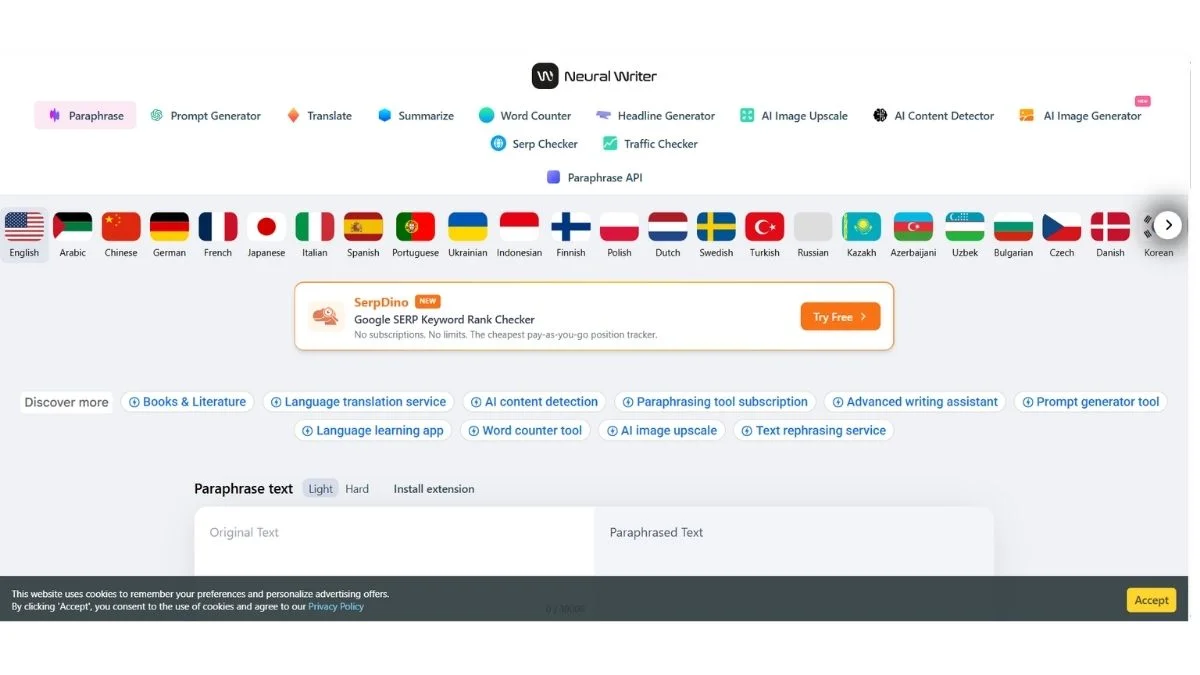
NeuralWriter is an AI writing assistant focused on content rewriting, paraphrasing, and article generation. It has a clean interface and does the basics reasonably well.
But users often leave because of:
- Limited output quality for long-form content
- Lack of SEO integration (no keyword tools built-in)
- Fewer templates compared to competitors
- Pricing concerns for what you actually get
If any of those sound familiar, this list is for you.
Quick Comparison Table
| Tool | Best For | Free Plan | Starting Price | SEO Tools |
|---|---|---|---|---|
| QuillBot | Paraphrasing & rewriting | ✅ Yes | ~$9.95/mo | ❌ No |
| Writesonic | Long-form SEO blogs | ✅ Yes | ~$16/mo | ✅ Yes |
| Rytr | Budget daily writing | ✅ Yes | ~$9/mo | ✅ Basic |
| Copy.ai | Marketing copy | ✅ Yes | ~$49/mo | ❌ No |
| Jasper AI | Enterprise content | ❌ Trial | ~$49/mo | ✅ Yes |
| Frase.io | SEO content briefs | ❌ Trial | ~$15/mo | ✅ Strong |
| Wordtune | Sentence rewriting | ✅ Yes | ~$13.99/mo | ❌ No |
| Simplified | All-in-one creators | ✅ Yes | ~$18/mo | ✅ Basic |
| HIX.AI | All-in-one writing | ✅ Yes | ~$19.99/mo | ✅ Yes |
1. QuillBot — Best for Paraphrasing and Rewriting
If NeuralWriter was your go-to for rewriting content, QuillBot is the clear upgrade.
It's been the gold standard for AI paraphrasing since 2017, and in 2026 it still leads the pack. You get multiple rewriting modes — Standard, Fluency, Formal, Academic, Creative, and more — so you can match the exact tone you need.
Best use case: Rewriting existing content, academic paraphrasing, making AI-generated text sound more natural.
Pros
- Multiple rewriting modes
- Grammar checker included
- Summarizer, citation tool, and translator built-in
- Excellent free tier (up to 125 words per rewrite)
Cons
- Not great for generating content from scratch
- Premium is needed for full-length rewrites
- Can sometimes change meaning subtly
Who should use it: Students, bloggers, and content editors who spend a lot of time reworking drafts.
Key advantage: The variety of writing modes is unmatched for paraphrasing. No other tool gives you this much control over tone and style.
💡 Read more: QuillBot Review & Complete Guide | QuillBot Alternatives
2. Writesonic — Best for Long-Form SEO Content (#2 is a serious NeuralWriter upgrade)
Writesonic has grown into one of the most powerful AI writing platforms available. Unlike NeuralWriter, it's built with SEO in mind from the ground up.
The flagship feature is Article Writer 6.0, which can generate a complete, SEO-optimized article based on a keyword — including headings, meta descriptions, and even internal links. It also includes Chatsonic, a real-time AI chatbot with web access.
Best use case: Writing SEO blog posts, product descriptions, landing pages, and ad copy at scale.
Pros
- Full long-form article generation with one click
- Real-time web access via Chatsonic
- 100+ writing templates
- Integrates with Surfer SEO for deeper optimization
Cons
- Word count can feel inconsistent on the free plan
- Interface can feel overwhelming at first
- Premium plans are pricier than basic tools
Who should use it: Content marketers, SEO agencies, and bloggers who publish frequently and need high-quality, optimized drafts fast.
Key advantage: The SEO integration and real-time research capability puts it in a completely different league from NeuralWriter.
💡 Related reading: Best AI Tools for Content Creators | Top Best Writesonic Alternatives for SEO Blog Writing
3. Rytr — Best Budget Alternative for Daily Writers
Not everyone needs an enterprise-grade AI tool. If you write a moderate amount of content and need something affordable and reliable, Rytr is your best bet.
At around $9/month, it gives you access to 40+ use cases, 30+ languages, and a clean writing interface. It's simple without being simplistic.
Best use case: Blog intros, email copy, social media captions, product descriptions, and brainstorming.
Pros
- Very affordable ($9/mo Saver, $29/mo Unlimited)
- 40+ use case templates
- Built-in plagiarism checker
- Tone selector (professional, funny, convincing, etc.)
Cons
- Weaker on long-form content (best for short-to-medium pieces)
- Not ideal for advanced SEO optimization
- Output can feel generic for complex topics
Who should use it: Freelancers, small business owners, and solo bloggers who need consistent output without breaking the bank.
Key advantage: Best price-to-value ratio in this list. For under $10/month, you get a legitimate daily writing assistant.
💡 Related reading: Best Free AI Writing Tools No Word Limit | Free AI Content Generators for Bloggers
4. Copy.ai — Best for Marketing and Sales Copy (#4 surprises most people)
Copy.ai was one of the first AI writing tools to gain mainstream attention, and it's still excellent — especially for marketing-focused content.
Where NeuralWriter feels like a general-purpose writing tool, Copy.ai feels like a dedicated marketing copywriter. It excels at hooks, headlines, CTAs, email sequences, and ad copy.
Best use case: Sales pages, email marketing sequences, Facebook/Google ad copy, product launches.
Pros
- Excellent marketing copy templates
- Unlimited words on paid plans
- Team collaboration features
- Workflow automation (Workflows feature)
Cons
- Gets pricier for teams
- Less suited for long editorial content
- Can feel templated if you don't customize prompts
Who should use it: Digital marketers, e-commerce brands, and startup founders who need compelling copy that converts.
Key advantage: The Workflows feature lets you automate entire content pipelines — something NeuralWriter simply doesn't offer.
💡 Related reading: Best Copy AI Alternatives for Generating Sales Copy | Jasper AI vs Copy AI vs Writesonic Best AI Copywriter
5. Jasper AI — Best for Enterprise and Brand-Consistent Content
Jasper AI is the premium option in this list. It's positioned squarely at marketing teams and agencies that need consistent, on-brand content at scale.
What separates Jasper from the others is its Brand Voice feature — you train it on your company's tone, terminology, and style, and every output reflects that. For businesses managing multiple clients or large content operations, this is a game-changer.
Best use case: Large-scale content marketing, brand-consistent blog production, agency workflows.
Pros
- Brand Voice training
- SEO Mode (integrates with Surfer SEO)
- 50+ templates for different content types
- Team collaboration and workflow features
Cons
- Expensive (starts around $49/month)
- No meaningful free plan (only a trial)
- Overkill for individual bloggers or students
Who should use it: Marketing agencies, content managers at mid-to-large companies, and serious content entrepreneurs.
Key advantage: Brand Voice consistency across all outputs — no other tool in this list does this as well.
💡 Related reading: Best Jasper AI Alternatives for Marketing Copy | Top Free Jasper AI Alternatives for Small Businesses
6. Frase.io — Best for Research-Backed SEO Writing
Here's the thing about most AI writers: they generate content but don't tell you what to write about to rank. Frase.io is different.
It analyzes the top 20 Google results for your target keyword and builds a content brief showing you exactly what topics, headings, and questions your article needs to cover to compete. Then it helps you write it.
Best use case: SEO content briefs, competitive content research, optimizing existing pages for search.
Pros
- SERP analysis baked into the writing workflow
- Question research from Google, Reddit, and Quora
- Content scoring vs. top competitors
- Affordable entry plan (~$15/month)
Cons
- Writing quality is decent but not the strongest on pure generation
- Interface has a learning curve
- Best results require some SEO knowledge
Who should use it: SEO specialists, content strategists, and bloggers serious about ranking their articles on Google.
Key advantage: No other tool in this list combines SERP analysis + content brief creation + AI writing in one workflow as seamlessly.
💡 Related reading: How to Do an SEO Audit for Your Website | Free SEO Checker Online | On-Page SEO Techniques That Actually Work
7. Wordtune — Best for Sentence-Level Rewriting
If you write your own drafts but constantly feel like your sentences could be sharper, Wordtune is built exactly for that.
It doesn't generate long articles — instead, it sits alongside your writing and offers real-time rewrite suggestions for individual sentences. You write, it refines. It's like having an editor looking over your shoulder.
Best use case: Polishing your own writing, improving clarity, adapting tone for different audiences.
Pros
- Feels like a real-time writing coach
- Tone options (casual, formal)
- Shorten/Expand options per sentence
- Works as a browser extension (Gmail, Docs, etc.)
Cons
- Not for generating content from scratch
- Free plan limits rewrites per day
- Focused on sentence level, not full articles
Who should use it: Non-native English speakers, professionals writing emails and reports, and writers who want to polish rather than generate.
Key advantage: The browser extension integration means it works wherever you write — no copy-pasting required.
💡 Related reading: Top Best Wordtune Alternatives for Sentence Rewriting | QuillBot vs Wordtune vs Grammarly Best AI Paraphrasing Tool
8. Simplified — Best for Content Creators Who Need Everything in One Place
Simplified is the Swiss Army knife of this list. It combines AI writing, graphic design, video editing, social media scheduling, and AI image generation into one platform.
If NeuralWriter was just your writing tool, Simplified wants to be your entire content creation studio. It's particularly popular with social media managers and YouTube creators.
Best use case: Content creators managing blogs, social media, graphics, and videos from one dashboard.
Pros
- AI writer + designer + video editor in one tool
- Generous free plan
- Social media scheduling built-in
- AI image generator included
Cons
- Jack of all trades, master of none — individual tools have deeper alternatives
- Can feel cluttered for users who only need writing
- Advanced features require paid plan
Who should use it: Solo content creators, social media managers, and small marketing teams who want to reduce the number of tools they pay for.
Key advantage: The combination of writing + design + scheduling in one workspace saves serious time and money.
💡 Related reading: Best AI Tools for E-commerce Stores | 11 Free AI Social Media Tools | 13 Free AI Tools for Content Creators
9. HIX.AI — Best All-in-One AI Writing Platform
HIX.AI is one of the newer platforms making serious noise in the AI writing space. It combines 120+ writing tools, a long-form editor, a browser extension, and an AI email writer into one platform — at a competitive price.
What makes it stand out is the HIX Editor, which functions like Google Docs but with AI assistance built in. You can write, command the AI inline, and keep your document clean throughout.
Best use case: Bloggers and content teams who want a polished writing environment with AI assistance that doesn't feel bolted on.
Pros
- 120+ writing tools and templates
- HIX Editor for clean long-form writing
- Browser extension for writing anywhere
- Bypass AI detection features (useful for academic contexts)
Cons
- Newer platform (less community/support compared to Jasper/Copy.ai)
- Some advanced features still being refined
- Pricing tiers can be confusing
Who should use it: Bloggers, content writers, and marketers who want a modern, all-in-one platform with a strong editor experience.
Key advantage: The sheer volume of tools (120+) combined with a clean editor makes this one of the most complete packages available.
💡 Related reading: Best HIX AI Alternatives for All-in-One AI Writing | HIX AI vs Writesonic vs Copy AI Best All-in-One AI Writer
Pro Tips: How to Get the Most Out of Any AI Writing Tool
Switching tools is only half the battle. Here's how to actually get great results from any of the alternatives above:
1. Always give detailed prompts. "Write a blog post about SEO" will give you garbage. "Write a 1,500-word blog post targeting the keyword 'local SEO for restaurants' for a UK audience, using a conversational tone" will give you something useful.
2. Use AI for drafts, not finals. The best content teams use AI to generate first drafts and then add human editing, real examples, and personality. Never publish raw AI output.
3. Match the tool to the task. Use QuillBot for rewriting, Frase for SEO research, Rytr for quick social posts, and Jasper for brand-consistent long-form. Trying to force one tool to do everything usually ends in frustration.
4. Check for factual accuracy. AI tools can hallucinate statistics and dates. Always verify any specific claims before publishing.
5. Run it through a grammar checker. Even the best AI tools make subtle grammatical errors. Pair your chosen tool with Grammarly for clean final output.
💡 More resources: Free vs Paid AI Writing Tools Is Upgrading Worth It | Best Prompt Engineering Techniques for Developers
Which NeuralWriter Alternative Should You Choose?
Still not sure which one to pick? Here's a quick decision guide:
- You rewrite a lot of existing content → QuillBot
- You write SEO blogs regularly → Writesonic or Frase.io
- You're on a tight budget → Rytr
- You create marketing/ad copy → Copy.ai
- You work in a team or agency → Jasper AI
- You want one tool for everything → HIX.AI or Simplified
- You want to polish your own writing → Wordtune
There's genuinely no single "best" tool — it depends entirely on what you're creating and how you work.
More Tools Worth Exploring
If you're going deep on AI writing and content creation, these resources from BrightSEOTools cover everything you need:
- Best AI Tools Complete Guide with Pros & Cons
- Best Free AI Tools to Use Daily
- Top 100 Best AI Tools
- 25 Best AI Tools for Every Profession
- Free AI Tools That Replace Expensive Software
- Best AI Tools for Productivity
- Ultimate List of Best AI Tools for Beginners
- Free AI Tools Every Freelancer Needs
- Free AI Copywriting Tools for Marketing
- Free AI Article Writers Full Length
- Best Free Grammar Checkers
- Does AI Generated Content Hurt Your SEO
- ChatGPT vs Claude vs Gemini Which AI Wins
- Notion AI vs ChatGPT Which One Should You Actually Use
- Best Free ChatGPT Alternatives
- Free AI Chatbots With Unlimited Messages
- ChatGPT Alternatives
- DeepL Alternatives
- Grammarly Alternatives
Frequently Asked Questions
What is the best free NeuralWriter alternative?
QuillBot offers the strongest free plan for rewriting, with up to 125 words per session at no cost. For longer content generation, Rytr's free tier allows around 10,000 characters per month — enough to test whether it works for your workflow before committing to a paid plan. Most tools listed here have a functional free option.
Which NeuralWriter alternative is best for SEO content?
Frase.io and Writesonic are the top two for SEO-focused content. Frase analyzes competitor pages and builds research-backed content briefs, while Writesonic generates full SEO articles with heading structure and meta data. If you're serious about ranking, either of these is a significant upgrade over NeuralWriter.
Is NeuralWriter good for academic writing?
NeuralWriter has basic paraphrasing features, but for academic use QuillBot is widely considered the better choice — it has an Academic mode specifically designed for research papers and essays, along with a citation generator and summarizer. Just make sure to check your institution's policy on AI-assisted writing before using any tool.
What's the difference between a paraphrasing tool and an AI writer?
A paraphrasing tool (like QuillBot or Wordtune) rewrites content you already have. An AI writer (like Writesonic or Rytr) generates new content from a prompt or keyword. NeuralWriter does both, but most alternatives specialize — which is often why they do each job better.
Are AI writing tools safe to use for published content in 2026?
Yes, with caveats. Google's current stance is that AI-generated content is acceptable as long as it's helpful, accurate, and meets quality standards — it doesn't automatically penalize AI content. The risk comes from publishing low-quality, unedited AI output. Always edit, fact-check, and add original insights before publishing. For more detail, see: Does AI Generated Content Hurt Your SEO?
Which AI writing tool is best for non-English content?
DeepL leads for pure translation quality, and Rytr supports 30+ languages for content generation. HIX.AI also has solid multilingual support. If you're creating content for international audiences, check out: 7 Best Free AI Translation Tools and 11 Free AI Translators Better Than Google.
Final Thoughts
NeuralWriter served a purpose — but the AI writing landscape in 2026 has grown dramatically. The tools in this list are simply more capable, more specialized, and in many cases more affordable.
Here's the short version:
- QuillBot → rewriting and paraphrasing
- Writesonic → SEO blog content at scale
- Rytr → budget-friendly daily writing
- Copy.ai → marketing and sales copy
- Jasper AI → enterprise brand content
- Frase.io → research-backed SEO writing
- Wordtune → sentence-level polishing
- Simplified → all-in-one creator platform
- HIX.AI → comprehensive writing toolkit
Pick the one that matches how you work — not just the one with the flashiest feature list.
Ready to level up your content game? Start with the free plans of QuillBot, Rytr, or HIX.AI and see which one clicks. You might be surprised how much your output improves.
Explore more on BrightSEOTools:
- Best AI Tools for Students
- Top 10 Free AI Tools for Students
- Free AI Essay Writers No Plagiarism
- Best Free AI Tools for Small Business
- Free AI Marketing Tools for Startups
- Free AI Productivity Tools for Teams
- Best Jenni AI Alternatives for Academic Writing
- Top Best Sudowrite Alternatives for Fiction Writing
- Top Smodin Alternatives for AI Essay Writing
- Free AI Tools for Entrepreneurs