Best TextCortex AI Alternatives in 2026 (Free & Paid)

TextCortex is a solid AI writing tool—but it's not perfect for everyone. Maybe the pricing doesn't fit your budget. Maybe you need stronger SEO features, better plagiarism detection, or a tool that doesn't feel like it's writing in circles.
Whatever your reason, you're in the right place.
This guide covers the 10 best TextCortex AI alternatives in 2026—tools that are genuinely useful, honestly reviewed, and suited to different needs. Whether you're a blogger, marketer, student, or developer, there's something here for you.
Let's get into it.
What Is TextCortex AI? (Quick Recap)
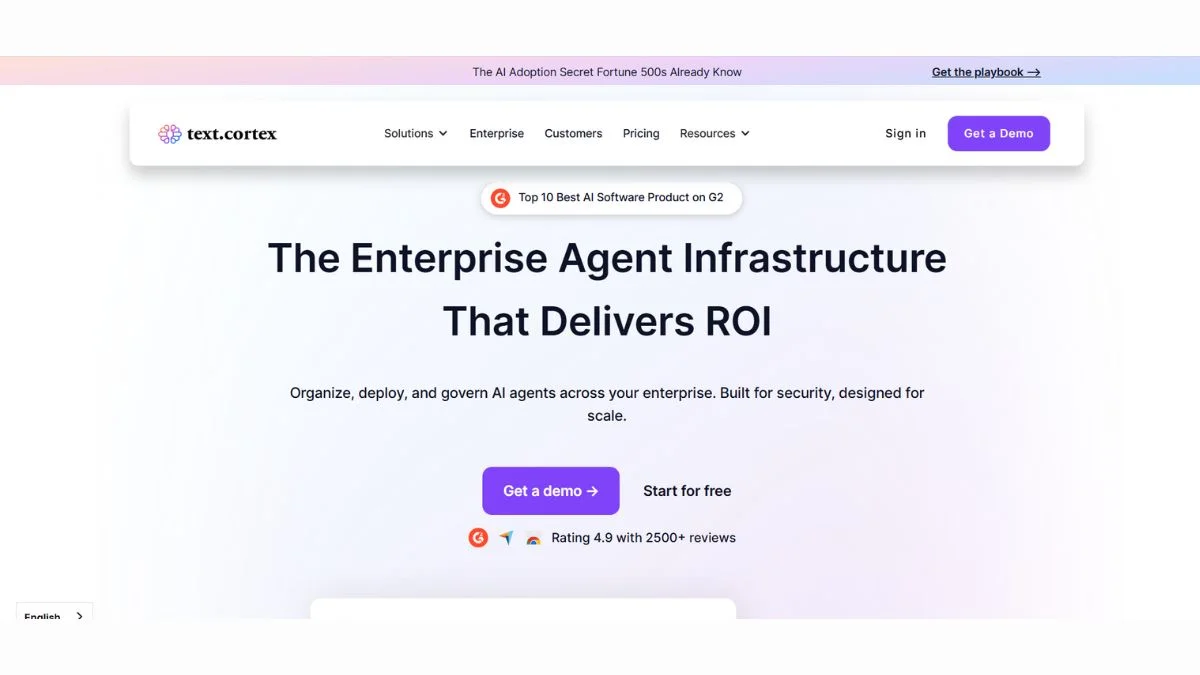
TextCortex is an AI writing assistant that helps users generate content, rewrite text, summarize documents, and create long-form articles. It works as a browser extension and a web app, which makes it convenient.
But it has limitations:
- The free tier is quite restrictive (limited daily "creations")
- Output quality can feel generic for niche topics
- It lacks deep SEO optimization features
- No built-in plagiarism checker
If any of those pain points sound familiar, read on.
How We Picked These Alternatives
We evaluated each tool based on:
- Output quality — does it actually write well?
- Use case fit — who benefits most from it?
- Pricing — is the free tier usable?
- Unique features — what sets it apart?
- Ease of use — can a beginner figure it out?
No sponsored rankings. No inflated scores. Just honest picks.
Quick Comparison Table
| Tool | Best For | Free Plan | Starting Price | Standout Feature |
|---|---|---|---|---|
| Jasper AI | Marketing copy | No (trial) | $39/mo | Brand voice memory |
| Copy.ai | Sales & ad copy | Yes (limited) | $36/mo | 90+ templates |
| Writesonic | SEO blog writing | Yes | $16/mo | Surfer SEO integration |
| QuillBot | Paraphrasing & editing | Yes | $9.95/mo | Best paraphrase modes |
| Rytr | Budget users | Yes | $9/mo | Most affordable paid plan |
| Grammarly | Grammar & clarity | Yes | $12/mo | Real-time writing feedback |
| Notion AI | Note-takers & teams | Add-on | $10/mo add-on | Built into Notion workspace |
| ChatGPT | General writing & coding | Yes | $20/mo | Versatile, multi-modal |
| Wordtune | Rewriting & tone shifts | Yes | $13.99/mo | Sentence-level rewrites |
| HIX.AI | All-in-one writing | Yes | $19.99/mo | 120+ writing tools |
The 10 Best TextCortex AI Alternatives
1. Jasper AI — Best for Marketing Teams
What it is: Jasper is one of the most well-known AI writing platforms built specifically for marketing and brand content.
Best use case: Writing ad copy, landing pages, email campaigns, and long-form blog content with a consistent brand voice.
Who should use it: Marketing teams, agencies, and content managers who need consistent, on-brand output at scale.
Key advantage: Jasper's Brand Voice feature lets you train the AI on your existing content so every output sounds like you, not a generic robot.
Pros:
- Excellent long-form writing quality
- Integrates with Surfer SEO
- Team collaboration features
- 50+ templates for different content types
Cons:
- No real free plan (only a trial)
- Can get expensive for solo users
- Occasional factual inaccuracies on complex topics
Pro Tip: Use Jasper's "Boss Mode" to give the AI detailed instructions and get outputs that actually match your brief. Vague prompts = vague outputs.
If you're comparing AI writing tools head-to-head, check out our guide on Jasper AI vs Copy.ai vs Writesonic – Best AI Copywriter.
2. Copy.ai — Best for Ad Copy and Sales Content
What it is: Copy.ai is a fast, template-driven AI writing tool focused on generating short-form marketing content quickly.
Best use case: Social media captions, product descriptions, cold emails, and ad copy.
Who should use it: Freelancers, e-commerce sellers, and small business owners who need quick copy without a steep learning curve.
Key advantage: Over 90 ready-to-use templates — just pick one, fill in a few details, and get usable copy in seconds.
Pros:
- Generous free plan (2,000 words/month)
- Very beginner-friendly interface
- Fast generation with solid variety
- Good for social media and ads
Cons:
- Not ideal for long-form content
- Limited brand customization
- Free plan lacks team features
Looking for budget-friendly Copy.ai alternatives? See our list of Best Copy.ai Alternatives in 2026.
3. Writesonic — Best for SEO Blog Writing (#3 is a game-changer for bloggers)
What it is: Writesonic is an AI writing tool that combines content generation with SEO optimization—making it one of the most powerful alternatives to TextCortex for bloggers and content marketers.
Best use case: Writing SEO-optimized blog posts, product pages, and landing pages that rank on Google.
Who should use it: Bloggers, content agencies, and SEO professionals who want AI writing and SEO guidance in one place.
Key advantage: Native integration with Surfer SEO means you can optimize your content for target keywords while writing it—no switching between tabs.
Pros:
- Article Writer 6.0 produces full blog posts quickly
- Surfer SEO integration (big win for SEOs)
- Affordable pricing with a usable free plan
- Supports 25+ languages
Cons:
- Long-form quality can be inconsistent without good prompts
- The interface has a learning curve
- Factual accuracy needs manual verification
Want to explore more Writesonic alternatives? Read Best Writesonic Alternatives in 2026.
Also worth reading: Top Best Writesonic Alternatives for SEO Blog Writing.
4. QuillBot — Best for Rewriting and Paraphrasing (#4 is unbeatable for students and editors)
What it is: QuillBot is the gold standard for AI-powered paraphrasing and sentence rewriting. It doesn't generate content from scratch—it transforms what you already have.
Best use case: Rewriting academic papers, improving clarity, avoiding plagiarism, and refining draft content.
Who should use it: Students, academics, journalists, and anyone who writes first drafts and wants to polish them without losing meaning.
Key advantage: QuillBot's 7 writing modes (Standard, Fluency, Formal, Simple, Creative, Expand, Shorten) give you precise control over how your text is rewritten—something most AI tools simply don't offer.
Pros:
- Best-in-class paraphrasing quality
- Works inside Google Docs and Microsoft Word
- Grammar checker included
- Summarizer tool built in
Cons:
- Can't generate long-form content from scratch
- Premium is needed for full mode access
- Rewrites can sometimes alter meaning slightly
See how it stacks up: QuillBot vs Wordtune vs Grammarly – Best AI Paraphrasing Tool.
Also check the full QuillBot Review & Complete Guide.
5. Rytr — Best Budget Alternative
What it is: Rytr is a lightweight, affordable AI writing assistant that covers the basics surprisingly well for the price.
Best use case: Short-form content like emails, product descriptions, blog intros, and social media posts.
Who should use it: Freelancers, side hustlers, and budget-conscious users who need a basic AI writing tool without paying $30–$80/month.
Key advantage: At just $9/month, Rytr's Saver plan gives you 100,000 characters per month—that's genuinely usable for most solo creators.
Pros:
- Very affordable
- Simple, clutter-free interface
- 40+ use cases and 30+ languages
- Tone selector helps customize voice
Cons:
- Not great for complex, research-heavy content
- Long-form quality lags behind Jasper and Writesonic
- Limited integrations
Looking for Rytr alternatives? We've covered 10 Best Rytr Alternatives in 2026.
6. Grammarly — Best for Writing Quality and Editing
What it is: Grammarly is primarily a grammar and style checker, but its AI writing assistant (GrammarlyGO) has made it a legitimate content creation tool too.
Best use case: Polishing and editing existing content, catching grammar errors, improving tone and clarity in real time.
Who should use it: Anyone who writes professionally—bloggers, business writers, students, executives—who wants their writing to always look sharp.
Key advantage: Grammarly works everywhere you type—Gmail, Slack, Google Docs, LinkedIn, social media—making it the most seamlessly integrated tool on this list.
Pros:
- Real-time grammar, tone, and style feedback
- Works across virtually every platform
- Plagiarism checker included (Premium)
- AI generation + editing in one tool
Cons:
- AI writing features are limited compared to dedicated tools
- Premium can be pricey ($12–$15/month)
- Doesn't generate long-form content well
Read our in-depth Grammarly Review & Beginner's Guide or explore Grammarly Alternatives.
7. Notion AI — Best for Note-Takers and Remote Teams
What it is: Notion AI is an add-on built directly into the Notion workspace. It can draft content, summarize notes, brainstorm ideas, and translate text—all inside your existing Notion pages.
Best use case: Teams already using Notion for project management who want AI assistance without switching apps.
Who should use it: Remote teams, product managers, startup founders, and anyone deeply embedded in the Notion ecosystem.
Key advantage: Zero context-switching. Your AI assistant lives inside your documents, meeting notes, and wikis—where the actual work happens.
Pros:
- Seamlessly integrated into Notion workflow
- Summarize, translate, and draft in one click
- Affordable as an add-on ($10/month)
- Great for team knowledge bases
Cons:
- Requires a Notion subscription
- Not as powerful as standalone AI writing tools
- Limited SEO or content marketing features
Compare your options: Notion AI vs ChatGPT – Which One Should You Actually Use and explore Best Free Notion AI Alternatives.
8. ChatGPT — Best All-Around Alternative
What it is: OpenAI's ChatGPT needs no introduction. It's the most versatile AI assistant on this list—capable of writing, coding, analysis, brainstorming, summarizing, and much more.
Best use case: General content creation, research assistance, coding help, and creative writing. Basically everything.
Who should use it: Anyone. Seriously. ChatGPT (especially GPT-4o) is a competent writing assistant for bloggers, developers, marketers, students, and businesses alike.
Key advantage: Multimodal capabilities—ChatGPT can analyze images, work with uploaded PDFs, generate code, and browse the web (on paid plans). No other tool on this list matches that breadth.
Pros:
- Handles virtually any writing task
- Strong reasoning and creative output
- Web browsing on paid tier
- Huge community and resource library
Cons:
- No built-in SEO tools
- Can "hallucinate" facts—always verify
- Free plan uses the older model
Curious how it compares? Read ChatGPT vs Claude vs Gemini – Which AI Wins or find the Best Free ChatGPT Alternatives.
9. Wordtune — Best for Sentence-Level Rewrites
What it is: Wordtune is an AI writing companion focused on improving individual sentences and paragraphs. Think of it as a smarter, more context-aware version of the thesaurus.
Best use case: Rewriting sentences for clarity, changing the tone of an email, simplifying complex paragraphs, and expanding thin content.
Who should use it: Business professionals, non-native English speakers, and writers who know what they want to say but struggle with how to say it.
Key advantage: Wordtune's "Rewrite" button produces multiple alternative versions of any sentence instantly—great for finding the perfect phrasing without staring at a blank page.
Pros:
- Excellent sentence-level suggestions
- Tone adjustment (casual ↔ formal)
- Works in Gmail and Google Docs
- Great for ESL writers
Cons:
- Not designed for generating full articles
- The free plan is quite limited
- Can sometimes oversimplify nuanced writing
Explore Best Wordtune Alternatives in 2026 or the Top Best Wordtune Alternatives for Sentence Rewriting.
10. HIX.AI — Best All-in-One Writing Platform
What it is: HIX.AI is a comprehensive AI writing platform with over 120 writing tools, an AI chat assistant, a long-form editor, and a browser extension—all in one product.
Best use case: Users who want a single tool to handle everything from blog posts and emails to YouTube scripts and social media captions.
Who should use it: Content creators, digital marketers, and agencies who need variety without managing multiple subscriptions.
Key advantage: The sheer breadth of tools—120+ templates covering almost every content type—makes HIX.AI one of the most complete TextCortex alternatives available today.
Pros:
- Massive template library
- Long-form writer + short-form tools in one
- Browser extension for writing anywhere
- Supports 50+ languages
Cons:
- Can feel overwhelming for beginners
- Output quality varies across templates
- Premium is needed for best features
Read our review: Best HIX AI Alternatives for All-in-One AI Writing.
Expert Tips for Choosing the Right Alternative
Before you commit to a tool, ask yourself these three questions:
1. What's your primary use case? Rewriting → QuillBot or Wordtune. SEO blogs → Writesonic or Jasper. General use → ChatGPT.
2. What's your budget?
- Zero budget: ChatGPT (free), Grammarly (free), Copy.ai (free tier)
- Tight budget: Rytr ($9/mo) or QuillBot ($9.95/mo)
- Growth budget: Writesonic ($16/mo) or HIX.AI ($19.99/mo)
3. Do you need integrations? If you write in Google Docs → QuillBot or Grammarly. In Notion → Notion AI. In WordPress → Jasper or Writesonic.
Expert Tip: Most of these tools offer free trials. Don't pick based on pricing alone—test the output quality on your specific content type first.
More Tools Worth Exploring
Not finding exactly what you need? Here are a few more resources:
- Best Free AI Writing Tools – No Word Limit
- Free AI Content Generators for Bloggers
- Best AI Tools for Content Creators
- Free AI Copywriting Tools for Marketing
- Best AI Tools Complete Guide with Pros & Cons
- Top 10 AI Tools You Must Try
- Free AI Essay Writers – No Plagiarism
- Best Free AI Tools to Use Daily
- 25 Best AI Tools for Every Profession
- Best AI Tools for Productivity
- Best Free Grammar Checkers
- Top 100 Best AI Tools
For Students
- Best AI Tools for Students
- Top 10 Free AI Tools for Students
- Free AI Homework Helpers – All Subjects
- Best Free AI Tools for Students – Boost Your Grades
- 11 Free AI Extensions for Students
For Freelancers and Small Businesses
- Free AI Tools Every Freelancer Needs
- Free AI Tools for Small Businesses
- Free AI Marketing Tools for Startups
- 13 Best Free AI Tools for Freelancers
- Best Free AI Tools for Small Business – Save Hours, Cut Costs & Grow Faster
- Free AI Productivity Tools for Teams
- Free AI Tools for Entrepreneurs
Comparing Specific Tools
- Grammarly vs ProWritingAid vs Hemingway – Which Is Best?
- ChatGPT vs Jasper AI – Which Gives Better Marketing Copy?
- Free vs Paid AI Writing Tools – Is Upgrading Worth It?
- HIX AI vs Writesonic vs Copy.ai – Best All-in-One AI Writer
- Best Claude AI Alternatives in 2026
- Best Google Gemini Alternatives in 2026
More Writing Tool Alternatives
- Best Jasper Alternatives in 2026
- Best Copy.ai Alternatives in 2026
- Best Anyword Alternatives in 2026
- Best Sudowrite Alternatives in 2026
- Best ProWritingAid Alternatives in 2026
- Best Hemingway Alternatives in 2026
- Top Best Sudowrite Alternatives for Fiction & Novel Writing
- Best Jenni AI Alternatives for Academic Writing
- Top Smodin Alternatives for AI Essay Writing
- Best Scalenut Alternatives
- Best Frase Alternatives
- Best Writer.com Alternatives
- 10 Best Simplified Alternatives in 2026
- 9 Best Notion AI Alternatives
- Best ClickUp AI Alternatives
- Best Hypotenuse AI Alternatives in 2026
- Best HyperWrite Alternatives in 2026
Does AI-Generated Content Hurt SEO?
This is a question every AI writing tool user should think about. Google's stance (as of 2025–2026) is clear: it's about quality, not origin.
AI content that's helpful, accurate, and written for humans is fine. AI content that's thin, keyword-stuffed, or factually wrong will hurt your rankings.
The tools on this list are starting points—not finished products. Always:
- Verify facts before publishing
- Add your own insights and examples
- Edit for tone and clarity
- Use proper SEO structure
Read more: Does AI-Generated Content Hurt Your SEO? What Google Says
And if you want to sharpen your SEO knowledge alongside your writing:
- Free Website SEO Checker – The Definitive Guide
- SEO for Beginners – The Ultimate Step-by-Step Guide
- How to Optimize Blog Posts for SEO
- How Content Marketing Boosts SEO
- On-Page SEO Techniques That Actually Work
- How to Improve Content Readability for SEO
Frequently Asked Questions
What is the best free alternative to TextCortex AI?
The best free TextCortex alternatives are ChatGPT (free tier), Grammarly (free plan), Copy.ai (2,000 words/month free), and Rytr (limited free tier). ChatGPT is the most versatile, while Grammarly is best if your focus is editing rather than content generation.
Each tool has different strengths. ChatGPT handles virtually any writing task, Grammarly is unmatched for editing and grammar, and Copy.ai's free tier is generous enough for light marketing copy work.
Is QuillBot better than TextCortex?
QuillBot is better than TextCortex specifically for paraphrasing and rewriting existing content. However, TextCortex has an edge in generating original content from scratch. They serve different primary use cases.
If you frequently need to rework drafts, improve clarity, or paraphrase academic content, QuillBot wins. If you need to generate new blog posts or marketing copy, TextCortex (or Writesonic/Jasper) is more suitable.
Which TextCortex alternative is best for SEO content?
Writesonic is the best TextCortex alternative for SEO content, thanks to its native Surfer SEO integration. Jasper AI is a close second for teams. Both generate long-form blog content with SEO optimization built into the workflow.
For a deeper look at SEO-focused AI writing, explore our Best AI Tools for Content Creators guide and the Essential Content Optimization Practices Every Marketer Should Know.
Can I use multiple AI writing tools together?
Absolutely. Many professional writers use a combination—ChatGPT or Writesonic to draft, QuillBot to refine, and Grammarly to polish. This layered approach produces better results than relying on a single tool.
A practical workflow: generate a first draft with Writesonic, run it through QuillBot to eliminate awkward phrasing, then use Grammarly for a final quality check before publishing.
Is Jasper AI worth the price compared to TextCortex?
Jasper is worth the premium price for marketing teams and agencies who need consistent brand voice, team collaboration, and high-volume content production. For solo bloggers or casual users, more affordable options like Rytr or Writesonic provide better value.
If your business depends on content marketing, Jasper's brand voice training and integrations can save significant editing time. For occasional use, the monthly cost may outweigh the benefits.
What's the best TextCortex alternative for students?
QuillBot is the top choice for students—particularly for paraphrasing research and improving essay clarity. ChatGPT is excellent for brainstorming and explaining difficult concepts. Both have free plans suitable for student budgets.
For more student-focused picks, see our Top 10 Free AI Tools for Students and Free AI Research Tools for College Students.
Final Thoughts
TextCortex isn't bad—but it's not the only option, and for many users, it's not the best option.
Here's a quick recap of where each tool shines:
- Best overall: ChatGPT (versatility wins)
- Best for SEO blogs: Writesonic
- Best for marketing copy: Jasper AI or Copy.ai
- Best for rewriting: QuillBot
- Best budget pick: Rytr
- Best for editing: Grammarly
- Best for teams in Notion: Notion AI
- Best all-in-one: HIX.AI
- Best for sentence polish: Wordtune
The right tool depends on your workflow, your content type, and your budget. Start with the free plans, test outputs on your actual content, and upgrade only when you're confident it fits.
Ready to explore more AI tools and SEO resources?
- AI Tools: 7 Game Changers for Explosive SEO in 2025
- Best AI Coding Assistants
- Free AI Chat Tools – No Sign Up Required
- Free AI Assistants Better Than ChatGPT
- Ultimate List of Best AI Tools for Beginners
- How AI Is Changing SEO
- Free AI Chatbots With Unlimited Messages
This content is for informational purposes. Pricing and features may change—always verify on the official tool websites before purchasing.